

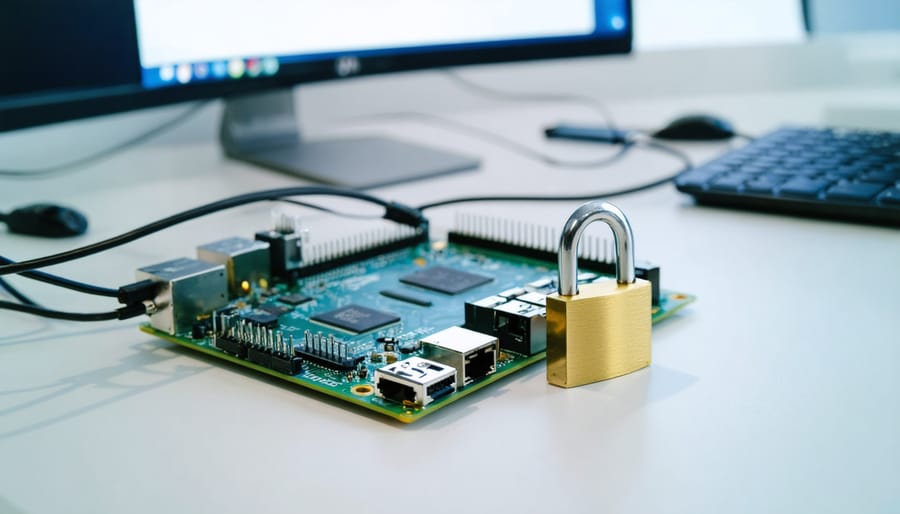
**Embed privacy-by-design principles into every Raspberry Pi workplace project you build.** When creating employee monitoring systems, IoT sensors, or automation tools, configure your Pi to collect only essential data, encrypt all transmissions using protocols like SSL/TLS, and provide clear opt-out mechanisms for users. Your maker projects gain credibility when they respect human autonomy from the circuit board up.
**Design transparent data flows that users can actually understand.** If your Pi-powered attendance tracker or environmental monitor captures information about people, document exactly what data moves where, create accessible dashboards showing real-time collection, and build in automatic deletion schedules. Transparency isn’t just good ethics—it prevents the trust erosion that kills workplace technology adoption.
**Implement algorithmic fairness checks in any decision-making code.** Whether you’re automating schedule assignments or analyzing productivity patterns with your Raspberry Pi, test your Python scripts against diverse datasets to identify bias. A $35 device can easily perpetuate discrimination if the logic behind it remains unexamined. Run validation tests across different demographic groups before deployment.
**Establish clear boundaries between monitoring and surveillance.** Your motion sensors, cameras, or network traffic analyzers should serve legitimate workplace needs—safety, efficiency, resource management—not function as digital surveillance tools. Define specific use cases, set retention limits, and ensure workers understand both the purpose and limitations of your Pi-powered systems. Digital ethics transforms innovative projects from potentially invasive to genuinely beneficial workplace tools.
What Digital Ethics Actually Means for Your Raspberry Pi Projects
Digital ethics isn’t some abstract philosophy textbook concept—it’s about making responsible choices when your Raspberry Pi projects interact with real people’s lives and data. If you’re building anything for a workplace environment, you need to think beyond “can I build this?” and ask “should I build this, and if so, how can I do it right?”
Let’s break this down with scenarios you might actually encounter. Say you’re creating an employee badge scanning system with a Pi and RFID reader. Sure, it tracks who enters the office, but are employees aware their movements are being logged? How long is that data stored? Who can access it? These questions matter because ethical technology implementation starts with transparency and consent.
Or maybe you’re automating workplace tasks—controlling lighting, managing meeting room schedules, or monitoring equipment performance. Great! But if your automation collects data about employee behavior patterns (like when people arrive, how long they spend in meetings, or frequency of break room visits), you’ve crossed into privacy territory. The ethical approach means collecting only what’s necessary, securing that data properly, and being upfront about what you’re tracking.
Here are the core principles to follow: First, practice data minimization—only collect information essential to your project’s function. Second, implement security from the start, not as an afterthought. Use encryption, secure your Pi’s SSH access, and regularly update your software. Third, build in transparency. If your project affects others, they deserve to know what it does and why.
The good news? Building ethically doesn’t mean building less creatively. It means thinking holistically about your project’s impact. When you design a workplace Pi project with privacy, consent, and transparency baked in from day one, you’re not just making something functional—you’re creating technology that respects the people who’ll interact with it daily.
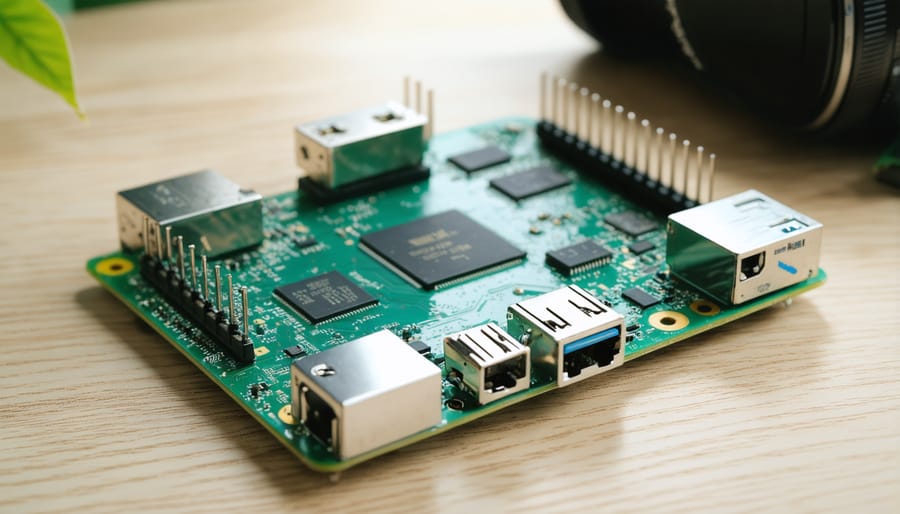
The Real-World Scenarios Where Ethics Meets Your Pi
Employee Monitoring and Surveillance Systems
Raspberry Pi cameras and monitoring tools make workplace surveillance systems incredibly affordable and accessible—but just because you *can* build them doesn’t mean you should deploy them without careful ethical consideration.
Pi-based camera systems can cost under $50 to assemble, making them tempting solutions for small businesses and makerspaces wanting to monitor equipment or secure facilities. Time tracking dashboards using Pi sensors can log employee presence, while productivity monitoring tools can capture keystrokes, screenshots, or application usage. These projects are technically straightforward—perfect beginner Pi applications—but they raise serious ethical questions.
The key distinction lies between **legitimate workplace needs** and **privacy invasion**. Security cameras monitoring building entrances? Generally acceptable with proper notification. Hidden cameras tracking bathroom breaks or constant screenshot capture? That crosses ethical boundaries and may violate privacy laws in many jurisdictions.
Before implementing any monitoring system, consider these principles:
**Transparency is essential.** Employees should know what’s being monitored, why, and how data is used. Hidden surveillance breeds distrust and damages workplace culture.
**Proportionality matters.** Does monitoring match actual security risks? Tracking warehouse inventory makes sense; monitoring lunch break duration doesn’t.
**Data protection is critical.** Your Pi system might inadvertently create the same problems as algorithmic bias if monitoring data is used unfairly in performance reviews.
If you’re building workplace monitoring projects, involve stakeholders early, document policies clearly, and always ask: “Would I want this used on me?” Remember—effective workplaces run on trust, not surveillance.

Workplace Automation That Affects Jobs
Automation projects using Raspberry Pi—from smart office assistants to inventory management systems—can dramatically improve workplace efficiency. However, makers and developers face an important ethical question: when does streamlining processes cross the line into eliminating jobs?
Before building automation tools, consider the human impact. A Pi-powered attendance tracker might save time, but could it lead to excessive monitoring or job cuts? An automated customer service chatbot might handle routine queries, but at what cost to support staff positions?
The ethical maker’s approach starts with transparency. If you’re developing workplace automation, communicate openly with those affected. Will your system augment human capabilities or replace them entirely? There’s a meaningful difference between a tool that helps employees work more efficiently and one designed to make their roles obsolete.
Consider implementing features that prioritize digital wellness alongside efficiency. For example, design systems that reduce repetitive strain rather than increase workload monitoring. Build tools that free workers from mundane tasks so they can focus on creative, meaningful work.
When documenting your projects, be honest about their implications. Include discussions about ethical deployment, potential job impacts, and ways to ensure technology serves people rather than replacing them. As makers, we have the power—and responsibility—to shape how automation integrates into workplaces, ensuring our innovations uplift rather than displace the humans they’re meant to serve.
Data Collection and Employee Privacy
Modern workplace monitoring has become surprisingly sophisticated—and Raspberry Pi devices are often at the heart of these systems. From temperature sensors tracking office conditions to badge readers monitoring room occupancy, these small computers power countless workplace data collection projects. But just because you *can* collect data doesn’t mean you *should*.
When building workplace monitoring systems, start by asking what data genuinely serves your project’s purpose. Temperature and humidity sensors for HVAC optimization? Reasonable. Motion sensors counting foot traffic in public spaces? Generally acceptable. But webcams tracking individual employees or keystroke loggers monitoring productivity? That crosses ethical lines.
The key principle is transparency. Anyone affected by your data collection should know what’s being monitored, why, and how long data is retained. If you’re creating a room occupancy tracker using PIR sensors, post clear signage explaining the system. Anonymous, aggregated data respects privacy far better than personally identifiable information.
Security matters enormously here. Apply data encryption basics to protect any collected information, even seemingly innocuous sensor readings. Implement automatic data deletion schedules—most workplace analytics don’t require storing data beyond 30-90 days.
Remember the “minimum viable data” approach: collect only what’s necessary, anonymize wherever possible, and give people options to opt out when feasible. Your Raspberry Pi project should enhance the workplace environment, not create an atmosphere of surveillance that erodes trust.
Building Ethics Into Your Raspberry Pi Workplace Projects
The Transparency Checklist for Your Project
Before launching your Raspberry Pi workplace project, run through this essential transparency checklist to ensure you’re meeting ethical standards:
**Data Collection Disclosure**
– Clearly document what sensors, cameras, or monitoring tools your Pi device uses
– Specify exactly what data points are being collected (timestamps, images, motion detection, etc.)
– Explain why each piece of data is necessary for the project’s function
**User Notification**
– Post visible signage if your Pi project involves cameras or sensors in shared spaces
– Provide written documentation accessible to all employees or users
– Include contact information for questions or concerns about the system
**Data Usage & Storage**
– Detail where data is stored (local storage, cloud services, network drives)
– Explain how long data is retained and your deletion policy
– Specify who has access to collected information
– Describe any data sharing with third parties
**Consent Mechanisms**
– Implement opt-in features where possible
– Provide clear instructions for opting out without penalty
– Document all consent agreements
**Regular Updates**
– Review and update your transparency documentation quarterly
– Notify users of any changes to data collection or usage
– Maintain a changelog of modifications to your system
This checklist ensures your Pi projects respect user privacy while maintaining functionality.
Privacy-First Programming Practices
When building Raspberry Pi projects for workplace environments, implementing privacy-first coding practices protects both your data and the people who interact with your systems. Let’s explore three fundamental approaches that every Pi programmer should adopt.
**Data Minimization** is your first line of defense. Only collect the information you absolutely need for your project to function. If you’re building a temperature monitoring system, for example, you don’t need to log user names or timestamps down to the millisecond—just the temperature readings at reasonable intervals. Before adding any data collection feature, ask yourself: “Is this essential?” This practice reduces risk and simplifies your code.
**Encryption basics** might sound intimidating, but they’re surprisingly straightforward on Raspberry Pi. For storing sensitive configuration files or API keys, use Python’s `cryptography` library to encrypt data before saving it. Even simple symmetric encryption with the Fernet module adds a crucial security layer. When transmitting data between devices, always use HTTPS or SSH protocols instead of plain HTTP or Telnet.
**Secure storage methods** complete your privacy toolkit. Never hardcode passwords or API keys directly in your Python scripts—use environment variables or encrypted configuration files instead. Store sensitive data in protected directories with restricted file permissions (chmod 600). Consider using SQLite with encryption extensions for database projects, and regularly backup your data to encrypted external storage.
To implement these practices effectively, start by learning how to secure your Pi at the system level, then apply these coding principles to every project you build.
Getting Consent the Right Way
When building workplace tools with your Raspberry Pi, implementing proper consent mechanisms isn’t just ethical—it’s essential. Start by designing clear opt-in systems rather than assuming consent. For employee monitoring projects or data collection systems, create a simple interface that explicitly asks for permission before any data gathering begins.
Your Pi application should include an easily accessible settings menu where users can review what data is collected and toggle features on or off. Consider adding a physical button or LED indicator to your hardware setup that shows when monitoring is active, providing transparent visual feedback.
Implement a straightforward opt-out process that doesn’t require technical knowledge. Store consent preferences locally when possible, and include a complete data deletion option. For example, if you’re building an attendance tracker or productivity monitor, let users export their data before opting out.
Document your consent procedures in plain language—avoid legal jargon. Include this information in your project’s README file and display it prominently during initial setup. Remember, consent should be informed, specific, and freely given. Your users need to understand exactly what they’re agreeing to, and they should feel comfortable saying no without negative consequences.
Comparison: Ethical vs. Problematic Raspberry Pi Workplace Implementations
Understanding the difference between ethical and problematic implementations can help you design Raspberry Pi workplace projects that respect privacy and build trust. Let’s examine three common scenarios to see how the same technology can be deployed responsibly or cross ethical boundaries.
**Attendance Tracking System**
*Problematic Approach:* A Raspberry Pi with a camera captures facial recognition data every time someone enters the office. The system logs exact entry and exit times, tracks bathroom breaks, and stores all images indefinitely without employee knowledge. Management reviews the data to identify who arrives late or takes longer breaks.
*Ethical Approach:* Employees tap RFID badges on a Raspberry Pi reader at a central location to log their presence. The system only records “checked in” or “checked out” status without tracking movement throughout the day. Data is anonymized for reports, retained for payroll purposes only, and employees receive clear notification about what’s collected and why.
**Workspace Environmental Sensors**
*Problematic Approach:* Motion sensors and cameras connected to Raspberry Pi devices are installed at individual desks to monitor “productivity” by tracking how long employees sit at their workstations. The data feeds into performance reviews, and employees aren’t informed about the monitoring scope.
*Ethical Approach:* Temperature, air quality, and noise sensors connected to Raspberry Pi units collect aggregate environmental data to improve workspace comfort. No individual tracking occurs—the system measures room-level conditions only. Results are shared openly on a dashboard accessible to all employees, who can suggest improvements based on the findings.
**Meeting Room Utilization**
*Problematic Approach:* A Raspberry Pi with audio recording capabilities captures all meeting conversations for “quality assurance.” The recordings are stored without encryption, accessible to multiple managers, and employees aren’t asked for consent.
*Ethical Approach:* A simple PIR motion sensor on a Raspberry Pi detects room occupancy to show availability status. No audio, video, or identifying information is collected—just binary “occupied/vacant” data. This helps teams find available spaces without invading privacy.
The key difference? Ethical implementations collect only necessary data, maintain transparency, respect autonomy, and prioritize people over surveillance. When building your workplace projects, always ask: “Would I be comfortable being monitored this way?”

Hands-On: Adding Ethical Features to an Existing Project
Let’s take a basic Raspberry Pi surveillance camera project and transform it into an ethically-minded workplace tool. This tutorial demonstrates how to add transparency, user control, and consent features to existing projects—principles you can apply to any workplace monitoring system.
**Starting Point: Basic Camera Setup**
We’ll assume you have a Raspberry Pi with a camera module running motion detection software like Motion or MotionEyeOS. Our goal is to retrofit three essential ethical features: a visible activity indicator, user-controlled data deletion, and consent logging.
**Step 1: Add a Physical Activity Indicator**
First, connect an LED to GPIO pin 17 and ground. This provides immediate visual feedback when recording occurs—crucial for transparency.
Install the required library:
“`
sudo apt-get install python3-rpi.gpio
“`
Create a simple Python script (`activity_led.py`) that monitors your camera process and lights the LED when active:
“`python
import RPi.GPIO as GPIO
import subprocess
import time
GPIO.setmode(GPIO.BCM)
GPIO.setup(17, GPIO.OUT)
while True:
result = subprocess.run([‘pgrep’, ‘motion’], capture_output=True)
if result.returncode == 0:
GPIO.output(17, GPIO.HIGH)
else:
GPIO.output(17, GPIO.LOW)
time.sleep(1)
“`
Set this script to run at startup. Now anyone near the camera knows exactly when it’s recording—no hidden surveillance.
**Step 2: Create a Data Deletion Interface**
Employees should control their data. Build a simple web interface using Flask that allows authorized users to delete recordings older than a specified date.
Install Flask:
“`
pip3 install flask
“`
Create `deletion_interface.py`:
“`python
from flask import Flask, request, render_template
import os
import datetime
app = Flask(__name__)
RECORDING_PATH = ‘/var/lib/motion’
@app.route(‘/delete’, methods=[‘POST’])
def delete_recordings():
days_old = int(request.form[‘days’])
cutoff_date = datetime.datetime.now() – datetime.timedelta(days=days_old)
for filename in os.listdir(RECORDING_PATH):
filepath = os.path.join(RECORDING_PATH, filename)
file_time = datetime.datetime.fromtimestamp(os.path.getmtime(filepath))
if file_time < cutoff_date: os.remove(filepath) return "Deletion complete" ``` **Step 3: Implement Consent Logging** Create a consent database using SQLite to track who approved monitoring and when: ```python import sqlite3 from datetime import datetime conn = sqlite3.connect('consent_log.db') c = conn.cursor() c.execute('''CREATE TABLE IF NOT EXISTS consent (employee_id TEXT, consent_given INTEGER, timestamp TEXT)''') def log_consent(employee_id, approved): c.execute("INSERT INTO consent VALUES (?, ?, ?)", (employee_id, approved, datetime.now().isoformat())) conn.commit() ``` Display this consent log prominently in your deletion interface, showing that ethical practices are documented and auditable. These three features transform a potentially invasive tool into a transparent, respectful system that balances workplace needs with employee dignity.
When Your Ethical Pi Project Meets Workplace Resistance
You’ve built an elegant Pi-powered solution for your workplace—maybe it’s an attendance tracker, a productivity monitor, or an automated scheduling system. But now management wants you to add features that make you uncomfortable: keystroke logging, bathroom break tracking, or camera feeds with facial recognition. What do you do?
First, recognize that your technical skills give you influence in these conversations. You’re not just following orders; you’re the architect who understands what’s possible and what’s problematic. This positions you to advocate for better solutions.
**Start with questions, not objections.** Instead of saying “That’s invasive,” try “What specific problem are we trying to solve?” Often, managers request invasive features because they’ve identified a real issue but haven’t considered alternative solutions. A request for constant location tracking might really be about coordinating team availability—something achievable through voluntary check-in systems.
**Propose ethical alternatives that meet the same goals.** If asked to monitor individual productivity, suggest aggregate analytics instead. “We could track overall task completion rates without identifying specific individuals. This gives you the insights you need while respecting privacy.” Frame it as a technical recommendation, not a moral lecture.
**Highlight the risks to the organization.** Privacy violations can lead to legal liability, decreased employee morale, and reputational damage. Present your concerns as protecting company interests: “Implementing this feature could expose us to GDPR compliance issues” carries more weight than abstract ethical arguments.
**Document your objections professionally.** If pushed to implement something truly problematic, send a brief email summarizing your concerns. This creates a paper trail and demonstrates you’ve fulfilled your responsibility to raise red flags.
Remember, refusing to build invasive features isn’t obstruction—it’s professional responsibility. Your expertise includes knowing when technology crosses ethical lines.
Digital ethics isn’t reserved for Silicon Valley giants or enterprise-level corporations—it’s a responsibility that sits with every maker, educator, and hobbyist creating technology solutions. Whether you’re building a simple attendance tracker for your classroom, automating office tasks with a Raspberry Pi, or developing monitoring tools for your workshop, the choices you make about privacy, transparency, and user control matter profoundly.
The beauty of being an independent maker is that you can embed ethical principles from day one, without navigating layers of corporate bureaucracy. You have the power to set a higher standard, creating workplace tools that respect human dignity while delivering functionality.
Ready to put digital ethics into practice? Here are your immediate next steps:
**Audit your current projects.** Look at any workplace or monitoring tools you’ve built. Ask yourself: Does this collect more data than necessary? Are users aware of what’s being tracked? Can they access or delete their information? Make a list of potential privacy concerns.
**Document your data handling.** Create a simple text file explaining what data your project collects, how it’s stored, who can access it, and when it’s deleted. This transparency builds trust and holds you accountable.
**Add an opt-out feature.** Where possible, give users control over their participation in any tracking or monitoring system. Even a simple physical switch can make the difference between ethical tech and invasive surveillance.
Start small, but start today. Your next project could be the model others follow.