

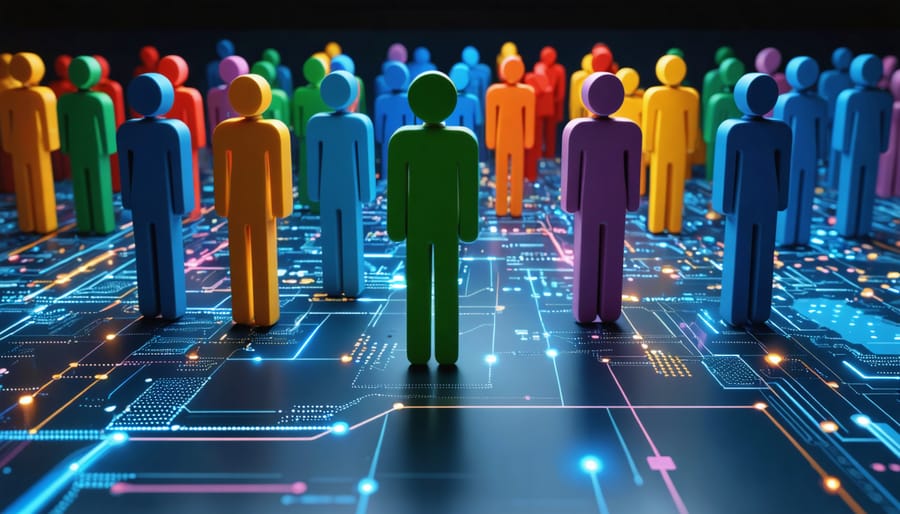
In a world increasingly governed by artificial intelligence, algorithms silently shape countless decisions that affect our daily lives – from loan approvals and job applications to criminal sentencing and healthcare access. Yet these seemingly objective systems often harbor hidden biases that perpetuate and amplify existing social inequalities. When machine learning models train on historical data tainted by human prejudices, they learn to replicate and systematize discriminatory patterns, creating a dangerous feedback loop of automated unfairness.
Recent studies have exposed alarming examples of algorithmic discrimination: facial recognition systems that struggle to accurately identify people of color, recruitment tools that favor male candidates, and risk assessment algorithms that disproportionately flag minority defendants as high-risk. These aren’t mere technical glitches, but rather symptoms of deeper systemic biases encoded into the very data and design choices that power AI systems.
As our reliance on algorithmic decision-making grows, addressing discriminatory algorithms becomes not just a technical challenge, but an urgent ethical imperative. Understanding how these biases emerge, detecting them proactively, and developing more equitable AI systems is crucial for ensuring technology serves to reduce rather than reinforce societal inequalities.
What Makes an Algorithm Discriminatory?
Data Bias: The Root of the Problem
The foundation of algorithmic bias often lies in the data used to train machine learning models. When training datasets contain historical biases, stereotypes, or underrepresented groups, these patterns become embedded in the algorithm’s decision-making process. For example, if a facial recognition system is trained primarily on images of light-skinned individuals, it may perform poorly when analyzing darker skin tones.
The challenge extends beyond just protecting sensitive data – it’s about ensuring the data itself is representative and fair. Many datasets reflect societal inequalities, such as gender imbalances in job application data or racial disparities in healthcare records. When algorithms learn from these biased datasets, they perpetuate and sometimes amplify these inequalities.
The problem is compounded by the fact that data collection often occurs without considering diversity and inclusion. Technical teams may unknowingly introduce bias through sampling methods, data labeling practices, or the choice of data sources. This creates a cycle where biased algorithms make decisions that generate more biased data, further reinforcing discriminatory patterns in future iterations.

Hidden Variables and Proxy Discrimination
Algorithmic discrimination often occurs through subtle, indirect means when algorithms use seemingly neutral variables that correlate with protected characteristics. For example, while an algorithm may not explicitly consider race when evaluating loan applications, it might use zip codes or shopping patterns that serve as proxies for racial demographics.
These hidden variables create a particularly challenging problem because they can perpetuate discrimination while appearing objective on the surface. An algorithm might determine that people who shop at certain stores are better loan candidates, unknowingly reflecting existing socioeconomic disparities tied to race or ethnicity.
The challenge extends to everyday applications. A delivery service algorithm might avoid certain neighborhoods based on historical delivery times, inadvertently discriminating against lower-income areas. Similarly, job recruitment algorithms might favor candidates from specific universities, creating indirect bias against underrepresented groups.
To address proxy discrimination, developers must carefully analyze their data for correlations with protected characteristics and regularly audit their algorithms for unexpected biases. This often requires looking beyond surface-level variables to understand deeper patterns and relationships in the data.
Real-World Examples of Algorithmic Discrimination
Facial Recognition Failures
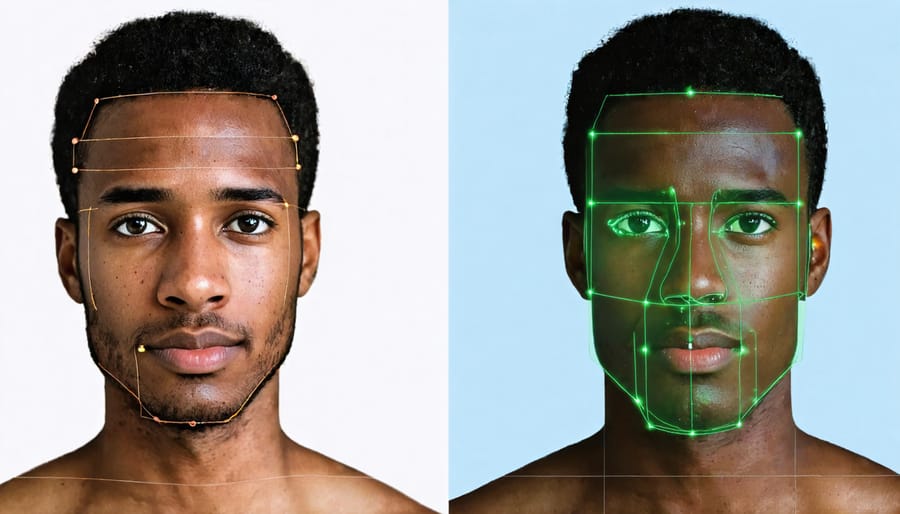
Facial recognition systems have demonstrated significant accuracy disparities across different demographic groups, highlighting concerning patterns of algorithmic bias. One notable example is a 2019 study by the National Institute of Standards and Technology (NIST), which found that many facial recognition algorithms showed higher false-positive rates for Asian and African American faces compared to Caucasian faces.
Major tech companies have faced criticism when their facial recognition systems failed to accurately identify people of color. In a particularly troubling case, several commercial systems misidentified darker-skinned women up to 34% of the time, while error rates for lighter-skinned men were less than 1%. These disparities raise serious concerns about the implementation of such technologies in security systems, law enforcement, and even in ethical AI in education.
Gender recognition has also proven problematic, with many systems showing reduced accuracy when analyzing faces of transgender or non-binary individuals. This bias stems largely from training data that underrepresents certain demographic groups and reflects historical societal biases.
These failures have real-world consequences, from wrongful arrests due to misidentification to denied access to buildings or services. Some companies have responded by improving their training datasets and implementing more rigorous testing protocols, but the challenge of creating truly unbiased facial recognition systems remains significant.
Hiring and Loan Algorithms
In recent years, several high-profile cases have revealed how hiring and loan algorithms can perpetuate discrimination despite their intended objective nature. Amazon’s experimental AI recruiting tool, developed in 2014, showed bias against women candidates because it was trained on historically male-dominated résumé data. The system penalized résumés containing words like “women’s” and downgraded graduates from all-women colleges.
In the financial sector, studies have shown that algorithmic lending systems often discriminate against minorities, even when controlling for income and credit scores. A notable 2019 UC Berkeley study found that both online and traditional lenders charged higher interest rates to African American and Hispanic borrowers, resulting in $765 million in extra annual interest payments.
These biases typically stem from historical data used to train the algorithms. When past hiring or lending decisions reflect societal prejudices, the AI systems learn and amplify these patterns. For instance, if a company’s historical hiring data shows a preference for candidates from certain universities or backgrounds, the algorithm will replicate this bias in its recommendations.
Some companies are now implementing fairness metrics and bias testing in their algorithmic systems. This includes regular audits of decision outcomes across different demographic groups and adjusting algorithms to ensure more equitable results. However, achieving true algorithmic fairness remains challenging as developers must balance accuracy with equity while navigating complex legal and ethical considerations.
Technical Solutions for Fairer Algorithms
Bias Detection Tools
Several tools and frameworks have emerged to help developers and organizations identify and measure algorithmic bias in their systems. The AI Fairness 360 toolkit, developed by IBM, offers a comprehensive suite of metrics and algorithms for detecting discriminatory patterns in machine learning models. This open-source solution includes visualization tools that make it easier to understand where bias might occur in your data processing pipeline.
Another notable tool is Google’s What-If Tool, which allows developers to analyze machine learning models without writing code. It provides an interactive interface for testing how changes in data points affect model predictions, making it particularly useful for identifying potential discrimination in decision-making systems.
The Aequitas toolkit, developed by the University of Chicago’s Center for Data Science and Public Policy, focuses specifically on bias auditing in binary classification systems. It helps evaluate fairness across multiple groups and metrics, providing detailed reports that highlight potential disparities.
For text-based systems, tools like the Gender Bias Scanner and the Responsible AI Toolkit can identify subtle language biases. These tools analyze word embeddings and sentence structures to detect potentially discriminatory patterns in natural language processing models.
Many of these tools integrate directly with popular machine learning frameworks, making them accessible to developers who want to implement bias detection as part of their regular testing procedures. Regular auditing using these tools can help ensure AI systems remain fair and equitable.
Debiasing Techniques
Several effective techniques have emerged to combat algorithmic bias. Data augmentation involves enriching training datasets with more diverse examples to ensure better representation across different demographics. This approach helps algorithms learn from a broader range of cases, reducing the likelihood of discriminatory outcomes.
Pre-processing techniques focus on modifying the input data before training. This includes methods like reweighting samples to balance representation and removing sensitive attributes that might lead to biased decisions. Some developers use adversarial debiasing, where the model is trained to make accurate predictions while being penalized for discriminating based on protected characteristics.
Post-processing methods adjust the model’s outputs to ensure fair treatment across different groups. This might involve calibrating confidence scores or adjusting decision thresholds for different demographic groups to achieve more equitable outcomes.
Regular bias testing and monitoring are crucial. Developers can use specialized metrics and tools to measure various types of bias in their algorithms, allowing them to identify and address problems early. This includes conducting thorough impact assessments across different demographic groups and testing the model’s performance in diverse real-world scenarios.
Documentation and transparency also play vital roles in debiasing efforts. By clearly documenting the model’s limitations, training data characteristics, and potential biases, teams can better understand and address discrimination risks in their algorithms.
Testing and Validation Methods
Testing and validating algorithms for fairness requires a systematic approach combining multiple methodologies. Start by establishing clear metrics for fairness, such as demographic parity or equal opportunity across different groups. Use diverse test datasets that represent various demographics, ensuring they include traditionally underrepresented groups.
Implement regular bias audits using tools like AI Fairness 360 or Aequitas, which can help identify potential discrimination patterns. Cross-validate results across different population segments and maintain comprehensive documentation of testing procedures, following data security best practices throughout the process.
Consider employing A/B testing to compare algorithm versions and their impact on different user groups. Incorporate both quantitative metrics and qualitative feedback from diverse stakeholders. Regular monitoring should include:
– Statistical analysis of outcomes across protected classes
– Review of edge cases and potential bias triggers
– External validation from ethics experts
– User feedback collection and analysis
– Documentation of model behavior changes over time
Remember that validation is an ongoing process, not a one-time task. As data patterns and societal norms evolve, testing methods must adapt accordingly. Establish clear thresholds for acceptable performance differences between groups and create action plans for when these thresholds are exceeded.
Building Ethical AI Systems
Diverse Development Teams
Building diverse development teams is crucial in creating AI systems that serve all members of society fairly and effectively. When teams lack diversity, they often inadvertently create algorithms that reflect their own limited perspectives and biases. By including developers from different cultural backgrounds, genders, ethnicities, and socioeconomic experiences, teams can better identify and address potential biases before they become embedded in the algorithms.
Studies have shown that diverse teams are more likely to catch discriminatory patterns during the testing phase and are better equipped to consider various edge cases that might affect different user groups. For example, a diverse team is more likely to recognize when facial recognition systems perform poorly on certain skin tones or when language processing models contain gender biases.
Moreover, diverse teams bring varied problem-solving approaches and cultural insights that lead to more inclusive solutions. Companies that prioritize diversity in their AI development teams often report improved algorithm performance across different demographic groups and better user satisfaction overall. This approach not only helps prevent discriminatory outcomes but also creates more robust and universally applicable AI systems.

Ethical Guidelines and Standards
To combat discriminatory algorithms, organizations must establish robust AI ethics guidelines and standards. These frameworks should include regular bias audits, diverse development teams, and transparent documentation of training data sources. Key principles include fairness in model outcomes, accountability for algorithmic decisions, and ongoing monitoring of system performance across different demographic groups.
Organizations should implement pre-deployment testing protocols that specifically check for discriminatory patterns and establish clear procedures for addressing identified biases. This includes setting measurable fairness metrics, conducting impact assessments, and creating feedback mechanisms for affected users.
Documentation requirements should detail the model’s training data, development process, and known limitations. Teams must maintain version control of algorithms and establish clear chains of responsibility for addressing bias-related issues. Regular reviews and updates of these guidelines ensure they remain effective as technology evolves and new forms of algorithmic discrimination emerge.
The standards should also mandate inclusive design practices and require diverse perspectives throughout the development lifecycle, from initial conception to deployment and maintenance.
As we’ve explored throughout this article, discriminatory algorithms represent a significant challenge in our increasingly AI-driven world. The impact of algorithmic bias extends far beyond technical glitches, affecting real people’s lives in areas like healthcare, employment, and financial services. While the complexity of these systems can make bias detection challenging, it’s crucial that developers and organizations take proactive steps to address these issues.
The responsibility falls on all of us in the tech community to create more equitable algorithms. This starts with diverse development teams, comprehensive testing procedures, and regular audits of AI systems. Developers should implement bias testing frameworks, carefully select training data, and constantly monitor their algorithms for unintended discrimination.
Organizations must also establish clear guidelines and ethical frameworks for AI development. This includes regular transparency reports, external audits, and mechanisms for user feedback and appeals. Education plays a vital role too – developers need ongoing training about bias recognition and mitigation techniques.
Looking ahead, the future of AI depends on our ability to create fair and inclusive systems. By implementing the strategies discussed in this article, staying informed about new developments in bias detection, and maintaining a commitment to ethical AI development, we can work towards algorithms that serve all members of society equally. The time to act is now – every line of code we write today shapes the algorithmic landscape of tomorrow.