

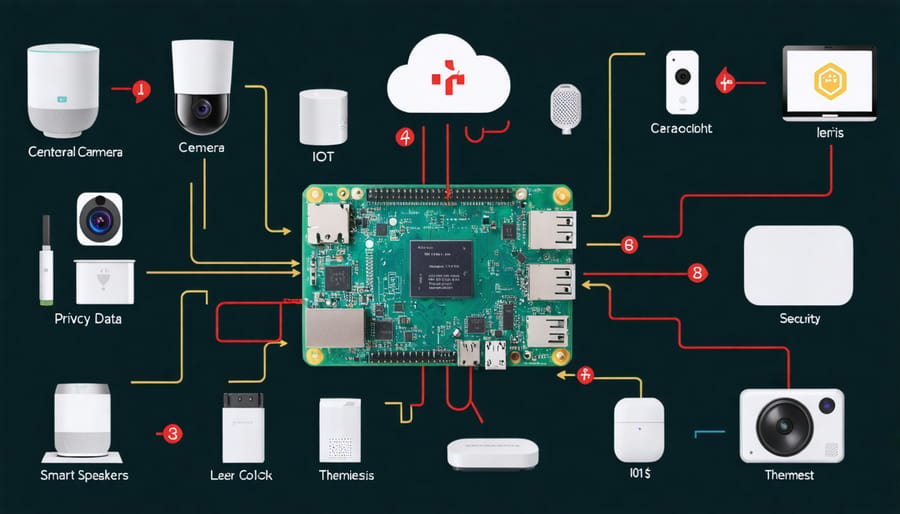
The rapid proliferation of Internet of Things (IoT) devices in our homes, offices, and public spaces has created an unprecedented privacy challenge. From smart thermostats recording our daily routines to voice assistants capturing our conversations, these connected devices collect vast amounts of personal data, often without users’ full awareness or consent. Recent studies show that the average smart home generates over 100GB of data per month, with up to 70% of IoT devices containing serious security vulnerabilities that could compromise user privacy.
The stakes are particularly high because IoT devices create an intricate web of interconnected data points that, when combined, can reveal intimate details about our lives. A smart doorbell doesn’t just record who visits; it builds a pattern of our daily movements. A fitness tracker doesn’t simply count steps; it creates a detailed health profile that could be exposed to third parties.
Understanding these privacy implications is crucial as we navigate an increasingly connected world. Whether you’re a consumer, developer, or technology enthusiast, protecting your data requires a combination of technical knowledge, awareness of potential vulnerabilities, and implementation of robust security measures. This comprehensive guide explores the critical privacy challenges facing IoT users and provides practical solutions to safeguard your connected ecosystem.
The Hidden Data Trails of IoT Devices
Data Collection Points
IoT devices collect sensitive information through various touchpoints in our daily lives, often in ways we might not expect. Smart home devices, particularly those controlled by Raspberry Pi systems, gather data through sensors, microphones, cameras, and network connections. Common collection points include voice commands to smart speakers, temperature and humidity readings from environmental sensors, and motion detection from security cameras.
When building IoT projects with Raspberry Pi, it’s crucial to understand these data privacy considerations and collection mechanisms. Smart doorbells capture footage of visitors and passersby, while connected thermostats track your daily routines and temperature preferences. Even seemingly simple sensors can reveal detailed patterns about household activities.
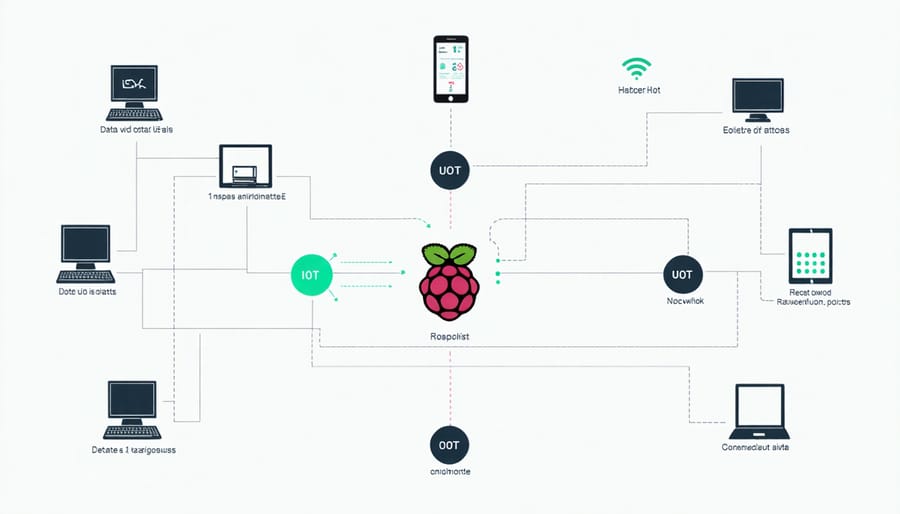
Network traffic analysis shows that many IoT devices continuously transmit data to cloud servers, including usage statistics, device status, and user interaction patterns. This constant data flow creates multiple points where personal information could be intercepted or misused. For Raspberry Pi enthusiasts, being aware of these collection points is essential when designing and implementing IoT projects that respect user privacy while maintaining functionality.
Common Privacy Breaches
Several high-profile IoT privacy breaches have highlighted the importance of securing smart devices. In 2019, a major smart home camera manufacturer experienced a breach that allowed hackers to access live feeds from thousands of homes, including children’s bedrooms. Similarly, smart doorbell systems have been compromised, enabling attackers to intercept Wi-Fi credentials and gain access to home networks.
Connected toys have also been at the center of privacy concerns. In one notable case, a popular smart teddy bear leaked over 2 million voice recordings of children and parents, along with email addresses and password data. Smart TVs have been found collecting and transmitting viewing habits and even recording private conversations without user consent.
Even seemingly innocent devices like smart vacuum cleaners have raised privacy concerns. Several models were discovered mapping home layouts and sending this data to third parties without explicit user permission. In the industrial sector, compromised smart sensors in manufacturing plants have led to intellectual property theft and exposed sensitive production data.
These incidents underscore the critical need for proper security measures when developing and deploying IoT devices, especially in sensitive environments like homes and workplaces.
Practical Privacy Protection Measures
Secure Data Storage
When it comes to protecting IoT data on your Raspberry Pi projects, implementing robust storage encryption is crucial. Start by encrypting sensitive data at rest using industry-standard encryption algorithms like AES-256. For Raspberry Pi projects, you can utilize built-in Linux disk encryption tools like LUKS (Linux Unified Key Setup) to create encrypted containers for your data.
Consider implementing a hierarchical storage system where different types of data are stored with varying levels of encryption based on their sensitivity. For instance, device logs might require basic encryption, while user credentials demand the highest level of protection.
Always use secure key management practices. Store encryption keys separately from the encrypted data, preferably in a hardware security module (HSM) or trusted platform module (TPM) if available. For Raspberry Pi projects, you can use a separate USB device or microSD card for key storage.
Regular data backups are essential, but ensure these backups are also encrypted. Implement automated backup systems that maintain the same level of encryption as your primary storage. Consider using rsync with encryption for secure backup transfers.
Don’t forget to sanitize data before storage. Only store necessary information and implement data retention policies that automatically delete unnecessary data after a specified period. This minimizes the risk of data breaches and helps comply with privacy regulations.
Remember to regularly update your encryption methods and keys to maintain strong security standards as encryption technologies evolve.

Network Security
Network security forms the backbone of IoT privacy protection, especially when working with Raspberry Pi projects. Start by implementing a robust firewall configuration to control incoming and outgoing traffic. For Raspberry Pi devices, the built-in ‘ufw’ (uncomplicated firewall) provides an excellent starting point for network protection.
Create separate network segments for your IoT devices using VLANs (Virtual Local Area Networks) to isolate them from your main network. This segmentation prevents compromised devices from affecting your entire network infrastructure. When connecting your Raspberry Pi to the internet, always use encrypted protocols like HTTPS and SSH instead of their unencrypted counterparts.
Regular network monitoring is essential. Set up intrusion detection systems (IDS) to alert you of suspicious activities. Tools like Snort or Suricata can be installed on your Raspberry Pi to monitor network traffic for potential security threats. Additionally, implement strong Wi-Fi security by using WPA3 encryption where possible and regularly updating your network passwords.
Consider using a VPN (Virtual Private Network) for remote access to your IoT devices. This adds an extra layer of encryption and ensures secure communication even over public networks. For Raspberry Pi projects, OpenVPN is a popular and reliable choice that’s relatively easy to set up.
Remember to disable unnecessary network services and ports on your devices. The principle of least privilege applies here – only keep open what you actually need for your project to function.
Data Transmission Protection
Data transmission is one of the most vulnerable aspects of IoT systems, especially when working with Raspberry Pi projects. As your devices communicate with servers and other endpoints, the data they send needs robust protection to prevent unauthorized access and tampering.
Encryption plays a vital role in securing data in transit. Using protocols like TLS (Transport Layer Security) and SSL (Secure Sockets Layer) creates an encrypted tunnel between your IoT devices and their destination servers. For Raspberry Pi projects, implementing HTTPS instead of HTTP for web-based communications is a straightforward first step in protecting your data.
Another essential practice is certificate validation. Always verify the authenticity of certificates when establishing connections between devices and servers. This helps prevent man-in-the-middle attacks where malicious actors might attempt to intercept your data.
Data compression before encryption can also enhance security by making it harder for attackers to analyze traffic patterns. However, be mindful of your Raspberry Pi’s processing power when implementing compression algorithms.
Consider implementing message authentication codes (MACs) to ensure data integrity during transmission. This verification method confirms that messages haven’t been altered in transit and come from legitimate sources.
For wireless communications, using secure Wi-Fi protocols like WPA3 adds an extra layer of protection. If your project involves Bluetooth connectivity, opt for Bluetooth Low Energy (BLE) with proper pairing and bonding procedures to secure device-to-device communications.
Ethical Data Handling Framework
Data Minimization
Data minimization is a crucial strategy for protecting privacy in IoT projects, particularly when working with Raspberry Pi devices. The key principle is simple: collect only the data you absolutely need for your project to function effectively. This approach not only enhances privacy but also improves system performance and reduces storage requirements.
Start by conducting a thorough assessment of your IoT project’s requirements. For each data point you plan to collect, ask yourself: “Is this information essential for the core functionality?” For instance, if you’re building a smart thermostat, you might need temperature readings and time stamps, but collecting audio or video data would be unnecessary and potentially invasive.
Consider implementing these practical data minimization techniques:
– Set appropriate sampling intervals instead of continuous data collection
– Use aggregated data when possible rather than individual data points
– Implement automatic data deletion policies for outdated information
– Filter out sensitive information at the source before transmission
– Use data anonymization techniques when personal information is involved
When programming your Raspberry Pi, include data validation checks that reject any non-essential information before it’s stored. For example, if your temperature sensor captures additional metadata, strip it away before processing. Remember to regularly audit your data collection practices and update your code to remove any unnecessary data gathering that might have crept in during development.
User Consent Management
Implementing transparent data collection policies in IoT projects is crucial for maintaining trust and ensuring user privacy protection. When developing Raspberry Pi-based IoT devices, it’s essential to create clear consent mechanisms that inform users about what data is being collected and how it will be used.
Start by implementing a straightforward consent management system that includes:
– Clear opt-in/opt-out options
– Detailed information about data collection purposes
– Simple language explaining data storage and sharing practices
– Easy-to-access privacy settings controls
For Raspberry Pi projects, you can create a basic web interface that displays these consent options when users first connect to your device. Consider using Python frameworks like Flask or Django to build user-friendly consent forms that store user preferences in a secure database.
Remember to:
– Request explicit permission before collecting any personal data
– Allow users to modify their consent settings at any time
– Provide options to download or delete collected data
– Implement secure storage for consent records
When users understand exactly what they’re agreeing to and have control over their data, they’re more likely to trust and engage with your IoT project. Keep consent forms simple but comprehensive, and always prioritize transparency in your data collection practices.
Privacy-First Project Design
Privacy Impact Assessment
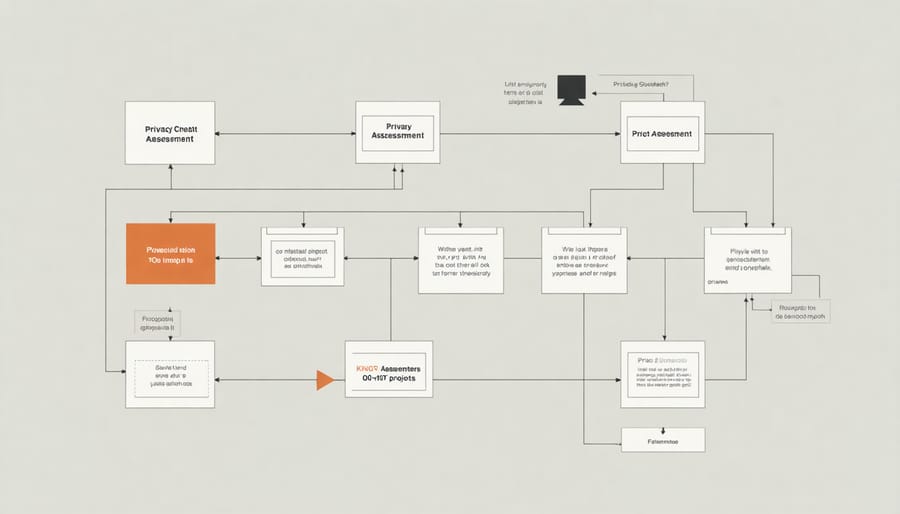
Before implementing any IoT project, conducting a Privacy Impact Assessment (PIA) helps identify and mitigate potential privacy risks. Start by mapping out all data collection points in your system, including sensors, cameras, and input devices. For each point, document what data is being collected, how it’s stored, and who has access to it.
Create a risk matrix that evaluates the likelihood and severity of potential privacy breaches. Consider factors like data sensitivity, storage duration, and transmission methods. For instance, temperature readings might be low-risk, while camera feeds require strict privacy controls.
Next, outline specific mitigation strategies for each identified risk. This could include implementing encryption for data transmission, setting up secure authentication methods, or establishing data retention policies. Don’t forget to consider physical security measures for your IoT devices.
Regular reviews are essential as your project evolves. Schedule periodic assessments to ensure your privacy controls remain effective and up-to-date. Document all findings and actions taken, as this helps track improvements and demonstrates due diligence in protecting user privacy.
Remember that privacy protection isn’t just about technical solutions – it’s also about building trust with users by being transparent about data practices and respecting their privacy preferences.
Privacy-Enhancing Features
When designing IoT projects, incorporating privacy-enhancing features from the start is crucial. Begin by implementing strong encryption for all data transmissions using protocols like TLS/SSL, and ensure proper key management. Consider using a VPN for additional security when devices need to communicate over the internet.
Data minimization is another essential feature – only collect and transmit the data that’s absolutely necessary for your project to function. Include user controls that allow for easy data deletion and the ability to opt-out of non-essential data collection.
For authentication, implement multi-factor authentication where possible, and use secure device registration processes. Regular security updates should be automated, with clear notification systems for users when updates are available or installed.
Local processing capabilities can significantly enhance privacy by reducing the need to send sensitive data to cloud services. When possible, process data on the device itself or on a local network rather than sending it to external servers.
Consider adding privacy indicators like LED lights that show when devices are collecting or transmitting data. Finally, implement network isolation features that separate IoT devices from other network segments containing sensitive information, creating an additional layer of protection against potential breaches.
As we’ve explored throughout this article, protecting privacy in IoT projects requires a multi-layered approach combining technical solutions with thoughtful implementation. By implementing strong encryption, regular security updates, and careful data handling practices, makers can significantly reduce privacy risks in their IoT devices. Network segmentation and robust authentication mechanisms serve as essential building blocks for secure IoT deployments.
Moving forward, it’s crucial for the maker community to prioritize privacy by design in all IoT projects. This means considering privacy implications from the earliest planning stages rather than treating them as an afterthought. Start small by implementing basic security measures, then gradually enhance protection as your project grows.
Remember that responsible IoT development isn’t just about technical solutions – it’s about creating devices that respect user privacy while delivering valuable functionality. Before implementing any IoT solution, always ask yourself: Is this data collection necessary? How can I minimize privacy risks? What safeguards will protect my users?
By following these guidelines and staying informed about emerging privacy threats and solutions, we can contribute to a more secure and privacy-conscious IoT ecosystem.