
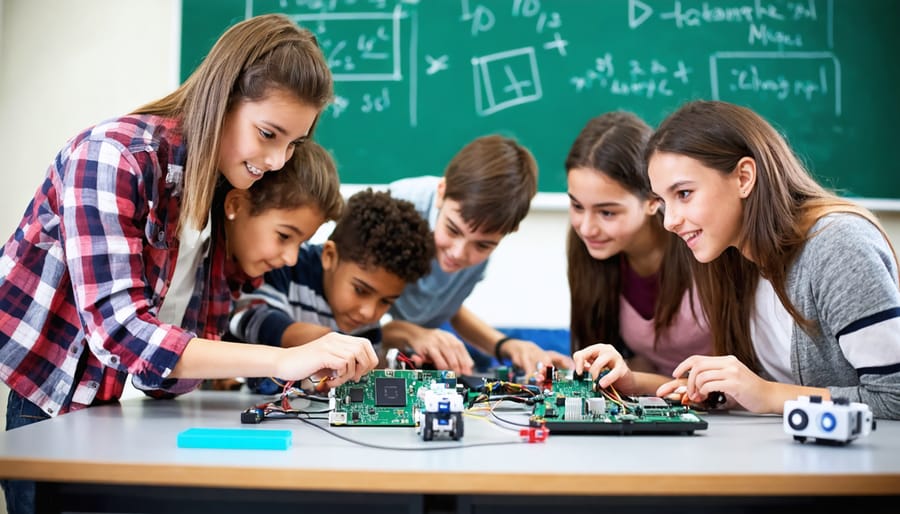
Revolutionize K-12 STEM education by implementing project-based learning modules that integrate real-world technology challenges with core curriculum standards. Equip classrooms with affordable single-board computers to transform your school’s tech program while teaching fundamental programming concepts through hands-on experimentation. Structure progressive skill development paths that build computational thinking abilities from elementary through high school, ensuring age-appropriate challenges and measurable outcomes at each grade level. Create cross-disciplinary connections by incorporating STEM principles into traditional subjects, demonstrating how technology intersects with mathematics, science, and engineering in practical applications.
The future workforce demands technical literacy and problem-solving skills that traditional education often struggles to deliver. Modern STEM education bridges this gap by providing students with hands-on experience in coding, robotics, and digital fabrication. By focusing on practical application rather than theoretical knowledge alone, educators can nurture the next generation of innovators while maintaining academic rigor and meeting state educational standards.
Why Single-Board Computers Are Perfect for K-12 STEM
Cost-Effective Learning Tools
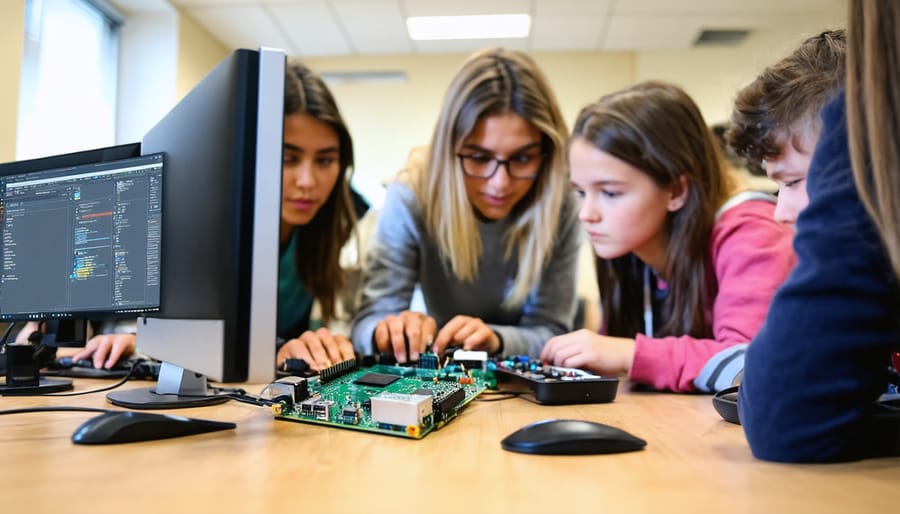
Modern STEM education doesn’t require expensive equipment to be effective. Single-board computers like Raspberry Pi offer desktop-level computing power at a fraction of traditional costs. Schools can equip entire classrooms for the price of a few traditional computers, making technology accessible to more students. Open-source software and free educational resources further reduce implementation costs. Bulk purchasing options and educational discounts make these tools even more affordable for schools. Additionally, these devices’ durability and upgradability ensure long-term value, while their compact size requires minimal storage space. Many successful STEM programs start with just a small investment in basic equipment and gradually expand as needs and budgets allow.
Real-World Programming Experience
Students gain hands-on programming experience through interactive projects like creating simple games, building basic websites, and developing mobile apps. Popular platforms such as Scratch and Python provide age-appropriate coding environments where students can learn fundamentals while creating engaging projects. Many schools integrate robotics kits and microcontrollers, allowing students to write code that controls physical devices, bridging the gap between virtual and real-world applications.
Project-based learning helps students understand practical coding concepts through immediate feedback and tangible results. Students often work in teams to solve real-world problems, developing not just coding skills but also collaboration and problem-solving abilities. Advanced students can participate in coding competitions, hackathons, and community service projects, applying their programming knowledge to create meaningful solutions for local challenges.
Safe Learning Environment
Enclosed learning environments provide students with a secure foundation for exploring STEM concepts without the risk of damaging expensive equipment or compromising system integrity. These controlled spaces, whether physical labs or virtual sandboxes, allow beginners to experiment freely while maintaining clear boundaries and safety protocols. Students can learn through trial and error, knowing that mistakes won’t have serious consequences. This approach builds confidence and encourages creative problem-solving, as learners can reset their work and try different solutions without fear. Additionally, enclosed systems help teachers maintain better oversight of student progress and provide targeted assistance when needed, ensuring a more effective learning experience for everyone involved.
Implementing Single-Board Computers in the Classroom
Essential Hardware Setup
Creating an effective STEM learning environment requires careful consideration of hardware setup and classroom organization. The foundation begins with setting up Raspberry Pi workstations that allow students to work individually or in small groups. Each station should include a Raspberry Pi computer, monitor, keyboard, mouse, and necessary power supplies.
Essential components for a basic STEM classroom setup include:
– One Raspberry Pi unit per 2-3 students
– HD monitors (minimum 1080p resolution)
– USB keyboards and mice
– Power strips with surge protection
– Network switches for connectivity
– Storage solutions for components
– Basic tools for assembly and maintenance
Arrange workstations in clusters or pods to facilitate collaboration while maintaining clear sight lines for supervision. Include a dedicated demonstration area with a large display or projector for instructor-led activities. Consider mobile storage units for equipment that needs to be secured between classes.
Ensure proper ventilation and cable management for all equipment. Label components clearly and create a system for tracking hardware assignments. Additionally, maintain a small inventory of spare parts and peripherals to quickly address any technical issues that may arise during lessons.
Software and Learning Resources
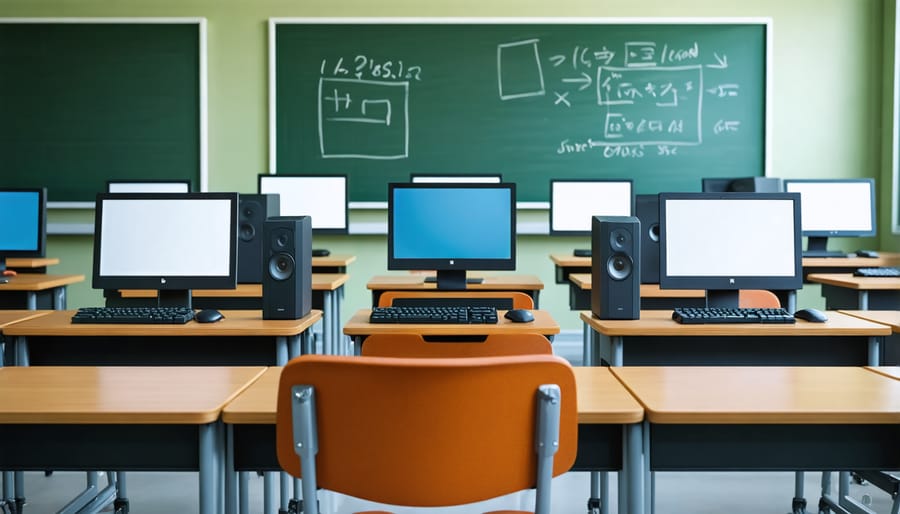
Several high-quality software platforms and learning resources have emerged to support K-12 STEM education, making it easier for educators to implement engaging tech-focused lessons. Scratch, developed by MIT, remains a cornerstone for teaching programming basics to elementary and middle school students through its visual block-based coding interface. For more advanced learners, Python-focused platforms like CodeCombat and Trinket offer interactive tutorials that align with curriculum standards.
Google’s CS First provides free curriculum materials and coding activities suitable for various grade levels, while Microsoft’s MakeCode brings physical computing to life through block-based and text programming. For mathematics, platforms like GeoGebra and Desmos create interactive visualizations that help students understand complex concepts.
Project-based learning resources like Arduino Education and the Raspberry Pi Foundation offer comprehensive lesson plans, complete with hardware suggestions and step-by-step tutorials. These platforms include assessment tools and progress tracking features, making it easier for teachers to monitor student development.
Free resources like Khan Academy and Code.org provide structured courses in programming, mathematics, and sciences, with adaptive learning capabilities that adjust to each student’s pace. Additionally, platforms like Tinkercad and OnShape introduce students to 3D design and engineering concepts through user-friendly interfaces suitable for K-12 learners.
Classroom Management Strategies
Effective equipment management is crucial for successful STEM education. Start by creating a clear inventory system using digital spreadsheets or management apps to track all devices, components, and materials. Label everything clearly with both names and designated storage locations. Consider using color-coding systems to differentiate grade levels or subject areas.
Implement a check-out system for equipment, requiring students to sign out items and record their return. This builds responsibility while maintaining accountability. Store sensitive electronics in anti-static bags and use moisture-absorbing silica gel packets in storage containers to protect against humidity damage.
Organize components in clear, stackable containers with detailed labels listing contents and quantities. Keep frequently used items easily accessible, and store backup equipment separately. Establish a maintenance schedule for regular cleaning and testing of equipment, and document any repairs or replacements needed.
Create student equipment managers for each class period to help maintain organization and assist with distribution and collection. Develop clear protocols for handling equipment and post visual guides near storage areas. Set up a troubleshooting station where minor issues can be addressed without disrupting class flow.
Maintain a budget spreadsheet tracking consumable materials and replacement needs. Schedule regular inventory checks and order supplies well in advance to avoid disruptions to planned activities. Remember to include storage solutions in your budget planning to ensure proper equipment care and longevity.
Engaging Project Ideas for Different Grade Levels
Elementary School Projects
Elementary school students can engage with STEM through exciting hands-on projects that spark curiosity and build foundational skills. Simple circuit activities using batteries, LED lights, and copper tape allow young learners to explore basic electricity concepts while creating light-up greeting cards or paper creatures. Building and testing paper airplanes introduces engineering principles and scientific method as students modify designs to achieve better flight performance.
Nature-based STEM projects, like creating simple weather stations with basic materials, help students understand environmental science while developing measurement and data collection skills. Students can build basic robotics using recycled materials and simple motors, fostering creativity while learning mechanical concepts.
Coding activities using block-based programming platforms introduce computational thinking through game creation and simple animations. Math concepts come alive through hands-on geometry projects like creating 3D shapes with straws and pipe cleaners, or exploring patterns with tangram puzzles.
Garden-based projects integrate biology and engineering as students design and build small greenhouses or water delivery systems. Simple chemistry experiments, like making slime or exploring states of matter with household materials, provide safe and engaging ways to learn about chemical reactions.
These age-appropriate projects emphasize collaboration, problem-solving, and the engineering design process while maintaining a fun, discovery-based learning environment that builds confidence in STEM subjects.
Middle School Challenges
Middle school represents a crucial transition period where students can tackle more complex STEM challenges while building upon their elementary foundations. At this level, students are ready to engage with intermediate programming concepts and electronics projects that foster critical thinking and problem-solving skills.
Popular programming activities include creating simple games using Python or Scratch, developing basic mobile apps, and building interactive storytelling projects. These activities help students understand fundamental coding concepts like loops, conditionals, and variables while maintaining their engagement through creative expression.
In electronics and engineering, middle school students can work on projects such as:
– Building automated greenhouse systems with moisture sensors
– Creating basic robotics projects with Arduino or micro:bit
– Designing and 3D printing simple mechanical devices
– Constructing electronic musical instruments
– Developing weather monitoring stations
Mathematics integration becomes more sophisticated at this level, incorporating concepts like geometry and basic algebra into project designs. Students can apply these skills in real-world contexts, such as calculating solar panel angles for maximum efficiency or determining optimal dimensions for 3D-printed objects.
Group projects are particularly effective at this age, encouraging collaboration while tackling more complex challenges. Teachers can organize STEM fairs or competitions where students showcase their projects, fostering healthy competition and peer learning opportunities. This approach helps students develop both technical skills and essential soft skills like teamwork and presentation abilities.
High School Advanced Applications
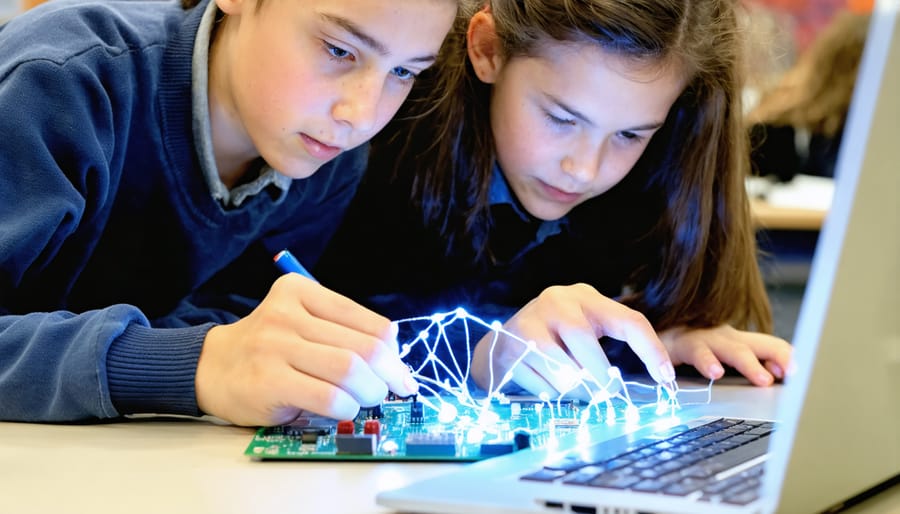
Advanced high school STEM education offers students the opportunity to engage in sophisticated, multi-disciplinary projects that mirror real-world applications. Students can develop complex robotics systems that integrate programming, electronics, and mechanical engineering, while incorporating data analysis and scientific principles. For example, creating an autonomous greenhouse system combines biology concepts with hands-on automation projects, requiring students to understand sensor technology, environmental science, and computer programming.
These projects often involve collaborative problem-solving, with teams working on different aspects of a larger system. Students might develop weather monitoring stations that collect and analyze atmospheric data, requiring knowledge of meteorology, statistics, and computer networking. Another popular project involves designing and building electric vehicles, which combines physics principles with electrical engineering and sustainable energy concepts.
3D printing projects integrate computer-aided design (CAD) with materials science, allowing students to prototype solutions for real community challenges. Advanced programming courses can incorporate artificial intelligence and machine learning concepts, teaching students to develop algorithms for pattern recognition or predictive analysis.
Through these complex projects, students not only master technical skills but also develop critical thinking, project management, and communication abilities essential for future STEM careers. The emphasis on practical application helps students understand how different STEM disciplines interconnect in solving real-world problems.
The integration of single-board computers into K-12 STEM education has revolutionized how students learn and interact with technology. These affordable, versatile devices have transformed traditional classrooms into dynamic learning environments where theory meets hands-on practice. Through practical projects and real-world applications, students develop not just technical skills but also critical thinking, problem-solving abilities, and creativity.
The impact of these devices extends beyond individual classrooms, creating ripple effects throughout entire educational systems. Schools report increased student engagement, improved understanding of complex STEM concepts, and growing interest in technology-related careers. Perhaps most importantly, these tools have helped bridge the digital divide by making technology education more accessible and affordable for schools across different socioeconomic backgrounds.
Looking ahead, the future of single-board computers in STEM education appears increasingly promising. Emerging technologies like artificial intelligence and Internet of Things (IoT) are being integrated into educational curricula, opening new possibilities for student learning. The continued development of user-friendly programming interfaces and educational resources makes these tools even more accessible to younger students and teachers with varying levels of technical expertise.
However, successful implementation requires ongoing commitment from educational institutions, adequate teacher training, and sustained funding for resources and equipment. Schools must continue to adapt their curricula to incorporate these technologies meaningfully while ensuring equal access for all students.
As we move forward, the role of single-board computers in STEM education will likely expand further. These devices will continue to serve as crucial tools for preparing students for future careers in technology and engineering. Their versatility and affordability make them ideal platforms for introducing students to programming, electronics, and computer science concepts at an early age.
The success stories from schools worldwide demonstrate that when properly implemented, these educational tools can inspire the next generation of innovators, engineers, and scientists. As technology continues to evolve, single-board computers will remain vital instruments in fostering STEM literacy and technological competency among K-12 students.