
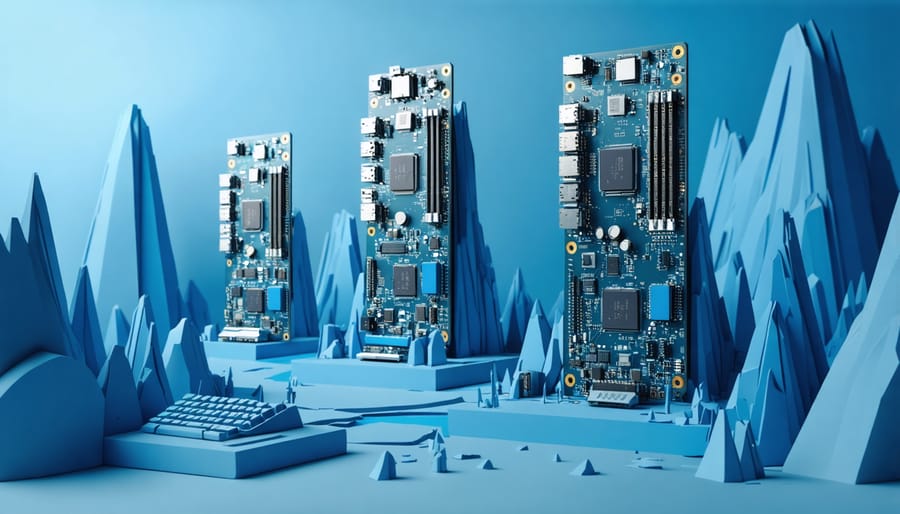
Single-board computers revolutionize edge computing by packing complete system functionality onto credit card-sized boards. From the versatile Raspberry Pi to industrial-grade alternatives like the NVIDIA Jetson Nano, these miniature powerhouses drive innovation across IoT, automation, and single-board computer projects. Their compact form factor, low power consumption, and robust processing capabilities make them ideal for distributed computing tasks, real-time data processing, and autonomous operations at the network edge.
Modern single-board computers now feature multi-core processors, dedicated GPUs, and extensive I/O options, enabling complex applications from AI inference to high-performance sensing. Their standardized interfaces and open-source software support create an accessible ecosystem for developers, while their affordability and scalability make them attractive for both prototyping and production deployments.
Whether implementing smart manufacturing systems, developing edge AI solutions, or building custom automation platforms, single-board computers offer the perfect balance of power, flexibility, and efficiency. Their continued evolution drives the future of edge computing, making sophisticated computing capabilities accessible to innovators worldwide.
Why Single-Board Computers Are Perfect for Edge Computing
Size and Power Efficiency
Small single-board computers are renowned for their compact form factors, typically fitting in the palm of your hand while delivering impressive computing capabilities. Most models measure between 85x56mm (credit card size) and 100x100mm, making them ideal for space-constrained applications and portable projects.
These diminutive devices are remarkably power-efficient, often consuming between 2.5W and 15W under normal operation, depending on the model and workload. For comparison, a typical desktop computer uses 65-250W. This low power consumption makes them perfect for battery-powered applications, remote installations, and environmentally conscious computing solutions.
Many modern single-board computers feature configurable power modes and sleep states, allowing users to further optimize energy usage based on their specific needs. When running lightweight tasks like sensor monitoring or basic automation, power consumption can drop below 1W, enabling extended operation on battery power or solar charging systems.
The combination of small size and power efficiency makes these devices particularly valuable for edge computing, IoT deployments, and mobile applications where space and energy constraints are critical considerations.
Cost-Effective Deployment
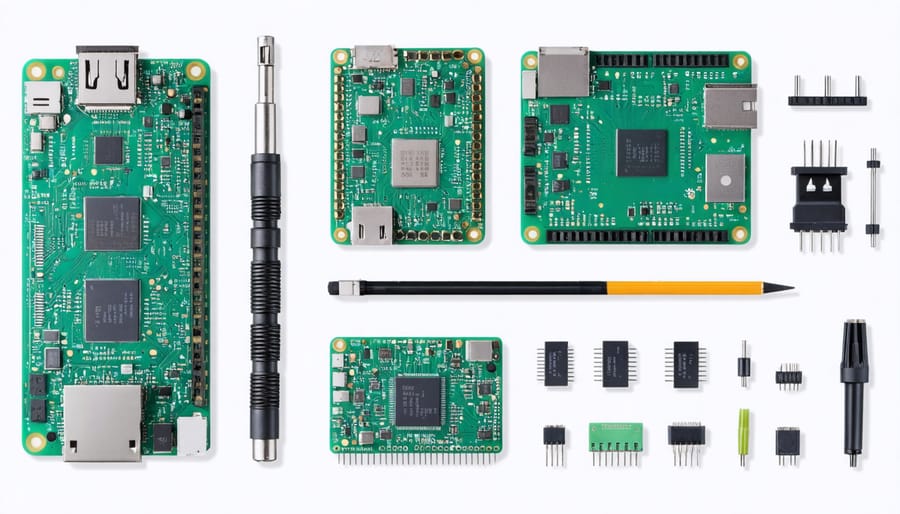
Small single-board computers offer remarkable cost advantages when deploying edge computing solutions at scale. A typical Raspberry Pi costs around $35-$75, while industrial IoT gateways can run into hundreds or thousands of dollars per unit. When implementing hundreds or thousands of edge nodes, these savings become substantial.
Beyond hardware costs, these devices consume minimal power, often running on 5-15 watts compared to traditional servers that use 300-500 watts. This translates to significant operational cost savings in electricity and cooling requirements. Additionally, their compact size reduces infrastructure needs and associated costs for housing and maintaining the hardware.
Maintenance costs are also lower thanks to their simplified architecture and easy replaceability. If a unit fails, it can be quickly swapped out without specialized technical expertise. The standardization of hardware and software configurations across identical units streamlines deployment and updates, reducing IT overhead and support costs.
Organizations can start small and scale gradually, avoiding large upfront investments while maintaining flexibility to expand their edge computing infrastructure as needed. This approach makes edge computing more accessible to businesses of all sizes.
Top Single-Board Computers for Edge Networks
Raspberry Pi Compute Module 4
The Raspberry Pi Compute Module 4 (CM4) represents a significant leap forward in edge computing capabilities, packing the power of a Raspberry Pi 4 into a compact form factor designed for industrial and embedded applications. With options for up to 8GB of RAM and 32GB of eMMC storage, the CM4 offers flexibility for diverse edge computing scenarios.
What sets the CM4 apart is its PCIe interface, enabling high-speed connectivity for specialized hardware accelerators and storage devices. The module supports dual 4K HDMI output, gigabit Ethernet, and optional wireless connectivity, making it ideal for IoT gateways and edge processing units. When implementing the CM4 in production environments, proper Raspberry Pi server mounting solutions are essential for reliable operation.
The CM4 excels in real-time data processing applications, thanks to its 1.5GHz quad-core ARM Cortex-A72 processor. Its compact size (55mm × 40mm) allows for integration into space-constrained environments, while the carrier board ecosystem enables customization for specific use cases. Popular applications include machine learning inference, industrial automation, and smart surveillance systems.
For developers, the CM4 supports major Linux distributions and offers extensive GPIO capabilities, making it a versatile platform for edge computing projects. The availability of both “lite” and wireless versions provides cost-effective options for different deployment scenarios.
NVIDIA Jetson Nano
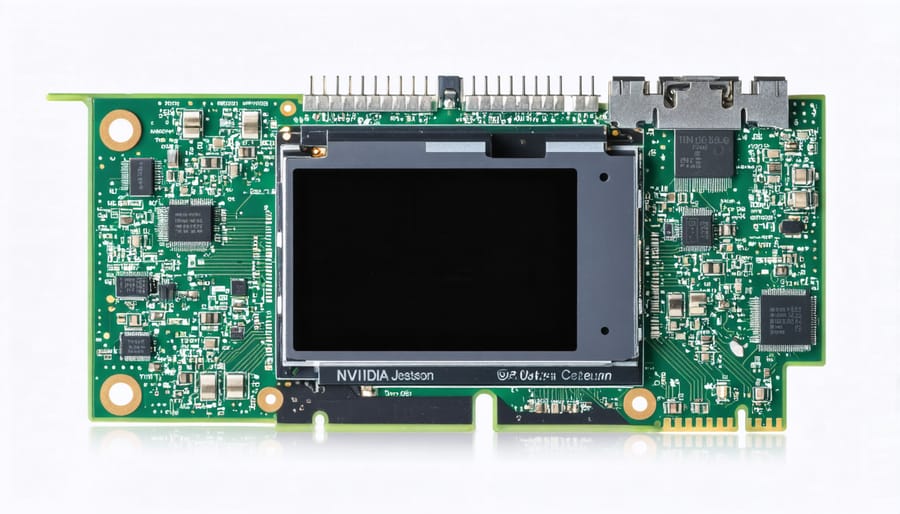
The NVIDIA Jetson Nano represents a significant leap forward in bringing powerful AI processing capabilities to the edge computing environment. This compact powerhouse combines a 128-core Maxwell GPU with a quad-core ARM processor, making it ideal for running multiple neural networks in parallel for applications like image classification, object detection, and segmentation.
What sets the Jetson Nano apart is its ability to process up to 472 GFLOPS while consuming as little as 5 watts of power. This efficiency makes it perfect for AI projects that require real-time processing without constant cloud connectivity. The board comes with 4GB of RAM and supports various storage options through its micro SD card slot.
Developers will appreciate the familiar Ubuntu-based operating system and complete support for popular AI frameworks like TensorFlow, PyTorch, and Caffe. The board features a comprehensive set of I/O options, including USB 3.0 ports, HDMI output, and a 40-pin GPIO header compatible with many Raspberry Pi accessories.
For makers and educators, the Jetson Nano offers an accessible entry point into AI and machine learning development. The included JetPack SDK provides essential tools and optimized libraries, while NVIDIA’s active developer community offers extensive resources and project examples to help newcomers get started with edge AI applications.
UP Squared Pro
The UP Squared Pro stands out as a robust industrial-grade single-board computer designed for demanding edge computing applications. Built around Intel processors, including options for Celeron, Pentium, and Core i3/i5/i7 variants, this board delivers desktop-level performance in a compact form factor.
What sets the UP Squared Pro apart is its industrial-grade components, capable of operating in temperatures ranging from -20°C to 60°C. The board features extensive connectivity options, including dual Gigabit Ethernet ports, multiple USB 3.0 ports, and M.2 slots for expansion. This makes it ideal for industrial automation, AI inference, and IoT gateway applications.
The board supports both Windows 10 and various Linux distributions, offering flexibility for different development environments. With up to 8GB of onboard memory and options for additional storage through eMMC and SATA interfaces, it provides ample resources for complex applications.
Security features include TPM 2.0 support and secure boot capabilities, making it suitable for sensitive industrial deployments. The board’s durable construction and wide input voltage range (12-24V) ensure reliable operation in harsh environments.
While the UP Squared Pro commands a higher price point compared to hobby-focused boards, its industrial certifications, reliability, and processing power make it a compelling choice for professional and industrial applications where downtime isn’t an option.
Setting Up Your Edge Computing Network
Network Architecture Considerations
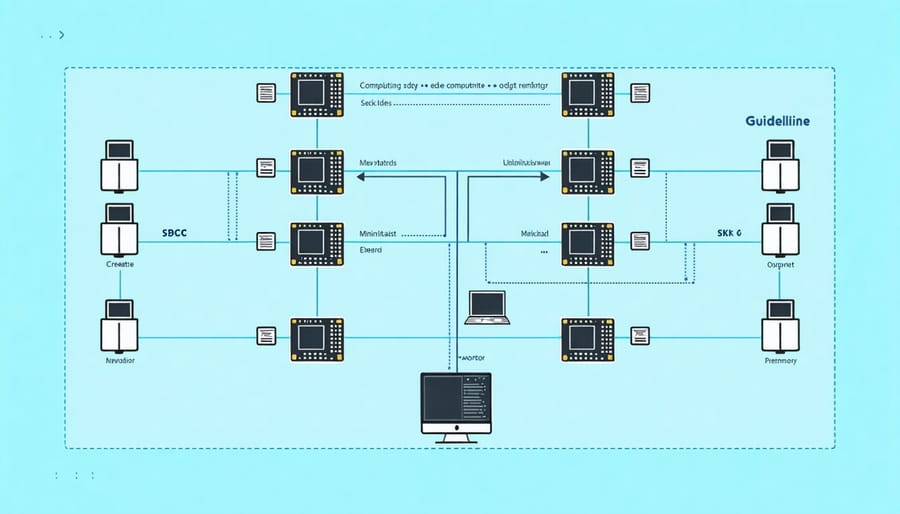
When designing networks for small single-board computers in edge applications, several key considerations can significantly impact performance and reliability. Start by determining whether your setup requires wired Ethernet or Wi-Fi connectivity. While Wi-Fi offers flexibility and easier deployment, Ethernet typically provides more stable connections and higher throughput, which is crucial for data-intensive edge applications.
For Wi-Fi implementations, consider using external antennas to improve signal strength and reliability, especially in industrial environments or locations with significant interference. If using multiple single-board computers, implement proper network segmentation to manage traffic effectively and enhance security.
Power over Ethernet (PoE) can simplify deployment by combining power and network connectivity through a single cable, though you’ll need compatible hardware and PoE HATs for boards like the Raspberry Pi. For remote locations, consider implementing a failover connection using cellular modules or redundant Wi-Fi networks.
Network security should be a top priority. Implement strong authentication mechanisms, use encrypted communications, and regularly update firmware and software. Consider setting up a separate VLAN for your edge devices to isolate them from other network traffic.
Bandwidth management is crucial, especially when dealing with multiple devices. Implement Quality of Service (QoS) policies to prioritize critical traffic and consider local data processing to reduce network load. For applications requiring real-time communication, ensure your network design minimizes latency through proper routing and hardware selection.
Remember to document your network architecture thoroughly and plan for future scaling. This includes maintaining adequate IP address space and ensuring your network infrastructure can handle additional devices as your deployment grows.
Security Implementation
Security is paramount when deploying single-board computers in edge computing environments. These devices often operate in exposed locations and handle sensitive data, making them potential targets for cyber attacks. To ensure robust protection, implementing a multi-layered security approach is essential.
Start by changing default passwords and implementing strong authentication methods. Use complex passwords and, where possible, enable two-factor authentication for all user accounts. SSH key-based authentication is preferable to password-based login for remote access.
Regular system updates are crucial for maintaining security. Configure automatic updates for both the operating system and installed applications, but ensure these updates don’t interfere with critical operations. Create a schedule for checking and applying security patches during maintenance windows.
Network security should include configuring a firewall to restrict unnecessary ports and services. Only expose the minimum required services to the network. Consider implementing a VPN for remote access rather than exposing services directly to the internet. For Wi-Fi-enabled boards, use WPA3 encryption when available and avoid connecting to unsecured networks.
Physical security is often overlooked but equally important. Secure devices in locked enclosures and disable unused physical ports. If possible, implement secure boot mechanisms and encrypt sensitive data storage. For devices in public spaces, consider using tamper-evident seals or sensors.
Monitoring and logging are essential for security maintenance. Set up system logging to track unauthorized access attempts and unusual activities. Configure alerts for suspicious behavior and regularly review security logs. Consider implementing intrusion detection systems appropriate for your device’s resources.
Remember to document all security measures and create recovery procedures for potential security breaches. Regular security audits help ensure continued protection of your edge computing devices.
Real-World Applications and Success Stories
Small single-board computers have revolutionized numerous industries through their versatile real-world implementations. One notable success story comes from a small agricultural startup that deployed Raspberry Pi units across their greenhouse operations. These SBCs monitor temperature, humidity, and soil moisture levels, automatically adjusting environmental controls and reducing water usage by 40%.
In education, a high school in California implemented a network of Rock Pi boards to create an affordable computer lab for teaching programming and robotics. The project cost less than one-third of traditional desktop setups while providing students hands-on experience with Linux and physical computing.
The healthcare sector has also embraced SBCs for edge computing solutions. A rural clinic in India uses Orange Pi boards to process patient data and run AI-powered diagnostic tools locally, overcoming unreliable internet connectivity while maintaining patient privacy. This solution has improved diagnostic accuracy by 25% and reduced wait times significantly.
Smart city initiatives have found success with BeagleBone Black boards for traffic monitoring. A medium-sized city in Europe installed these devices at key intersections, processing traffic camera feeds locally to adjust signal timing in real-time. This implementation reduced average commute times by 12 minutes during peak hours.
Manufacturing facilities have integrated Jetson Nano boards for quality control applications. One electronics manufacturer reports a 60% reduction in defect rates after implementing computer vision systems powered by these SBCs on their production lines.
These success stories demonstrate how single-board computers are making sophisticated computing solutions accessible and practical across various sectors. Their low cost, energy efficiency, and powerful capabilities continue to enable innovations that were previously cost-prohibitive or technically challenging to implement.
Single-board computers have revolutionized the way we approach computing projects, making technology more accessible and affordable than ever before. From educational initiatives to IoT deployments and industrial automation, these compact powerhouses continue to drive innovation across multiple sectors. As technology advances, we can expect to see even more powerful and energy-efficient boards, enhanced connectivity options, and improved AI capabilities. The growing ecosystem of accessories, software support, and community-driven development ensures that single-board computers will remain at the forefront of DIY electronics and edge computing solutions. Whether you’re a hobbyist, educator, or professional developer, these versatile platforms offer endless possibilities for creating, learning, and solving real-world problems.