


Master C programming for microcontrollers by focusing on three critical elements: precise hardware abstraction layers, efficient interrupt handling, and strategic memory management. Modern embedded systems demand developers who can balance performance with energy consumption, especially when working with power-efficient microcontrollers. Whether you’re building smart sensors, IoT devices, or industrial automation systems, understanding C’s direct hardware control capabilities transforms theoretical knowledge into practical, optimized solutions.
The key to successful microcontroller programming lies in mastering C’s low-level features while maintaining code portability and readability. By leveraging compiler-specific optimizations, implementing robust error handling mechanisms, and utilizing hardware-specific features through well-structured driver code, developers can create reliable, efficient embedded systems that maximize battery life and processing capabilities.
This comprehensive guide explores essential C programming techniques for microcontrollers, from basic GPIO manipulation to advanced power management strategies, helping you write code that’s both efficient and maintainable. We’ll focus on real-world applications, common pitfalls to avoid, and industry-proven optimization techniques that ensure your embedded projects succeed.
Understanding Power Consumption in Microcontrollers
Active vs Sleep Power States
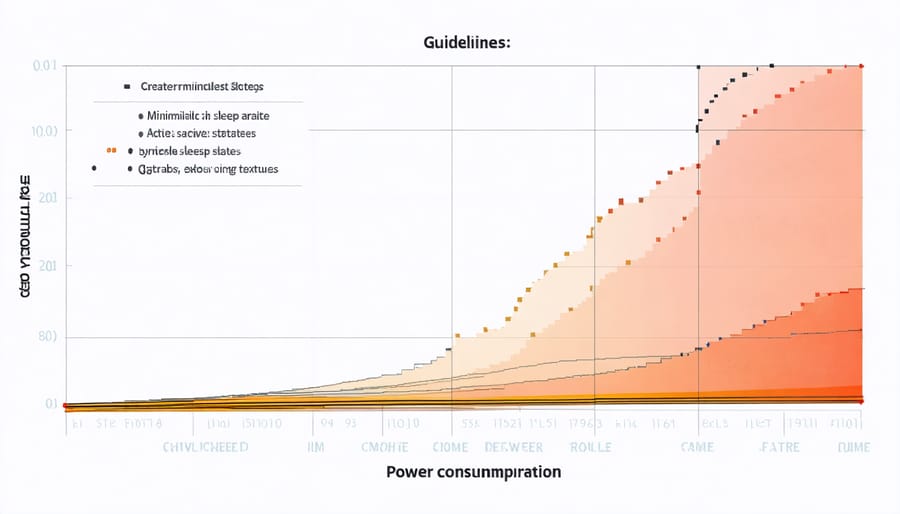
Microcontrollers typically operate in different power states to optimize energy consumption. The two primary states are Active mode and Sleep mode. In Active mode, the microcontroller runs at full capacity, executing instructions and performing operations with all peripherals enabled. This state consumes the most power but provides maximum performance.
Sleep mode, also known as low-power mode, significantly reduces energy consumption by shutting down unnecessary components. Most modern microcontrollers offer multiple sleep levels, from light sleep (where only certain peripherals are disabled) to deep sleep (where almost everything except essential wake-up sources is powered down).
For battery-powered applications, implementing effective power state management is crucial. You can transition between states using specific C commands. For example, many microcontrollers use special register bits or built-in functions to enter sleep mode:
“`c
// Enter sleep mode
SLEEP_MODE_PWR_DOWN; // Set sleep mode
sleep_enable(); // Enable sleep
sleep_cpu(); // Enter sleep mode
“`
Wake-up sources, such as interrupts or timer events, can bring the microcontroller back to active mode. Properly balancing these states can extend battery life from hours to months or even years.
Common Power Drains
When developing battery-powered microcontroller applications, several components can significantly impact power consumption. The microcontroller’s CPU typically consumes the most power during active operation, especially at higher clock frequencies. Peripheral devices like ADCs, DACs, and communication interfaces (UART, SPI, I2C) also contribute substantially to power drain when active.
LED indicators and display modules are often overlooked power consumers but can significantly impact battery life when left continuously active. Similarly, sensors and external components connected to the microcontroller can draw considerable power, particularly those requiring constant polling or continuous operation.
Radio frequency (RF) modules, such as WiFi or Bluetooth transceivers, are among the most power-hungry components, especially during data transmission. The voltage regulators and power management circuitry themselves introduce some power losses through conversion inefficiency.
Memory operations, particularly writing to flash memory, can cause temporary spikes in power consumption. Even unused GPIO pins left floating without proper configuration can lead to unnecessary power drain through leakage currents.
Understanding these common power drains is crucial for implementing effective power management strategies in your microcontroller applications.
Essential C Programming Techniques for Power Optimization
Sleep Mode Implementation
Implementing sleep modes in microcontrollers is crucial for power-efficient designs. Here’s a basic example of how to set up a sleep mode using C:
“`c
#include
#include
void enterSleepMode() {
set_sleep_mode(SLEEP_MODE_PWR_DOWN);
sleep_enable();
sleep_mode();
sleep_disable();
}
“`
For more advanced applications, consider implementing a secure sleep mode implementation that includes proper wake-up conditions and interrupt handling:
“`c
ISR(WDT_vect) {
// Watchdog Timer interrupt handler
wdt_disable();
}
void configureWatchdog() { Managing peripherals effectively is crucial for optimizing microcontroller performance and power consumption. By implementing efficient peripheral communications and smart power gating techniques, you can significantly extend battery life while maintaining functionality. Start by implementing a peripheral management strategy that enables or disables modules based on their usage. Use the microcontroller’s power management registers to control individual peripheral blocks. For example: “`c Efficient clock management is crucial for optimizing microcontroller performance and power consumption. Most modern microcontrollers support dynamic clock scaling, allowing you to adjust the system clock frequency during runtime based on processing requirements. To implement dynamic clock scaling, first identify your microcontroller’s clock configuration registers. In C, you can modify these registers using bit manipulation operations. Here’s a common approach: “`c Interrupt-driven programming is a crucial technique for creating power-efficient microcontroller applications. Instead of continuously polling for events, your microcontroller can enter a low-power sleep mode and wake up only when specific events occur, significantly reducing power consumption. To implement interrupts in C, you’ll need to define interrupt service routines (ISRs) that handle specific events. Here’s how it works: when an interrupt occurs, the microcontroller pauses its main program execution, saves its current state, and jumps to the corresponding ISR. After handling the interrupt, the processor returns to its previous task. A typical interrupt implementation might look like this: “`c To use interrupts effectively, follow these best practices: When developing battery-powered devices, combine interrupt-driven programming with sleep modes. For example: “`c This approach allows your microcontroller to wake up only when necessary, such as when handling button presses, sensor readings, or timer events, making your application much more power-efficient than polling-based solutions. When programming microcontrollers, optimizing your C code is crucial for achieving better performance and reducing power consumption. Start by using bitwise operations instead of arithmetic operations wherever possible, as they require fewer CPU cycles. For example, use bit shifting (<<, >>) instead of multiplication or division by powers of 2. Avoid floating-point operations when integers will suffice, as floating-point calculations are computationally expensive on most microcontrollers. If you must use floating-point math, consider fixed-point arithmetic as an alternative. Loop optimization is another essential technique. Unroll small loops to reduce branch penalties and decrease execution time. However, be mindful of code size when unrolling loops, as memory is often limited on microcontrollers. Use loop counters that decrement to zero instead of incrementing to a target value, as most processors can check for zero more efficiently. Variable optimization plays a crucial role in code efficiency. Declare frequently used variables as register variables using the ‘register’ keyword. Keep critical variables in lower memory addresses when possible, and use the appropriate data types to minimize memory usage. For instance, use uint8_t instead of int when you only need to store small positive numbers. Interrupt handling should be kept as brief as possible. Move lengthy calculations outside the interrupt service routines (ISRs) and use flags to signal the main loop to process the data. This approach helps maintain system responsiveness and reduces the risk of missing subsequent interrupts. Lastly, enable compiler optimization flags appropriate for your application. Common flags like -O2 or -Os can significantly improve code efficiency, but always test thoroughly as aggressive optimization might affect debugging capabilities. Testing and verifying your power optimization efforts is crucial for developing efficient microcontroller applications. Using a digital multimeter with current measurement capabilities is the most basic approach, allowing you to monitor the average current draw of your system. For more detailed analysis, consider using specialized tools like power analyzers or oscilloscopes with current probes. To implement basic power monitoring in your code, you can create simple timing functions that track how long your system spends in different power states. Here’s a practical example: “`c void track_power_state(bool is_active) { if (is_active) { For a real-world power optimization example, monitoring tools can help you identify unexpected wake-up events or peripheral activities that might be preventing your device from maintaining low-power states. Consider these key metrics when testing: Document your baseline measurements before optimization and compare them with results after implementing power-saving techniques. This helps validate your optimization strategies and ensures your device meets its power consumption targets. Remember to test under various environmental conditions and usage scenarios to get a complete picture of your system’s power profile. Optimizing microcontroller power consumption through effective C programming is crucial for creating efficient embedded systems. By implementing sleep modes, peripheral management, and proper interrupt handling, you can significantly extend battery life while maintaining functionality. Remember to always initialize unused pins, leverage compiler optimization flags, and regularly profile your code for power consumption. Testing under various conditions and documenting power states will help ensure consistent performance. Keep your code modular and well-commented for easier maintenance and future optimizations. Whether you’re developing IoT devices or battery-powered sensors, these practices will help you create more energy-efficient solutions. Start with the basics of power management and gradually incorporate advanced techniques as you become more comfortable with your microcontroller’s capabilities.
WDTCSR = (1<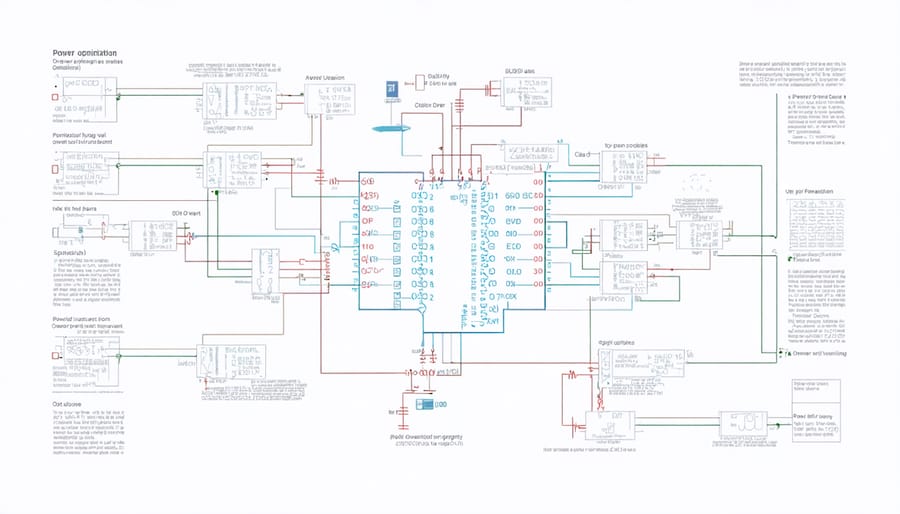
Peripheral Management
// Disable ADC peripheral
ADCSRA &= ~(1 << ADEN);
// Enable UART peripheral
UCSR0B |= (1 << TXEN0) | (1 << RXEN0);
```
Create wrapper functions for peripheral initialization and shutdown to ensure consistent control across your application. This approach helps prevent accidental peripheral activation and makes your code more maintainable:
```c
void initPeripheral(uint8_t peripheral) {
switch(peripheral) {
case PERIPH_ADC:
// ADC initialization code
break;
case PERIPH_UART:
// UART initialization code
break;
}
}
```
Remember to implement proper state management for peripherals that share resources. Use flags or state variables to track active peripherals and prevent conflicts. This systematic approach ensures smooth operation while minimizing power consumption through effective peripheral management.
Clock Management
void set_clock_frequency(uint8_t frequency_mode) {
// Disable interrupts during clock switching
cli();
// Update clock prescaler registers
CLKPR = (1 << CLKPCE);
CLKPR = frequency_mode;
// Re-enable interrupts
sei();
}
```
For battery-powered applications, consider implementing different power modes. During periods of low activity, switch to a lower clock frequency to conserve energy. When high performance is needed, temporarily increase the clock speed:
```c
// Example power modes
#define POWER_SAVE_MODE 0x04 // 1/16 clock speed
#define NORMAL_MODE 0x01 // 1/2 clock speed
#define PERFORMANCE_MODE 0x00 // Full clock speed
```
Remember to properly manage peripheral clocks as well. Many microcontrollers allow individual peripheral clock gating, which can significantly reduce power consumption. Always validate timing-critical operations after clock changes to ensure system stability.
Advanced Power Optimization Strategies
Interrupt-Driven Programming
ISR(TIMER0_OVF_vect) {
// Handle timer overflow interrupt
LED_toggle();
}
“`
– Keep ISRs short and fast
– Avoid complex calculations inside ISRs
– Use volatile keywords for variables shared between ISRs and main code
– Enable only the interrupts you need
– Properly configure interrupt priorities
void sleep_mode_setup() {
set_sleep_mode(SLEEP_MODE_PWR_DOWN);
sleep_enable();
sleep_mode();
}
“`Code Optimization Techniques

Testing and Monitoring Power Consumption
uint32_t sleep_time = 0;
uint32_t active_time = 0;
static uint32_t last_tick = 0;
uint32_t current_tick = get_system_ticks();
uint32_t elapsed = current_tick – last_tick;
active_time += elapsed;
} else {
sleep_time += elapsed;
}
last_tick = current_tick;
}
“`
– Average current consumption
– Peak current draw
– Time spent in each power mode
– Wake-up response time
– Battery life under typical usage