


Securing IoT devices has become critically essential as cyber threats evolve and target connected systems with increasing sophistication. From smart home security cameras to industrial sensors, IoT devices create vulnerable entry points that hackers actively exploit. Recent statistics show that IoT-related security breaches increased by 48% in 2022 alone, with over 2.5 billion records compromised through unsecured connected devices.
Modern IoT security systems integrate multiple layers of protection, including encrypted communications, secure boot mechanisms, and real-time threat detection. These systems protect not just individual devices but entire networks of interconnected sensors, controllers, and data collection points. By implementing robust security measures at both hardware and software levels, organizations can safeguard sensitive data, maintain operational integrity, and prevent unauthorized access to their IoT infrastructure.
The integration of artificial intelligence and machine learning has revolutionized IoT security, enabling systems to detect and respond to threats automatically. These advanced solutions continuously monitor network traffic patterns, device behavior, and system access attempts, providing proactive protection against emerging security risks while maintaining the seamless functionality that makes IoT systems valuable in the first place.
Why Microcontrollers are Your First Line of Defense
Hardware Security Features
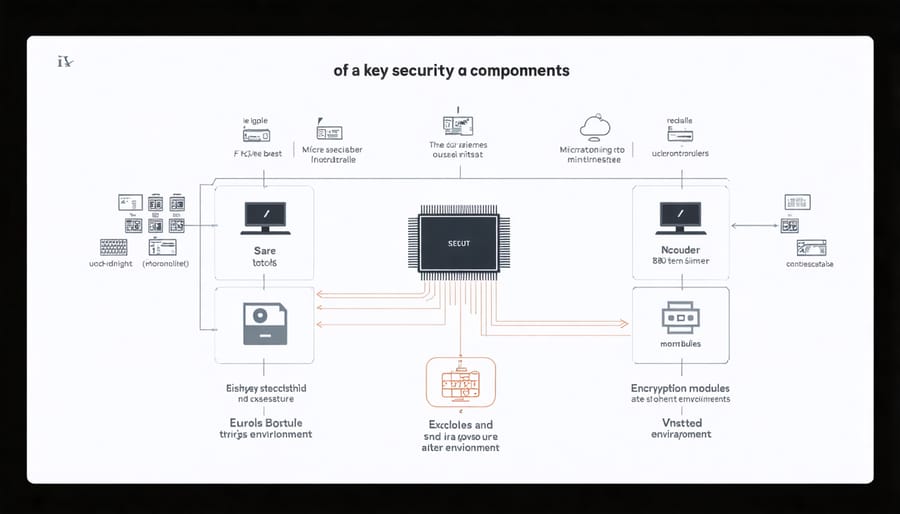
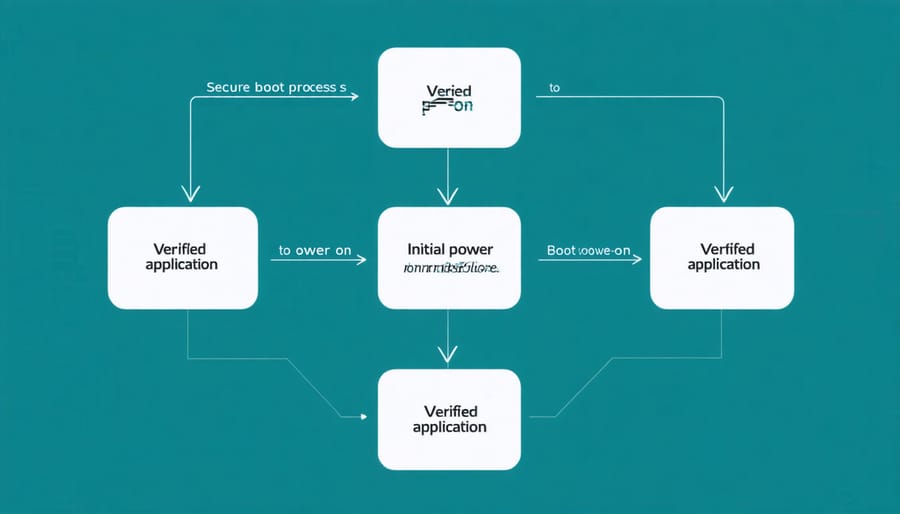
Modern IoT devices come equipped with several hardware-level security features that form the foundation of a robust security system. Secure boot ensures that only authenticated firmware can run on the device by verifying digital signatures during the boot process, preventing malicious code from taking control of the system at startup.
Trusted Execution Environments (TEE) provide an isolated processing environment for sensitive operations, keeping critical data and processes separate from the main operating system. This isolation helps protect encryption keys, authentication credentials, and other sensitive information from potential attacks.
Hardware security modules (HSM) serve as secure vaults for cryptographic keys and certificates, offering tamper-resistant storage and processing capabilities. Many IoT devices also incorporate secure elements that provide hardware-based random number generation and cryptographic acceleration, essential for maintaining strong encryption without compromising performance.
Physical security features like tamper-detection circuits and protected memory regions add another layer of defense, alerting system administrators to potential physical breaches and preventing unauthorized access to sensitive data stored in the device’s memory.
Resource Efficiency
Utilizing resource-efficient microcontrollers in IoT security systems offers a significant advantage through their minimal attack surface. Unlike complex operating systems with numerous potential entry points for attackers, microcontrollers run simplified firmware that performs specific tasks with limited functionality. This focused approach naturally reduces vulnerabilities and makes it harder for malicious actors to exploit the system.
The streamlined nature of microcontroller architecture means fewer running processes, minimal background services, and limited network protocols. Each of these characteristics contributes to a smaller attack surface, making it easier to implement and maintain robust security measures. Additionally, microcontrollers typically don’t require frequent updates or patches, reducing the risk of security gaps that often occur during software updates.
These devices excel at performing their designated tasks while maintaining tight resource constraints, which inherently limits the potential for security breaches. Their simplified architecture also makes it easier to implement security features like secure boot, encrypted storage, and hardware-based authentication without compromising performance or power efficiency.
Essential Security Implementation Steps
Secure Boot Configuration
Secure boot configuration is a critical first line of defense for your IoT device. Let’s walk through the essential steps to implement this security measure:
1. Enable Hardware Security Module (HSM):
– Access your device’s firmware configuration
– Locate the HSM settings in the security menu
– Enable the HSM module
– Save the configuration
2. Generate and Store Keys:
– Create a unique public/private key pair
– Store the private key in the HSM
– Back up keys in a secure location
– Configure key rotation policies
3. Set up Boot Verification:
– Enable signature verification
– Configure the boot sequence checker
– Set up integrity measurement
– Establish a root of trust
4. Configure Boot Parameters:
– Set boot timeout values
– Define retry attempts
– Establish fallback options
– Lock boot configuration
5. Test the Configuration:
– Perform a test boot sequence
– Verify signature checking
– Try booting with invalid signatures
– Document successful verification
Remember to maintain detailed documentation of your secure boot configuration and regularly update your security certificates. It’s recommended to test the setup in a controlled environment before deploying to production. For additional security, consider implementing multi-factor authentication and encrypted storage alongside secure boot.
Always keep your boot loader and firmware updated to patch any known vulnerabilities. Regular security audits of your boot configuration will help maintain the integrity of your IoT device’s security posture.
Encryption Implementation
When implementing encryption in IoT security systems, it’s crucial to follow industry best practices to ensure robust protection. Start by selecting appropriate secure communication protocols and encryption algorithms. For most IoT applications, AES-256 encryption provides a solid foundation, offering an excellent balance between security and performance.
Key management is essential – implement proper key generation using cryptographically secure random number generators (CSPRNG) and ensure regular key rotation. Store encryption keys securely using hardware security modules (HSM) or trusted platform modules (TPM) when available on your microcontroller.
For data in transit, use TLS 1.3 or higher for all network communications. Enable perfect forward secrecy (PFS) to protect past communications even if keys are compromised. Remember to validate certificates and implement certificate pinning to prevent man-in-the-middle attacks.
For data at rest, implement full-disk encryption or file-level encryption depending on your storage requirements. Use authenticated encryption modes like AES-GCM to ensure both confidentiality and integrity of stored data.
Always keep encryption libraries updated and avoid implementing custom encryption algorithms. Regular security audits and penetration testing can help identify potential vulnerabilities in your encryption implementation.
Access Control Methods
Access control is a fundamental pillar of IoT security, requiring both robust authentication and precise authorization mechanisms. For authentication, implement multi-factor authentication (MFA) whenever possible, combining something the user knows (password), has (security token), and is (biometric data). Use strong password policies that enforce complexity requirements and regular updates.
For authorization, adopt the principle of least privilege, granting users and devices only the permissions they absolutely need to function. Role-based access control (RBAC) is particularly effective in IoT environments, allowing you to group permissions into roles and assign them to users or devices accordingly.
Consider implementing OAuth 2.0 or JSON Web Tokens (JWT) for secure API authentication between devices and services. These protocols provide secure delegation of access rights without exposing sensitive credentials.
Device authentication is equally crucial. Each IoT device should have a unique identifier and credentials stored securely, preferably using hardware security modules (HSM) or trusted platform modules (TPM) when available. Certificate-based authentication using X.509 certificates provides an additional layer of security for device-to-device and device-to-cloud communication.
Regular access reviews and automated monitoring help identify and revoke unnecessary or potentially compromised access rights. Maintain detailed logs of all authentication attempts and access changes for security auditing and compliance purposes.
Real-world Security Practices
Smart Home Security Example
Let’s explore a practical implementation of an IoT security system in a smart home setting. Consider a multi-layered security setup that combines motion sensors, smart cameras, and door/window sensors, all managed through a Raspberry Pi hub. This system can be integrated with intelligent IoT applications for enhanced threat detection and automated responses.
The core components include:
– Raspberry Pi 4 as the central controller
– PIR motion sensors at key entry points
– ESP32-CAM modules for video surveillance
– Reed switches for doors and windows
– encrypted WiFi network for device communication
The system operates by continuously monitoring sensor inputs and triggering appropriate responses. When motion is detected, the cameras activate and begin recording. Door sensors alert the system of any unauthorized entry attempts. All data is processed locally on the Raspberry Pi before being securely transmitted to a cloud backup.
For authentication, each device uses unique certificates and implements TLS 1.3 for communication. The system also includes:
– Two-factor authentication for remote access
– Regular automated security updates
– Local data storage with encrypted backups
– SMS and email notifications for security events
This setup provides comprehensive security while maintaining user privacy and system reliability. The modular nature allows for easy expansion and customization based on specific needs.

Industrial IoT Case Study
A leading automotive parts manufacturer recently implemented a comprehensive IoT security system across their production facilities, offering valuable insights into industrial-scale IoT protection. The facility, which produces critical vehicle components, integrated over 1,000 IoT sensors and devices to monitor production processes, equipment health, and environmental conditions.
The security implementation involved a multi-layered approach. At the device level, each sensor was equipped with hardware-based encryption modules and secure boot mechanisms. The network architecture utilized segmentation, creating isolated zones for different production areas, with dedicated firewalls controlling traffic between zones.
A particularly effective measure was the implementation of a Zero Trust security model, requiring authentication for every device and user interaction. The system employed certificate-based authentication, with each device requiring valid certificates for network access. Real-time monitoring tools were deployed to detect unusual patterns or potential security breaches.
The results were significant: security incidents decreased by 85% within six months, while maintaining 99.9% production uptime. The system successfully blocked several attempted cyber attacks, including a ransomware attempt that targeted their legacy systems.
Key lessons learned included the importance of regular security audits, maintaining up-to-date firmware across all devices, and training staff on security protocols. The case demonstrates how robust IoT security can be achieved without compromising operational efficiency in industrial settings.
Common Pitfalls and Solutions
Security Vulnerabilities to Watch For
When building IoT security systems, several critical vulnerabilities require your attention. Default passwords and weak authentication are among the most common security holes – always change default credentials and implement strong password policies, preferably with two-factor authentication.
Unencrypted data transmission is another major concern. Without proper encryption, attackers can easily intercept sensitive information flowing between your devices. Use industry-standard encryption protocols like TLS/SSL for all data transmissions, and ensure your certificates are up to date.
Outdated firmware presents a significant risk, as manufacturers regularly patch security flaws. Set up automatic updates when possible, and regularly check for new firmware releases for your IoT devices. However, always test updates in a controlled environment first to avoid system disruptions.
Insecure network configurations often leave systems vulnerable. Implement network segmentation to isolate IoT devices from critical systems, and use strong Wi-Fi security protocols (WPA3 when available). Additionally, disable unnecessary ports and services that could serve as entry points for attackers.
Physical security vulnerabilities are frequently overlooked. Protect device ports and interfaces from unauthorized access, and consider implementing tamper detection mechanisms. For outdoor installations, use weather-resistant enclosures with proper security features to prevent both environmental damage and physical tampering.
Regular security audits and penetration testing can help identify these vulnerabilities before malicious actors exploit them. Document all findings and maintain an up-to-date security policy that addresses each potential threat.
Best Practices and Updates
Regular security updates are crucial for maintaining robust IoT security systems. Establish a routine update schedule for all firmware and software components, including both the main controller and connected sensors. When optimizing microcontroller performance, always prioritize security patches alongside performance improvements.
Implement these essential best practices:
– Enable automatic updates whenever possible
– Maintain detailed logs of all system changes
– Regularly audit device access permissions
– Use strong, unique passwords for each device
– Implement two-factor authentication where available
– Keep backups of critical system configurations
Create a security response plan that outlines steps to take during potential breaches. This should include emergency contact information, backup procedures, and recovery protocols. Test your security measures regularly through penetration testing and vulnerability assessments.
For network security, segment IoT devices onto separate networks, use encrypted communications, and regularly update firewall rules. Consider implementing a zero-trust security model where every device must verify its identity before accessing network resources.
Monitor system behavior patterns to detect anomalies quickly. Set up alerts for unusual activities like unexpected login attempts or data transfers. Remember that security is an ongoing process, not a one-time setup.
In today’s interconnected world, securing IoT devices is not just an option – it’s a necessity. Throughout this guide, we’ve explored the fundamental aspects of IoT security systems, from encryption protocols and authentication methods to network segmentation and regular firmware updates. Remember that implementing these security measures isn’t a one-time task but rather an ongoing process that requires constant vigilance and updates. By following the best practices outlined above, you can significantly reduce the risk of security breaches in your IoT projects. Start with the basics, layer your security measures, and always stay informed about emerging threats and countermeasures. Your IoT devices are only as secure as your weakest security link, so make sure to implement a comprehensive security strategy that protects both your devices and your data.