

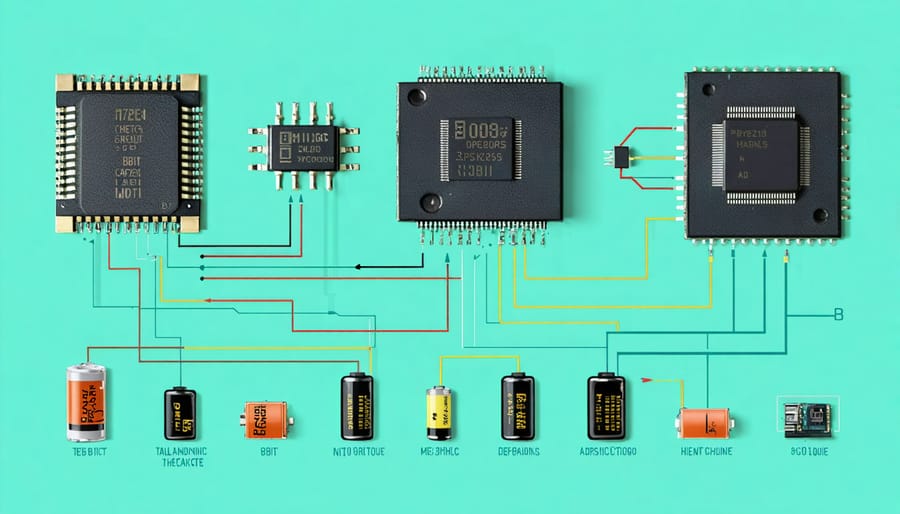
8-bit microcontrollers remain the unsung heroes of modern electronics, powering everything from smart home devices to industrial automation systems. Despite their modest processing capabilities, these compact powerhouses offer an ideal balance of performance, power efficiency, and cost-effectiveness that makes them indispensable in today’s embedded systems landscape.
Born in the 1970s with the Intel 8008, 8-bit MCUs have evolved into sophisticated devices that can handle complex tasks while consuming minimal power – often operating for years on a single battery. Their simplicity makes them perfect for applications where reliability and energy efficiency matter more than raw computing power. From temperature sensors and LED controllers to automotive systems and consumer electronics, 8-bit microcontrollers continue to drive innovation in ways that their more powerful 32-bit cousins cannot match.
At their core, these devices excel in basic input/output operations, analog-to-digital conversion, and simple data processing tasks. Their limited instruction set and straightforward architecture make them easier to program and debug, making them an excellent starting point for engineers and hobbyists alike. While the tech world races toward ever-more-powerful processors, 8-bit microcontrollers remind us that sometimes, less is more.
Why 8-Bit MCUs Excel at Power Management
Simplified Architecture Benefits
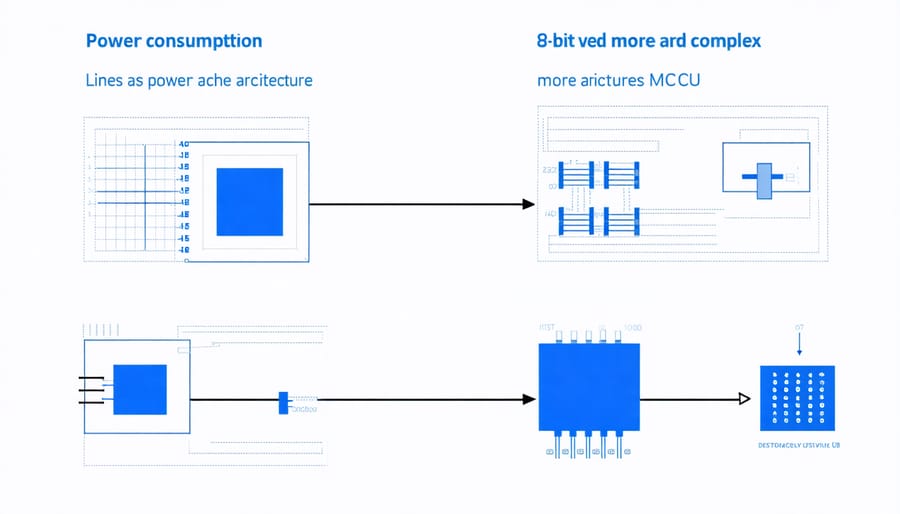
One of the most significant advantages of 8-bit microcontrollers lies in their simplified architecture. With fewer transistors and simpler designs compared to their 16-bit or 32-bit counterparts, these microcontrollers naturally consume less power. The streamlined architecture typically contains only essential components like the CPU, memory, and basic peripherals, reducing the overall power draw during operation.
This simplicity translates directly into energy efficiency. When an 8-bit microcontroller executes instructions, it processes smaller chunks of data, requiring less power for each operation. The reduced transistor count means fewer switching operations occur with each clock cycle, resulting in lower dynamic power consumption.
For battery-powered projects, this power efficiency can mean the difference between changing batteries weekly versus monthly. The simple architecture also generates less heat during operation, further improving energy efficiency and reducing the need for cooling solutions. This makes 8-bit microcontrollers particularly attractive for IoT devices, sensors, and other applications where power consumption is a critical factor.
Sleep Mode Capabilities
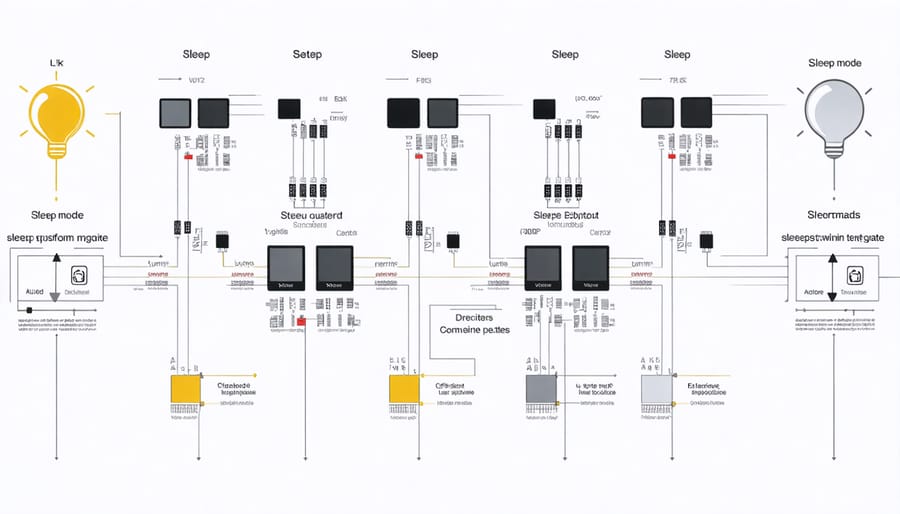
Modern 8-bit microcontrollers come equipped with sophisticated sleep modes that significantly reduce power consumption while maintaining essential functionality. These devices typically offer multiple power-saving states, from light sleep modes that only disable certain peripherals to deep sleep modes that shut down almost everything except for critical wake-up sources.
The most common sleep modes include Idle, which stops the CPU while keeping peripherals running; Power-down, which only maintains minimal circuitry for wake-up events; and Standby, which preserves RAM contents while consuming minimal power. Many microcontrollers can wake up from these states in just a few microseconds, making them ideal for battery-powered applications.
Wake-up sources often include external interrupts, timer overflows, or communication events. Some advanced models even feature brown-out detection and watch-dog timers that remain active during sleep, ensuring system reliability. By properly implementing these sleep modes, developers can extend battery life from months to years, making 8-bit microcontrollers perfect for IoT sensors, remote monitoring systems, and other low-power applications.
Power Optimization Techniques
Clock Management Strategies
Clock management is a crucial aspect of optimizing 8-bit microcontroller performance and power consumption. Most modern 8-bit microcontrollers offer multiple oscillator options, including internal RC oscillators, external crystal oscillators, and ceramic resonators. Each option presents different trade-offs between accuracy, power consumption, and cost.
The internal RC oscillator provides a convenient, built-in clock source that requires no external components, making it ideal for simple applications where precise timing isn’t critical. While it consumes less power and reduces board space, its frequency can vary with temperature and voltage fluctuations.
External crystal oscillators offer superior frequency stability and accuracy, essential for applications requiring precise timing or communication protocols. However, they increase both component cost and power consumption. Ceramic resonators present a middle-ground solution, offering better stability than RC oscillators at a lower cost than crystals.
Many 8-bit microcontrollers feature dynamic clock switching capabilities, allowing programs to adjust clock speeds on the fly. This feature enables power-efficient operation by running at higher speeds only when necessary and switching to lower frequencies during idle periods. Some advanced devices also include clock divider options and sleep modes, which can further reduce power consumption.
When selecting a clock source, consider your application’s specific requirements for timing accuracy, power efficiency, and cost constraints. For battery-powered devices, implementing proper clock management strategies can significantly extend operational life while maintaining required performance levels.
Peripheral Power Control
One of the key advantages of modern 8-bit microcontrollers is their sophisticated peripheral power management capabilities. These devices allow developers to precisely control which on-chip components are active at any given time, significantly reducing power consumption in battery-operated devices.
Most 8-bit microcontrollers feature multiple power modes, from full-operation to deep sleep states. Peripherals like ADCs, timers, and 1-wire communication protocols can be individually enabled or disabled, allowing for fine-grained power optimization. When a peripheral isn’t needed, it can be completely shut down to eliminate both dynamic and static power consumption.
Smart peripheral management involves understanding your application’s timing requirements and implementing appropriate sleep strategies. For example, you might configure your microcontroller to wake up briefly to take sensor readings, process the data, and then return to sleep mode. Many modern 8-bit MCUs also feature autonomous peripheral operation, allowing certain functions to continue while the core processor remains in a low-power state.
The key to effective power management lies in proper initialization of peripheral modules and careful monitoring of their power states through dedicated control registers. This approach can extend battery life from months to years in many applications.
Code Optimization for Power Efficiency
Optimizing code for power efficiency is crucial when working with 8-bit microcontrollers, especially in battery-powered applications. The key lies in understanding how different programming practices affect power consumption. Start by implementing sleep modes whenever the microcontroller isn’t actively processing data. This can be achieved through proper microcontroller communication setup and careful timing management.
Use interrupt-driven programming instead of polling loops, as this allows the microcontroller to remain in sleep mode until specific events occur. When writing loops, avoid unnecessary iterations and optimize your algorithms to minimize processing time. Consider using lookup tables instead of complex calculations when possible, as they typically consume less power.
Peripheral management is equally important. Only enable the peripherals you need and disable them when not in use. This includes ADCs, timers, and communication interfaces. Choose the appropriate clock frequency for your application – running at higher speeds than necessary wastes power.
For variables, use the smallest data type that can handle your needs. An 8-bit integer uses less memory and requires fewer clock cycles to process than a 16-bit integer. Additionally, minimize the use of floating-point operations, as they’re particularly power-hungry on 8-bit architectures.
Remember to initialize unused I/O pins as outputs or inputs with pull-up resistors to prevent floating inputs that can cause unnecessary current draw.
Real-World Applications
Battery-Powered Devices
8-bit microcontrollers are particularly well-suited for battery-powered devices due to their low power consumption and efficient operation. In IoT applications, these microcontrollers excel at managing sensor data while maintaining extended battery life through various power-saving features. Common implementations include smart home sensors, wearable devices, and environmental monitoring systems.
The success of Arduino-based sensor implementations has demonstrated how 8-bit microcontrollers can effectively balance performance with power efficiency. By utilizing sleep modes and wake-up triggers, these devices can operate for months or even years on a single battery charge.
Key strategies for maximizing battery life include implementing deep sleep modes, optimizing sensor polling intervals, and using interrupt-driven operations instead of continuous polling. Many modern 8-bit microcontrollers feature specialized power management units that can automatically switch between different power states based on system requirements.
For portable devices, developers often combine these microcontrollers with energy harvesting technologies, such as solar panels or piezoelectric generators, to extend operational life further. This approach is particularly effective in remote sensing applications where battery replacement is impractical or costly.
Popular applications include wireless sensor nodes, smart meters, and portable medical devices, where reliable long-term operation is crucial. The simplicity and power efficiency of 8-bit architectures make them an ideal choice for these battery-dependent scenarios.
Energy Harvesting Systems
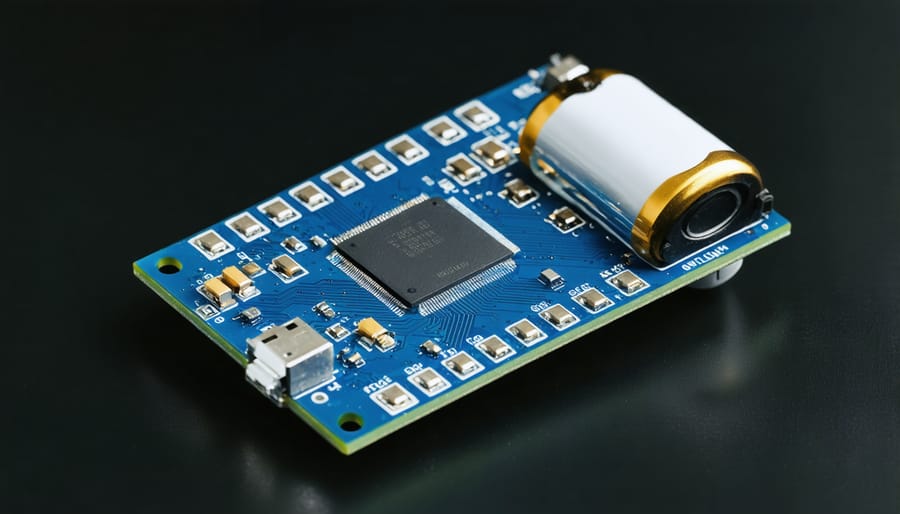
Energy harvesting systems represent an exciting frontier for 8-bit microcontrollers, enabling self-powered applications that can operate indefinitely without battery replacements. These systems typically combine low-power 8-bit MCUs with energy-harvesting technologies like solar panels, piezoelectric elements, or thermal generators to create sustainable electronic devices.
The low power consumption characteristics of 8-bit microcontrollers make them ideal for energy harvesting applications. Many modern 8-bit MCUs can operate at incredibly low power levels, sometimes requiring just a few microamps in sleep mode, which allows them to function effectively with the limited power available from harvesting sources.
Common applications include wireless sensor nodes for environmental monitoring, smart agriculture systems, and building automation devices. For instance, a solar-powered temperature sensor using an 8-bit MCU might wake up periodically to take measurements, transmit data wirelessly, and return to sleep mode, all while maintaining operation through harvested solar energy.
To implement effective energy harvesting systems, developers typically employ specialized techniques such as:
– Dynamic voltage scaling to adjust power consumption based on available energy
– Efficient sleep mode management
– Optimized wake-up schedules
– Power-aware programming techniques
The combination of energy harvesting with 8-bit microcontrollers has opened up new possibilities for long-term deployable sensors and IoT devices, particularly in remote or hard-to-access locations where battery replacement would be impractical or impossible.
Practical Implementation Tips
Development Tools and Debugging
Developing power-efficient applications for 8-bit microcontrollers requires specialized tools and debugging techniques. Modern integrated development environments (IDEs) like MPLAB X and Arduino IDE offer built-in power profiling tools that help developers monitor and optimize power consumption in real-time.
For accurate power measurements, developers often use digital multimeters and specialized power analyzers. These tools can measure current draw at different operating modes, helping identify power-hungry sections of code. Many development boards now include on-board power monitoring capabilities, making it easier to track consumption during development.
When debugging communication interfaces and other power-critical features, logic analyzers prove invaluable. They allow developers to observe signal timing and identify unnecessary wake-up events that might drain the battery.
Software simulators help developers test power optimization strategies before deploying to hardware. These tools can estimate power consumption based on CPU cycles, peripheral usage, and sleep modes. Popular debugging tools like ICD4 and PICKIT also support power debugging features, allowing developers to pause execution and analyze power states.
For battery-powered applications, power logging tools help track long-term consumption patterns. This data helps developers fine-tune sleep modes and optimize duty cycles for maximum battery life.
Common Pitfalls to Avoid
When implementing power management in 8-bit microcontroller projects, several common mistakes can significantly impact battery life and system performance. One frequent error is leaving unused peripherals enabled, which continuously draws power even when not in use. Always remember to disable features like ADC, timers, or communication interfaces when they’re not actively needed.
Another pitfall is improper use of sleep modes. Many developers either forget to implement sleep modes entirely or choose inappropriate sleep modes for their application. Selecting a too-deep sleep state might save power but could cause the system to miss critical events or take too long to wake up.
Inefficient code structure can also lead to power waste. Busy-wait loops and polling mechanisms keep the processor active unnecessarily, consuming more power than interrupt-driven approaches. Additionally, failing to properly configure internal pull-up or pull-down resistors can create unwanted current paths and increase power consumption.
Watch out for voltage regulator inefficiencies. Using an oversized or inefficient regulator for your application can waste significant power through heat dissipation. Similarly, running the microcontroller at a higher frequency than necessary increases power consumption without providing any benefit to the application.
Lastly, neglecting to implement brownout detection can lead to unstable operation as battery voltage drops, potentially corrupting data or causing system malfunction. Always include proper voltage monitoring and graceful shutdown procedures in battery-powered applications.
Despite the rise of more powerful microcontrollers, 8-bit MCUs continue to play a vital role in modern electronics, especially in power-sensitive applications. Their simplicity, low power consumption, and cost-effectiveness make them the ideal choice for battery-operated devices, IoT sensors, and wearable technology. The minimal power requirements of 8-bit microcontrollers, combined with their ability to handle basic tasks efficiently, ensure their relevance in an increasingly power-conscious world. For developers and manufacturers focused on creating energy-efficient devices, these versatile chips remain an essential tool in their design arsenal. As the Internet of Things expands and the demand for long-lasting, battery-powered devices grows, the importance of 8-bit MCUs in power-sensitive applications will likely continue well into the future.