

Raspberry Pi straddles the line between a traditional embedded system and a general-purpose computer, offering unique advantages for embedded applications. While not a pure embedded system in the classical sense, the Pi can function effectively as one when properly configured and deployed. Its combination of GPIO pins, compact form factor, and robust Linux-based operating system makes it ideal for embedded projects ranging from industrial automation to IoT devices. Unlike traditional microcontrollers, Raspberry Pi provides the flexibility to handle complex tasks while maintaining the essential characteristics of embedded systems: dedicated functionality, real-time processing capabilities, and direct hardware interaction. Whether you’re building a smart home controller, industrial sensor network, or autonomous robot, understanding the Pi’s embedded system capabilities unlocks its full potential for creating sophisticated, single-purpose devices that operate reliably in the field.
What Makes a System ‘Embedded’?
Core Characteristics of Embedded Systems
Embedded systems share several fundamental characteristics that distinguish them from general-purpose computers. First, they are designed to perform specific, dedicated functions rather than serving multiple purposes. These systems typically operate with limited resources, including processing power, memory, and energy consumption, optimized for their intended use.
Real-time operation is another crucial feature, where the system must respond to inputs within strict timing constraints. This is particularly important in applications like industrial controls or automotive systems. Embedded systems also usually operate without direct human intervention, running continuously and autonomously once deployed.
Reliability and durability are paramount, as these systems often need to function in challenging environments with minimal maintenance. They commonly integrate both hardware and software components into a single unit, with the software permanently stored in ROM or flash memory.
Most embedded systems also feature specialized input/output interfaces designed for their specific applications, rather than general-purpose peripherals like keyboards or monitors. This focused design approach ensures efficiency and reliability in their intended use cases.
Common Misconceptions
There are several misconceptions about Raspberry Pi and embedded systems that need clarification. First, many believe that all embedded systems must be single-purpose devices, but modern embedded systems like the Raspberry Pi can handle multiple tasks efficiently. Another common myth is that embedded systems must be tiny and have minimal processing power. While size can be a factor, the definition focuses more on the system’s purpose and integration than its physical dimensions. Some also incorrectly assume that Raspberry Pi can’t be an embedded system because it runs a full operating system. In reality, many embedded systems use operating systems, and the Pi can be configured to run embedded Linux distributions specifically designed for embedded applications. Lastly, the misconception that embedded systems must be permanently fixed or soldered is outdated, as many modern embedded solutions, including the Pi, offer flexibility in deployment and configuration.
How Raspberry Pi Fits the Embedded System Definition
Hardware Perspective
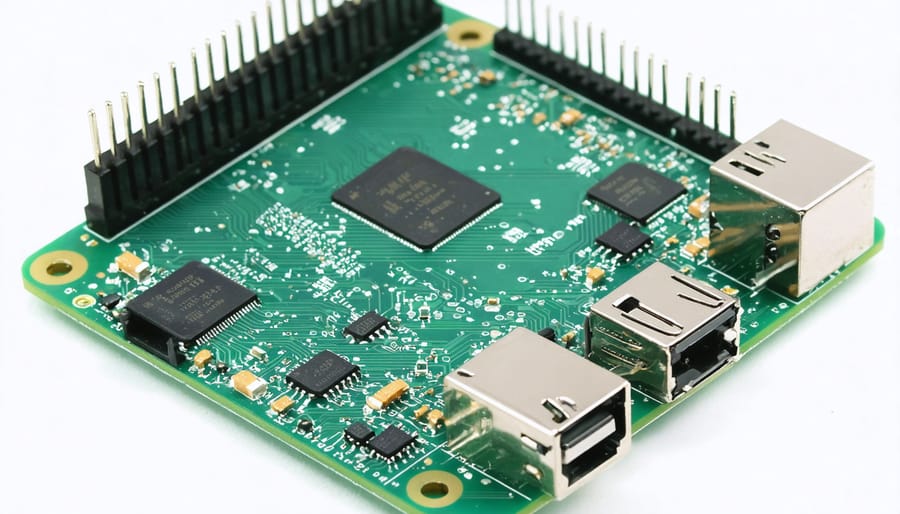
From a hardware perspective, the Raspberry Pi combines elements of both traditional embedded systems and general-purpose computers. At its core lies a powerful System-on-Chip (SoC) that integrates the CPU, GPU, and various peripherals onto a single chip, much like typical embedded systems. The Broadcom BCM2711 processor (in Pi 4) provides robust computing capabilities while maintaining relatively low power consumption.
What makes the Pi particularly suitable for embedded applications is its extensive GPIO (General Purpose Input/Output) pins. These pins allow direct interaction with sensors, actuators, and other electronic components – a fundamental requirement for embedded systems. The Pi also features dedicated interfaces for I2C, SPI, and UART communications, enabling seamless integration with various hardware peripherals.
Unlike traditional embedded systems, however, the Raspberry Pi includes components typically found in personal computers, such as USB ports, HDMI output, and ethernet connectivity. This hybrid nature makes it more versatile than conventional embedded systems but potentially more power-hungry and physically larger.
The board’s hardware architecture supports real-time processing capabilities, though not as deterministic as specialized microcontrollers. For most embedded applications, this trade-off is acceptable, especially considering the Pi’s processing power and extensive peripheral support. The availability of different models (from Pi Zero to Pi 4) allows developers to choose the right balance of power, size, and capabilities for their specific embedded projects.
Software Integration
The software integration capabilities of the Raspberry Pi make it particularly well-suited for embedded applications. At its core, Raspberry Pi OS provides a robust foundation for developing embedded solutions, offering a Linux-based environment that’s both lightweight and versatile.
Developers can leverage various programming languages like Python, C++, and Node.js to create embedded applications, with extensive libraries and frameworks available for hardware interaction. The GPIO (General Purpose Input/Output) pins are easily accessible through software libraries, allowing direct control of sensors, actuators, and other peripheral devices.
What sets Raspberry Pi apart in embedded development is its support for real-time applications through tools like pigpio and WiringPi. These libraries enable precise timing control and interrupt handling, essential features for embedded systems. Additionally, the platform supports multiple communication protocols including I2C, SPI, and UART, making it easy to interface with various hardware components.
The system’s package management capabilities allow seamless integration of additional software components, while its built-in networking stack facilitates IoT applications. Developers can also create custom boot configurations and automated startup processes, enabling the Pi to function as a headless embedded device.
Development Environments for Embedded Raspberry Pi Projects
Popular IDEs and Tools
Several powerful development tools and IDEs make Raspberry Pi embedded system development both efficient and enjoyable. For beginners, the Thonny IDE comes pre-installed with Raspberry Pi OS and offers an excellent starting point for Python programming. Its simple interface and built-in debugger make it perfect for learning embedded development basics.
For more advanced developers, Visual Studio Code (VS Code) has become increasingly popular due to its extensive extension support and remote development capabilities. After proper development environment setup, VS Code allows you to write and debug code directly on your Pi from your main computer.
Other notable tools include:
– Arduino IDE: Useful when combining Arduino components with Raspberry Pi
– Eclipse with C/C++ plugins: Ideal for complex embedded applications
– GPIO Zero: A beginner-friendly Python library for hardware control
– WiringPi: A GPIO interface library for C programming
For circuit design and prototyping, Fritzing helps visualize connections between the Pi and other components. Meanwhile, PuTTY and VNC Viewer enable remote access to your Pi during development, which is essential for headless setups.
Remember to install the appropriate SDKs and compilers based on your chosen programming language. Python developers typically use pip for package management, while C/C++ developers might prefer the GNU toolchain.

Best Practices for Embedded Development
When developing embedded applications on Raspberry Pi, following established best practices ensures reliable and efficient systems. Start by mastering embedded C programming, as it’s fundamental for hardware interaction and optimization.
Always implement proper error handling and recovery mechanisms to ensure your system can gracefully handle unexpected situations. Memory management is crucial – avoid memory leaks and optimize resource usage, especially in long-running applications.
Use version control systems like Git to track changes and collaborate effectively. Document your code thoroughly, including hardware connections and dependencies, making it easier for maintenance and troubleshooting.
For real-time applications, consider using a real-time operating system (RTOS) or implementing precise timing mechanisms. Test your system extensively under various conditions, including power fluctuations and hardware stress scenarios.
Keep your system’s boot time minimal by optimizing startup processes and removing unnecessary services. Implement proper shutdown procedures to prevent data corruption and hardware damage.
Security should never be an afterthought – implement authentication mechanisms, secure communication protocols, and regular security updates. Finally, monitor system performance using tools like htop or custom logging solutions to identify and resolve bottlenecks early in development.
The Raspberry Pi’s role as an embedded system opens up countless possibilities for developers, makers, and innovators. Its versatility allows it to serve as both a traditional computer and a specialized embedded device, making it an invaluable tool for learning, prototyping, and developing real-world solutions. This flexibility, combined with its low cost and robust community support, positions the Raspberry Pi as an ideal platform for exploring embedded systems development.
As we look to the future, the Raspberry Pi’s importance in embedded applications will likely continue to grow. From IoT devices and home automation systems to industrial control units and educational tools, the potential applications are virtually limitless. The skills developed working with Raspberry Pi as an embedded system translate directly to professional embedded development, making it an excellent stepping stone for aspiring developers.
Whether you’re a hobbyist working on a weekend project or a professional developer prototyping the next breakthrough device, understanding and utilizing the Raspberry Pi’s embedded capabilities can significantly enhance your development journey. Its accessibility, powerful features, and growing ecosystem make it an invaluable tool in the world of embedded systems.