
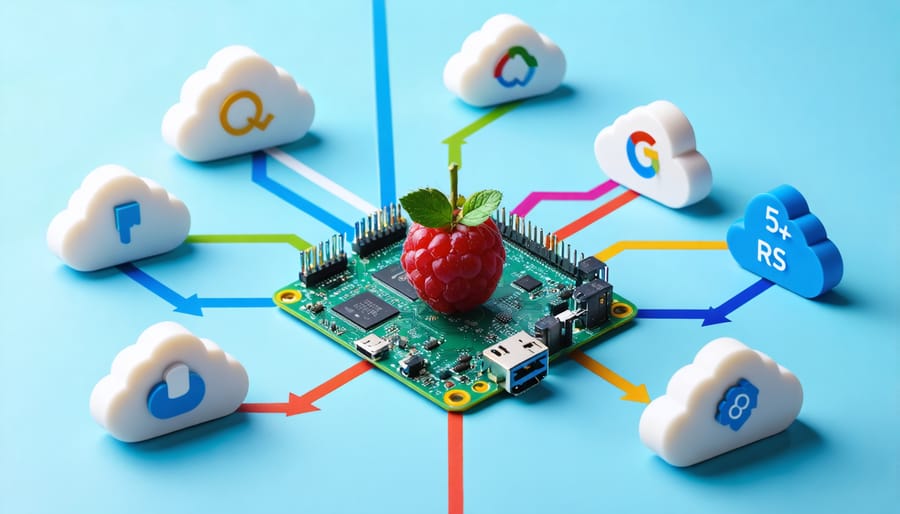
Transform your Raspberry Pi projects into scalable cloud solutions by mastering the 5 Rs of cloud migration – Rehost, Refactor, Revise, Rebuild, and Replace. These proven migration strategies, specifically optimized for cloud integration for Raspberry Pi, enable seamless transition from local computing to powerful cloud infrastructures. Whether you’re managing sensor data, running edge computing applications, or scaling IoT networks, understanding these migration pathways unlocks new possibilities for your Pi-powered innovations. This guide breaks down each migration strategy with practical implementations, hardware considerations, and real-world use cases, ensuring successful cloud adoption while maximizing your Raspberry Pi’s capabilities. Learn how to evaluate your current setup, choose the right migration approach, and implement cloud solutions that enhance performance without compromising reliability or security.
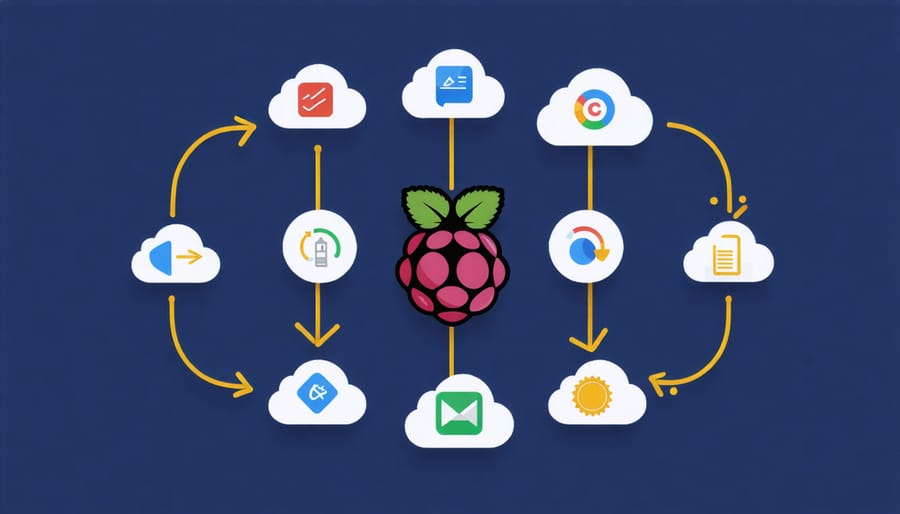
Rehost: Setting Up Your Pi as a Cloud Gateway
Hardware Requirements and Preparations
Before embarking on your cloud migration journey with Raspberry Pi, ensure you have all the necessary components ready. You’ll need a Raspberry Pi 4 Model B (8GB RAM recommended) or newer for optimal performance. A high-quality microSD card (32GB minimum) with Class 10 speed rating is essential for smooth operation. Don’t forget a reliable power supply (5.1V/3A USB-C) and a suitable case for proper ventilation.
For network connectivity, use a stable Ethernet connection or a dual-band Wi-Fi adapter. External storage solutions like SSDs or HDDs might be necessary depending on your migration scope. Keep a backup keyboard, mouse, and HDMI display handy for troubleshooting.
Software requirements include the latest Raspberry Pi OS (64-bit recommended), SSH enabled for remote access, and updated system packages. Install essential migration tools like rsync, rclone, or AWS CLI depending on your target cloud platform.
Before starting, create a complete backup of your existing system and document your current configuration. This preparation ensures a smoother migration process and provides a fallback option if needed.
Configuration Steps for Cloud Connection
Before diving into cloud migration, it’s essential to establish a secure and stable connection between your Raspberry Pi and your chosen cloud platform. Start by ensuring your Pi has a reliable internet connection through either Ethernet or Wi-Fi. For optimal performance, a wired connection is recommended, especially when handling large data transfers.
Next, install and configure the necessary cloud SDK (Software Development Kit) for your chosen platform. Most major cloud providers offer dedicated command-line tools that can be easily installed via the terminal. For example, if you’re using AWS, you’ll need to install the AWS CLI and configure it with your access credentials.
Set up authentication by generating API keys or access tokens from your cloud provider’s console. Store these credentials securely on your Raspberry Pi, preferably using environment variables or encrypted configuration files. Never hard-code sensitive information directly into your scripts.
Test your connection by running basic commands like listing cloud resources or performing a simple file upload. Monitor network latency and bandwidth to ensure optimal performance. If you’re experiencing slow connections, consider implementing retry mechanisms and connection pooling in your applications.
Finally, implement proper logging and monitoring to track cloud connectivity status. This helps identify potential issues early and maintains a reliable connection for your migration tasks. Remember to regularly update your cloud SDK and security certificates to maintain secure communication channels.
Refactor: Optimizing Your Pi for Cloud Services
Cloud-Native Adaptations
Cloud-native adaptations involve modifying your applications to take full advantage of cloud platform features. For Raspberry Pi projects, this means optimizing your code and services to work efficiently with cloud resources while considering the Pi’s unique capabilities.
Key modifications include implementing auto-scaling features to handle varying workloads, adopting containerization for better resource management, and utilizing cloud-native storage solutions. For instance, you might configure your Pi-based weather station to automatically scale its data collection frequency based on weather conditions while efficiently managing cloud storage costs.
Another important aspect is breaking down monolithic applications into microservices. This approach allows for better resource utilization and easier updates. For example, separating your Pi’s sensor data collection, processing, and visualization components into distinct services makes them independently scalable and maintainable.
Remember to implement proper monitoring and logging solutions native to your chosen cloud platform. This helps track performance metrics and quickly identify potential issues in your Pi projects. Additionally, consider implementing cloud-native security features like identity management and encryption to protect your data and services.

Performance Tuning Tips
To maximize your Raspberry Pi’s cloud performance after migration, focus on these essential optimization techniques. Start by implementing proper caching strategies – configure your application to cache frequently accessed data locally, reducing unnecessary cloud requests. Monitor your bandwidth usage carefully and optimize data transfer patterns to prevent bottlenecks, especially important given the Pi’s network limitations.
Consider implementing compression for data transfers, which can significantly reduce latency and improve overall responsiveness. When setting up your cloud services, choose regions closest to your physical location to minimize latency. Don’t forget to review and adjust your cloud storage security considerations without compromising performance.
For database operations, implement connection pooling and optimize your queries. Use appropriate instance sizes for your workloads – while it’s tempting to over-provision, right-sizing your cloud resources can save costs without sacrificing performance. Regular monitoring and logging are crucial; set up alerts for performance metrics and consistently review your application’s behavior to identify potential optimization opportunities.
Remember to leverage cloud-native features like auto-scaling and load balancing when applicable, but always consider the Raspberry Pi’s processing capabilities when implementing these features.
Revise: Implementing Multi-Cloud Architecture
Load Balancing Across Clouds
Load balancing across different cloud platforms is a crucial strategy for optimizing Raspberry Pi-based cloud deployments. When implementing a multi-cloud infrastructure setup, distributing workloads effectively ensures better performance, reliability, and cost efficiency.
For Raspberry Pi projects, you can implement load balancing using popular tools like HAProxy or Nginx. These solutions work well with Pi’s limited resources while providing robust distribution capabilities. Start by setting up a primary load balancer on one Pi device, which will act as the traffic controller for your cloud services.
Configure your load balancer to distribute requests based on factors like server response time, current load, or geographic location. This approach helps prevent any single cloud service from becoming overwhelmed while maintaining optimal performance for your applications.
Remember to implement health checks and failover mechanisms to ensure seamless operation if one cloud service experiences issues. For Raspberry Pi deployments, consider using lightweight monitoring tools like Prometheus to track performance metrics and adjust load distribution accordingly.
Failover Configuration
Failover configuration is a critical component of cloud migration, especially when working with Raspberry Pi deployments. By implementing redundancy and failover mechanisms, you can ensure your applications remain available even if primary systems encounter issues. Start by setting up multiple Raspberry Pi instances across different availability zones, configuring them to mirror your primary setup. Use tools like HAProxy or Keepalived to manage load balancing and automatic failover between your Pi nodes.
For database redundancy, implement master-slave replication or consider using distributed databases like MongoDB or Redis that support automatic failover. Set up monitoring systems to track the health of your services and configure automatic switchover triggers based on predefined thresholds. Remember to regularly test your failover mechanisms through controlled failure scenarios to ensure they work as expected.
To minimize downtime during failover events, implement health checks and automated recovery procedures. Configure your DNS settings to support quick redirections, and use floating IP addresses to make the transition seamless for end-users. Document all failover procedures and maintain up-to-date recovery playbooks for your team.
Rebuild: Creating Cloud-Native Pi Applications
Container Implementation
Implementing containers for your Raspberry Pi cloud migration requires careful planning and setup to ensure smooth containerized cloud deployment. Start by installing Docker on your Raspberry Pi, which provides a lightweight and efficient containerization platform suitable for ARM architecture. Create Dockerfiles that define your application’s environment, dependencies, and runtime configurations.
Next, package your applications into container images, ensuring they’re optimized for Raspberry Pi’s resources. Consider using multi-stage builds to reduce image size and improve deployment efficiency. Implement container orchestration tools like Docker Compose for simple deployments or Kubernetes for more complex scenarios.
Test your containers locally before pushing them to a container registry. For Raspberry Pi deployments, use ARM-compatible base images and verify resource utilization. Set up monitoring and logging solutions to track container performance and health.
Remember to implement container security best practices, including regular image scanning, implementing least privilege access, and keeping base images updated. Configure network policies and storage volumes appropriate for your Pi’s capabilities and your application’s requirements.
Microservices Architecture
Microservices architecture represents a transformative approach to cloud migration, particularly beneficial for Raspberry Pi projects. Instead of running your entire application as a single unit, you can break it down into smaller, independent services that communicate through APIs. This approach offers exceptional flexibility and scalability in cloud environments.
For Raspberry Pi enthusiasts, implementing microservices means you can distribute your application’s workload across multiple Pi devices or cloud instances. Each service can be developed, deployed, and scaled independently, making it easier to manage resources and maintain performance. For example, you might have separate services for data collection, processing, and visualization running on different Pi nodes or cloud containers.
The key advantages include improved fault isolation (if one service fails, others continue running), easier updates (services can be updated individually without disrupting the entire system), and better resource utilization. When migrating Pi projects to the cloud, microservices architecture allows you to start small and gradually move components as needed, providing a more manageable transition path.
Consider starting with critical services that would benefit most from cloud scalability, such as data processing or storage-intensive components, while keeping real-time sensor interactions local to your Pi devices.
Replace: Alternative Cloud Solutions
Service Comparison Matrix
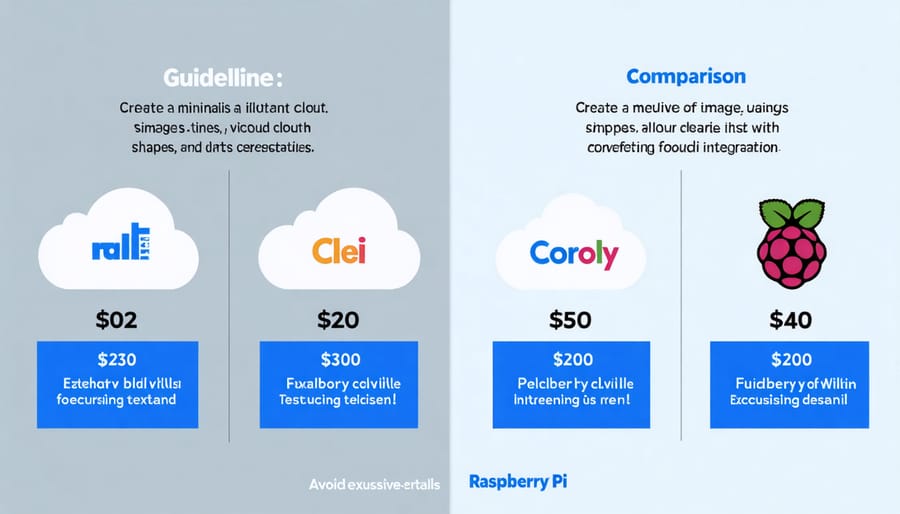
When comparing cloud service options for Raspberry Pi projects, a clear matrix helps identify the best migration path. AWS offers robust IoT integration and extensive documentation, making it particularly suitable for sensor-based projects. Google Cloud Platform excels in machine learning applications, ideal for Pi-based AI experiments, while Azure provides strong .NET support and IoT Hub services that work well with Pi deployments.
For compute services, AWS Lambda and Azure Functions both support Python, making them compatible with most Pi applications. Storage options vary, with AWS S3 offering the most cost-effective solution for Pi-generated data, while Google Cloud Storage provides better integration with TensorFlow projects.
Consider these key factors when choosing:
– Cost per GB of storage
– API request pricing
– Available runtime environments
– IoT service integration
– Regional availability
– Authentication methods
– Native backup solutions
Each platform offers free tiers suitable for testing migrations before committing to a specific service.
Cost-Benefit Analysis
When evaluating cloud migration options for your Raspberry Pi projects, conducting a thorough cost-benefit analysis is crucial. Each migration strategy comes with its own financial implications. Rehosting typically offers the quickest return on investment due to its straightforward nature, but may not optimize cloud resources effectively. Refactoring, while requiring higher initial investment in development time and resources, often leads to better long-term cost efficiency through improved cloud resource utilization.
Consider factors like ongoing maintenance costs, cloud service provider fees, and potential savings from reduced hardware requirements. For Raspberry Pi implementations, particularly evaluate data transfer costs and storage requirements. Replatforming often presents a middle-ground solution, balancing immediate costs with future benefits. Remember to factor in indirect costs such as training, potential downtime during migration, and the learning curve for your team.
Keep track of both quantitative metrics (like hosting costs and performance improvements) and qualitative benefits (such as improved reliability and scalability) to make informed decisions.
Implementing the 5 Rs of cloud migration for your Raspberry Pi projects doesn’t have to be overwhelming. By understanding and applying Rehosting, Refactoring, Revising, Rebuilding, and Replacing strategically, you can modernize your applications while maximizing your Pi’s capabilities. Start with a thorough assessment of your current setup, then create a step-by-step migration plan that aligns with your project goals. Remember to prioritize security, test thoroughly at each stage, and maintain backups of your data. Whether you’re moving a simple web server or a complex IoT application, these migration strategies provide a solid framework for success. Ready to begin? Start with a small, non-critical application to build confidence, then gradually tackle more complex migrations as you gain experience.