
G-computation stands as a powerful statistical framework revolutionizing how we analyze complex data systems, particularly in embedded computing platforms like the Compute Module 3+. This mathematical approach enables developers to estimate causal effects in situations where traditional statistical methods fall short, particularly when dealing with time-varying confounders and dynamic treatment regimes. By modeling the relationship between variables through a series of nested counterfactuals, g-computation provides a robust method for understanding cause-and-effect relationships in complex systems, making it invaluable for both research and practical applications. Unlike conventional statistical approaches, g-computation offers the unique advantage of handling longitudinal data while accounting for both direct and indirect effects, making it particularly useful in scenarios where multiple interacting variables influence system behavior over time.
Understanding G Computation in CM3+
Core Components
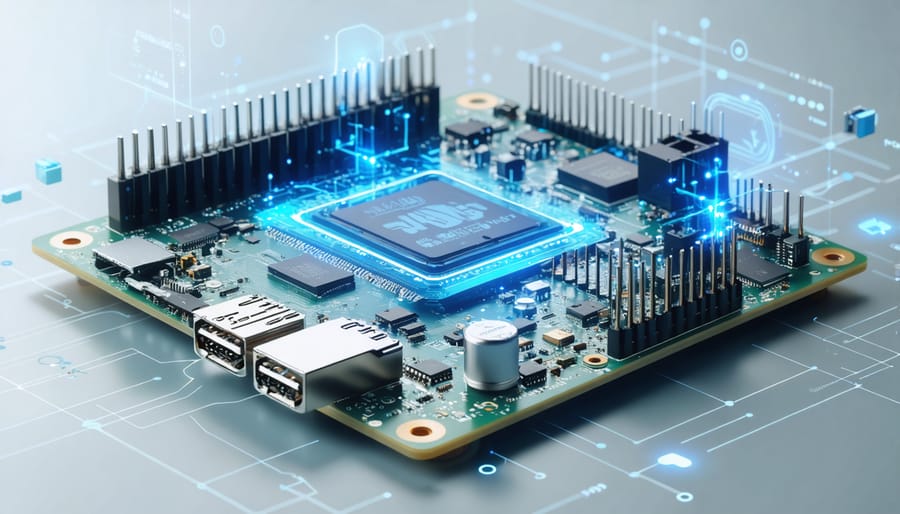
G computation relies on several key hardware components working in harmony to deliver efficient processing capabilities. At its core, you’ll find the Graphics Processing Unit (GPU), which handles the bulk of graphical computations and parallel processing tasks. This works alongside the Central Processing Unit (CPU), which manages general-purpose calculations and system coordination.
The memory subsystem plays a crucial role, featuring both dedicated video memory (VRAM) and system RAM. The VRAM specifically handles graphics-related data, while system RAM supports overall computational tasks. A high-speed bus interface connects these components, ensuring smooth data transfer between the processing units and memory systems.
The system also incorporates specialized hardware accelerators designed for specific computational tasks, such as video encoding/decoding and 3D rendering. These accelerators help optimize performance while reducing the load on the main processing units. The power management unit carefully regulates voltage and clock speeds across all components, ensuring efficient operation while maintaining system stability.
Understanding these core components is essential for developers looking to optimize their applications and make the most of g computation capabilities.
Processing Architecture
The g computation framework seamlessly integrates with the CM3+ architecture through its dedicated processing pipeline. At its core, the system utilizes the BCM2837B0 processor’s capabilities to handle complex computational tasks efficiently. The architecture employs a parallel processing approach, where multiple data streams can be processed simultaneously across the available cores.
When implementing g computation on the CM3+, the system leverages both the ARM Cortex-A53 CPU and the VideoCore IV GPU. This dual-processing capability enables faster execution of computational tasks while maintaining power efficiency. The architecture supports direct memory access (DMA) operations, allowing for quick data transfer between components without excessive CPU overhead.
The processing pipeline is structured in stages, with each stage optimized for specific computational tasks. Data flows through these stages in a streamlined manner, from input processing to final output generation. The CM3+’s flexible I/O options facilitate seamless integration with various sensors and output devices, making it ideal for real-time g computation applications in embedded systems and IoT projects.
Real-World Applications
Industrial Applications
G computation plays a crucial role in industrial automation, particularly in systems utilizing Raspberry Pi Compute Modules. Manufacturing facilities leverage g computation for real-time process control, data analysis, and automated decision-making. When implemented through a proper CM3+ IO board implementation, these systems can handle complex calculations for motion control, robotics, and quality assurance processes.
In industrial settings, g computation enables precise control of manufacturing equipment, optimizing production lines through real-time adjustments and predictive maintenance calculations. For instance, automated assembly lines use g computation algorithms to coordinate multiple robotic arms, ensuring precise timing and movement calculations that prevent collisions and maintain production efficiency.
The technology also proves invaluable in industrial monitoring systems, where it processes sensor data from multiple sources simultaneously. This capability allows for quick detection of anomalies in production processes, helping maintain quality standards and reducing downtime. Energy management systems in factories utilize g computation to optimize power consumption, calculating the most efficient operating parameters based on real-time production demands and environmental conditions.
These industrial applications demonstrate how g computation transforms raw data into actionable insights, enabling smarter, more efficient manufacturing processes while maintaining the reliability required for continuous operation.

IoT and Edge Computing
G computation plays a crucial role in IoT and edge computing applications, particularly when processing data closer to its source. In IoT deployments, devices often need to perform complex calculations and data analysis without relying heavily on cloud resources. This is where g computation shines, offering efficient local processing capabilities that reduce latency and bandwidth usage.
For IoT projects, g computation enables devices to handle sensor data processing, real-time analytics, and decision-making at the edge. This becomes especially important in scenarios where internet connectivity is unreliable or when immediate responses are required. For example, in smart manufacturing systems, g computation helps process machine sensor data locally, allowing for rapid adjustments to production parameters without cloud dependencies.
Edge computing solutions benefit from g computation’s ability to optimize resource usage while maintaining processing power. When implemented correctly, it can significantly reduce the computational overhead typically associated with distributed systems. This makes it particularly valuable for battery-powered IoT devices and remote installations where power efficiency is crucial.
Developers can leverage g computation in their IoT applications by:
– Implementing local data filtering and aggregation
– Processing sensor data in real-time
– Managing device-to-device communication efficiently
– Optimizing power consumption through smart computation scheduling
– Reducing cloud dependency for critical operations
These capabilities make g computation an essential component in modern IoT architectures, especially when building scalable and responsive edge computing solutions.
Optimization Tips
Performance Tuning
To effectively optimize compute module performance, proper g computation tuning is essential. Start by adjusting the core_freq parameter in config.txt, typically setting it between 400-500MHz for optimal results. Monitor temperature levels while testing different frequencies, as overheating can impact stability.
Memory allocation plays a crucial role in g computation performance. Allocate GPU memory appropriately by setting gpu_mem in config.txt. For compute-intensive tasks, 128MB is often sufficient, while graphics-heavy applications may require up to 256MB.
Fine-tune the over_voltage parameter cautiously, starting with conservative values between 2 and 4. This can provide additional stability when pushing core frequencies higher. However, ensure proper cooling solutions are in place before increasing voltage.
Consider implementing dynamic frequency scaling based on workload. This approach helps balance performance and power consumption effectively. Use vcgencmd get_config int command to verify your current settings and make incremental adjustments.
For multi-module setups, synchronize g computation settings across all units to ensure consistent performance. Monitor system logs for any stability issues and adjust parameters accordingly. Remember that optimal settings vary depending on specific use cases and environmental conditions.
Common Pitfalls
When implementing g computation on the CM3+, several common pitfalls can hinder your project’s success. One frequent mistake is overlooking proper thermal management, which can lead to throttling and inconsistent performance. Always ensure adequate cooling solutions are in place, especially when pushing computational limits.
Another common issue is incorrect memory allocation. Developers often underestimate the memory requirements for their computations, leading to buffer overflows or system crashes. It’s crucial to carefully calculate your memory needs and implement proper error handling.
Synchronization errors can also cause significant problems. When multiple processes attempt to access shared resources simultaneously, race conditions may occur. Implement proper mutex locks and semaphores to prevent these issues.
Poor optimization is another pitfall to watch for. Some developers attempt to run complex calculations without considering more efficient algorithms or parallel processing options. This can result in unnecessarily high CPU usage and slower execution times.
Lastly, neglecting proper error handling and logging can make debugging nearly impossible. Always implement comprehensive error checking and maintain detailed logs of your computational processes. This becomes especially important when dealing with large datasets or running long-term calculations.
By being aware of these common issues and planning accordingly, you can ensure more reliable and efficient g computation implementation on your CM3+ projects.
G computation stands as a pivotal advancement in the CM3+ ecosystem, offering developers and enthusiasts powerful tools for complex calculations and data processing. As we’ve explored, this computational approach significantly enhances the module’s capabilities, enabling more sophisticated applications while maintaining efficient resource usage. The future of g computation in CM3+ development looks particularly promising, with ongoing optimizations and community-driven innovations constantly pushing the boundaries of what’s possible.
For makers and developers working with the CM3+, understanding and implementing g computation has become increasingly essential for creating high-performance applications. As IoT devices and edge computing continue to evolve, the role of efficient computation methods becomes even more critical. The flexibility and power that g computation brings to CM3+ projects will undoubtedly play a crucial role in future developments, especially in areas like machine learning, real-time data processing, and automated systems.
Whether you’re a seasoned developer or just starting with CM3+, mastering g computation opens up new possibilities for your projects while ensuring optimal performance and resource utilization.