


3D printing stands at a crucial intersection of technological innovation and environmental responsibility. While this additive manufacturing technology promises to revolutionize production methods, its environmental impact remains a complex puzzle that demands careful consideration. From reducing transportation emissions through localized manufacturing to creating concerning amounts of plastic waste, 3D printing presents both opportunities and challenges for sustainability.
Recent studies indicate that 3D printing can reduce material waste by up to 90% compared to traditional manufacturing methods, yet the widespread use of non-biodegradable plastics and high energy consumption during printing processes raise significant environmental concerns. The technology’s ability to produce on-demand parts eliminates excess inventory and reduces storage needs, potentially decreasing the carbon footprint of manufacturing operations.
However, the environmental friendliness of 3D printing ultimately depends on how we choose to implement it. By adopting biodegradable materials, optimizing print settings for energy efficiency, and implementing proper recycling protocols, makers and manufacturers can harness the benefits of 3D printing while minimizing its environmental impact. This balance between innovation and sustainability will determine whether 3D printing becomes part of the solution to our environmental challenges or contributes to them.
The Environmental Impact of Traditional 3D Printing
Common Plastic Filaments: ABS and PLA
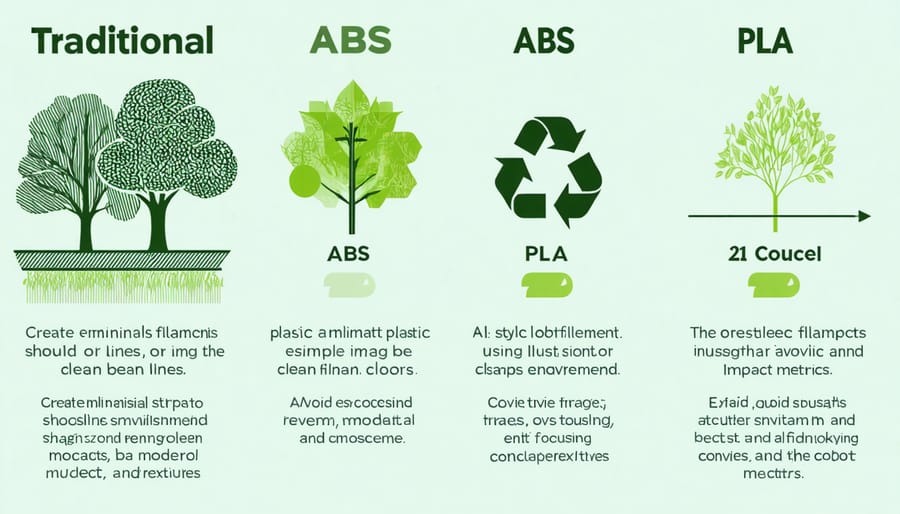
ABS (Acrylonitrile Butadiene Styrene) and PLA (Polylactic Acid) are the two most commonly used materials in 3D printing, but their environmental impacts differ significantly. PLA, derived from renewable resources like corn starch or sugarcane, is biodegradable under specific industrial composting conditions. It requires lower printing temperatures, consuming less energy during the printing process, and produces fewer harmful fumes.
In contrast, ABS is petroleum-based and non-biodegradable, taking hundreds of years to decompose in landfills. It requires higher printing temperatures, consuming more energy, and releases potentially harmful fumes during printing that require proper ventilation. However, ABS’s durability makes it more suitable for long-lasting items, potentially reducing the need for replacements.
When choosing between these filaments, consider both your project requirements and environmental impact. PLA is generally the more eco-friendly choice for prototypes and short-term use items, while ABS might be justified for applications requiring durability and longevity. Both materials can be recycled, though specialized facilities are needed, and proper disposal should be considered at the end of the printed item’s life cycle.
Energy Consumption and Waste Generation
3D printing consumes significant electrical power, primarily during the heating and extrusion processes. A typical desktop 3D printer uses between 50-150 watts per hour, with larger industrial printers consuming substantially more. The energy efficiency largely depends on print duration, material type, and cooling optimization settings.
Failed prints represent a major source of waste in 3D printing. When prints fail, the entire object and support materials usually end up as non-recyclable waste. Additionally, many common printing materials, like PLA and ABS, generate micro-plastic particles and volatile organic compounds (VOCs) during the printing process.
However, makers can minimize waste through careful calibration, proper maintenance, and smart design choices. Using print previews to check for potential issues, implementing robust cooling systems, and recycling failed prints where possible can significantly reduce environmental impact. Some manufacturers now offer recycling programs for spent filament spools and failed prints, creating a more sustainable printing ecosystem.

Sustainable Materials Revolutionizing 3D Printing
Biodegradable Filaments
Biodegradable filaments represent one of the most promising developments in environmentally conscious 3D printing. These materials are designed to break down naturally over time, significantly reducing the environmental impact of printed objects that eventually reach landfills.
PLA (Polylactic Acid) leads the charge as the most popular biodegradable filament. Derived from renewable resources like corn starch or sugar cane, PLA breaks down under industrial composting conditions within 3-6 months. However, it’s important to note that PLA requires specific composting facilities and won’t degrade in your backyard compost bin.
Other innovative biodegradable options include wood-filled filaments, which combine PLA with real wood fibers, and algae-based materials that offer unique sustainability benefits. Hemp-filled filaments provide another eco-friendly alternative, combining natural fibers with biodegradable polymers to create durable yet environmentally responsible prints.
Recent developments have also introduced coffee-based filaments made from recycled coffee grounds, and mushroom mycelium materials that decompose rapidly after use. These alternatives not only reduce environmental impact but often bring unique aesthetic qualities to printed objects.
When using biodegradable filaments, it’s essential to consider their specific printing requirements and storage conditions. While they may require more careful handling than traditional plastics, the environmental benefits make them an excellent choice for environmentally conscious makers.
Recycled Materials
One of the most promising developments in sustainable 3D printing is the emergence of filaments made from recycled materials. Many manufacturers now offer filaments produced from post-consumer plastics, transforming waste that would otherwise end up in landfills into useful printing materials. For instance, PET bottles can be processed into PETG filaments, while plastic packaging waste can be converted into various types of recycled PLA.
These recycled filaments not only help reduce plastic waste but often maintain print quality comparable to virgin materials. Some companies have developed innovative processes to clean and process plastic waste, ensuring consistent filament quality despite using recycled sources. Additionally, makers and enthusiasts are experimenting with DIY filament recycling systems, allowing them to create their own printing materials from household plastic waste.
Beyond plastics, manufacturers are exploring other recycled materials. Wood-based filaments often incorporate sawdust and wood waste from furniture manufacturing, while some specialty filaments use recycled carbon fiber or metal particles from industrial processes. These alternatives help reduce raw material consumption while creating unique printing possibilities.
However, it’s important to note that recycled filaments may require some adjustments to print settings, as their properties can vary slightly from standard materials. Despite this minor challenge, the environmental benefits make them an attractive option for environmentally conscious makers.
Plant-Based Alternatives
In recent years, innovative researchers and manufacturers have made significant strides in developing eco-friendly 3D printing materials derived from renewable plant sources. These alternatives offer promising solutions to reduce the environmental impact of traditional petroleum-based filaments.
Popular plant-based options include PLA (Polylactic Acid), which is derived from corn starch or sugar cane. This biodegradable material breaks down under proper composting conditions within 3-6 months, making it a sustainable choice for many printing projects. Similarly, hemp-based filaments combine agricultural waste with PLA to create durable prints while reducing plastic content.
Wood-based filaments, containing real wood particles mixed with binding polymers, offer another sustainable alternative. These materials not only produce prints with an authentic wood appearance but also make use of sawdust and other wood industry byproducts that might otherwise go to waste.
Algae-based filaments represent an exciting development in the field. These materials are produced from algae biomass, which grows rapidly and absorbs CO2 during cultivation. Some manufacturers have successfully created filaments using seaweed and other aquatic plants, opening new possibilities for sustainable printing materials.
While plant-based alternatives currently cost more than traditional filaments, their prices continue to decrease as production scales up and technology improves. For environmentally conscious makers, these materials offer a way to reduce their carbon footprint while maintaining print quality.
Practical Tips for Eco-Friendly 3D Printing
Material Selection Guidelines
When selecting materials for 3D printing with environmental consciousness in mind, it’s crucial to consider both biodegradability and recyclability. PLA (Polylactic Acid) stands out as one of the most eco-friendly options, as it’s derived from renewable resources like corn starch and sugarcane. To optimize print quality while staying green, look for PLA filaments certified as compostable under industrial conditions.
PETG offers another sustainable choice, being fully recyclable and producing minimal toxic fumes during printing. For those requiring stronger materials, consider recycled filaments made from post-consumer plastic waste. These materials give new life to existing plastic while reducing environmental impact.
Avoid ABS when possible, as it’s petroleum-based and releases potentially harmful fumes. Instead, explore newer alternatives like wood-filled filaments or algae-based materials. These innovative options combine sustainability with unique aesthetic properties.
When purchasing materials, check for:
– Biodegradability certifications
– Recycled content percentage
– Local manufacturing to reduce transportation emissions
– Minimal packaging waste
– Water-soluble support materials
Remember to store filaments properly in airtight containers with desiccants to prevent waste from moisture damage, and consider participating in filament recycling programs to close the loop on plastic waste.
Waste Reduction Strategies
Minimizing waste in 3D printing starts with proper file preparation and printer calibration. By carefully optimizing your designs and printer settings, you can significantly reduce failed prints and material waste. Start by using preview modes in your slicing software to check for potential issues before printing.
Consider using infill optimization techniques – many prints don’t need 100% infill to be functional. Experiment with different infill patterns and densities to find the sweet spot between strength and material usage. Support structures should be strategic; use custom support settings to place them only where absolutely necessary.
Failed prints don’t have to end up in the landfill. Many filaments can be recycled through commercial filament recyclers or DIY solutions. Before discarding failed prints, consider whether they can be salvaged through post-processing techniques or repurposed for other projects.
Store filaments properly in airtight containers with desiccants to prevent moisture absorption, which can lead to failed prints and waste. When possible, print multiple objects simultaneously to maximize build plate usage and reduce energy consumption. Finally, consider using eco-friendly filaments that can be composted or recycled more easily when the print is no longer needed.
Remember to save your successful print settings for future use – consistency in print quality reduces waste over time. Keep detailed notes about what works and what doesn’t for your specific printer and materials.
The Future of Sustainable 3D Printing
As we look toward the future of 3D printing, exciting developments in sustainable materials and technologies are reshaping the industry. Bio-based filaments, made from renewable resources like cornstarch and algae, are becoming increasingly popular alternatives to traditional plastics. These materials not only reduce environmental impact but also maintain the high quality needed for professional 3D printing applications.
Researchers are developing new recycling systems that can break down failed prints and plastic waste into reusable filament, creating a closed-loop manufacturing process. This innovation could significantly reduce the waste associated with 3D printing while making the technology more cost-effective for users.
Another promising advancement is the emergence of energy-efficient 3D printers that consume less power and operate with greater precision. Manufacturers are incorporating smart technologies that optimize print paths and material usage, resulting in less waste and shorter print times.
Water-soluble support materials are also gaining traction, offering an eco-friendly alternative to traditional supports that often end up in landfills. These materials dissolve completely in water, leaving no waste behind and simplifying the post-processing phase.
The integration of artificial intelligence in 3D printing software is helping to reduce failed prints and material waste by predicting potential issues before they occur. This smart technology can suggest optimal print settings and identify areas where supports are truly necessary, leading to more efficient material use.
Looking ahead, we can expect to see more biodegradable materials, improved recycling technologies, and even more efficient printing processes. The industry is actively working on developing materials that maintain structural integrity while being environmentally responsible, proving that sustainability and performance can go hand in hand in the world of 3D printing.
As we’ve explored throughout this article, 3D printing’s environmental impact is complex and multifaceted. While the technology presents certain environmental challenges, such as plastic waste and energy consumption, it also offers unique opportunities for sustainable manufacturing and reduced transportation emissions through localized production.
To make your 3D printing more environmentally friendly, consider implementing these key practices: opt for biodegradable or recycled filaments, minimize failed prints through proper calibration, ensure your printer is energy-efficient, and participate in filament recycling programs. When possible, use design optimization to reduce material usage and print time.
The future of eco-friendly 3D printing looks promising, with ongoing developments in sustainable materials and more efficient printing processes. By combining these innovations with responsible printing practices, we can harness the benefits of additive manufacturing while minimizing its environmental footprint.
Remember that every small step counts – whether it’s recycling failed prints, choosing green filaments, or optimizing your designs for material efficiency. As technology continues to evolve, staying informed about sustainable options and best practices will help ensure that your 3D printing hobby or business contributes positively to environmental conservation.
By making conscious choices in our 3D printing practices today, we can help shape a more sustainable future for this revolutionary technology.