
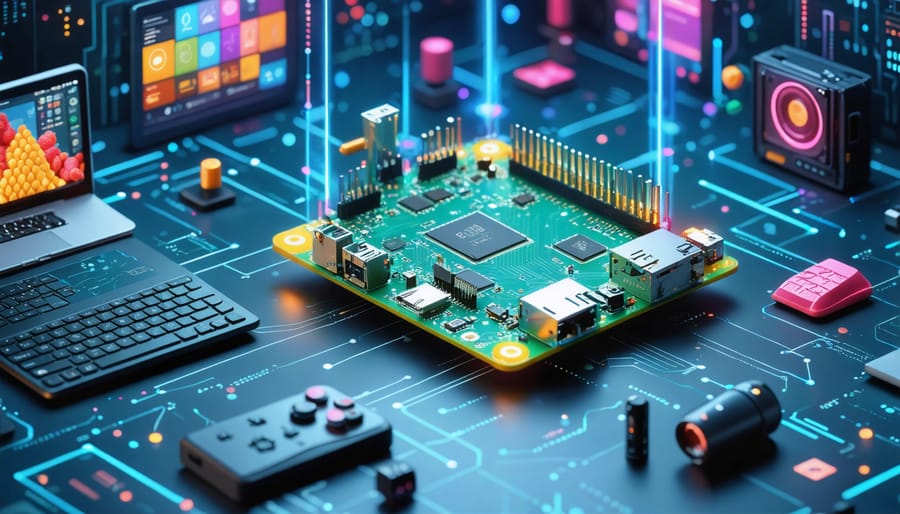
Transform your Raspberry Pi into groundbreaking projects that push the boundaries of what’s possible with this versatile $35 computer. From AI-powered smart home assistants to advanced robotics platforms, the latest wave of Raspberry Pi innovations combines cutting-edge technology with practical applications. Whether you’re a seasoned maker or just starting your DIY journey, 2024 brings exciting new possibilities – including machine learning projects that run entirely on the Pi 4’s enhanced processing power, sustainable IoT systems that monitor and optimize energy usage, and immersive retro gaming consoles that leverage the latest GPIO capabilities.
These projects not only showcase the Pi’s remarkable versatility but also demonstrate how far single-board computing has evolved. With the recent release of the Raspberry Pi 5 and its significant performance improvements, makers can now tackle previously impossible projects, from real-time computer vision applications to sophisticated home automation systems. Join us as we explore ten innovative projects that combine emerging technologies with practical, step-by-step implementations, helping you transform your Raspberry Pi from a simple microcomputer into a powerful tool for learning, creation, and innovation.
AI-Powered Home Assistant Projects
Voice-Controlled Home Automation
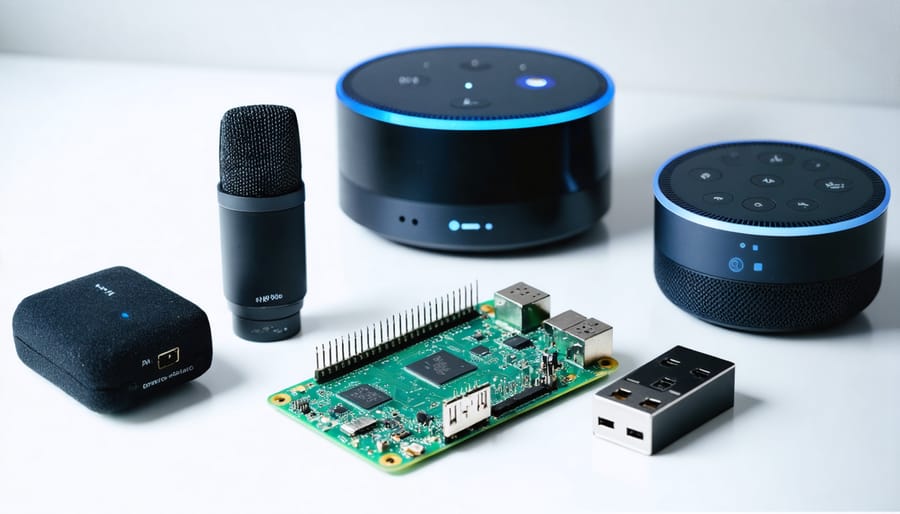
Transform your Raspberry Pi into a powerful voice-controlled hub for smart home automation using modern frameworks like Home Assistant and Mycroft AI. This project combines the accessibility of voice commands with the versatility of the Pi to create a customized virtual assistant that can control your entire home environment.
Start by installing Home Assistant OS on your Raspberry Pi 4, which serves as the foundation for your voice control system. Add the Mycroft AI integration to enable natural language processing capabilities. This combination allows you to create custom voice commands for controlling lights, thermostats, security cameras, and other connected devices.
What makes this project particularly exciting is the ability to train your assistant with personalized commands and responses. Using Python-based frameworks like Rhasspy or Snips-NLU, you can develop context-aware voice interactions that understand your specific needs and preferences.
The system can be expanded to include features like voice-activated routines, multi-room audio control, and even integration with existing virtual assistants like Alexa or Google Assistant. For enhanced privacy, all voice processing occurs locally on your Pi, ensuring your data stays within your home network.
Essential components include a USB microphone array, speakers, and compatible smart devices. The project scales easily, allowing you to start simple and gradually add more sophisticated automations as your needs grow.
Smart Security Camera with Object Detection
Transform your Raspberry Pi into a sophisticated security system with real-time object detection capabilities using TensorFlow Lite. This project combines the power of machine learning with the versatility of a Raspberry Pi camera setup to create an intelligent surveillance solution.
The system uses TensorFlow Lite’s pre-trained models to detect and classify objects, people, and animals in real-time. When movement is detected, the camera automatically begins recording and can send instant notifications to your smartphone. You can customize the detection parameters to focus on specific objects or movements, reducing false alerts and ensuring you only receive relevant notifications.
Getting started requires TensorFlow Lite, OpenCV, and Python libraries installed on your Raspberry Pi. The camera module connects directly to the Pi’s CSI port, and the detection software runs efficiently even on the Pi’s modest hardware. You can enhance the project by adding features like cloud storage for recordings, web interface monitoring, or integration with home automation systems.
For optimal performance, consider using the Pi 4 model with at least 4GB RAM. The system can process up to 30 frames per second while maintaining accurate object detection, making it suitable for both indoor and outdoor security applications. You can also implement night vision capabilities using infrared LEDs for 24/7 monitoring.
Green Energy Monitoring Systems
Solar Panel Performance Tracker
Transform your Raspberry Pi into a sophisticated solar panel monitoring system that helps you track and optimize your renewable energy setup. This project combines environmental consciousness with smart technology, allowing you to measure power generation, track efficiency, and analyze performance patterns over time.
Using readily available components like an ADS1115 analog-to-digital converter and current sensors, you can create a comprehensive monitoring solution. The system measures voltage, current, and power output from your solar panels, while the Raspberry Pi processes and stores this data for analysis.
The heart of this project lies in its Python-based monitoring script, which samples data at regular intervals and stores it in a SQLite database. You can visualize this information through a web interface built with Flask, displaying real-time metrics and historical data through interactive graphs and charts.
Add features like automated email alerts for performance issues, daily generation reports, and even weather data integration to contextualize your solar output. For additional functionality, incorporate a BME280 sensor to monitor environmental conditions that might affect panel efficiency.
This project not only helps you maximize your solar investment but also serves as an excellent learning platform for understanding renewable energy systems, data collection, and web development. Advanced users can expand the system to control panel orientation or implement machine learning for predictive maintenance.
Smart Home Energy Dashboard
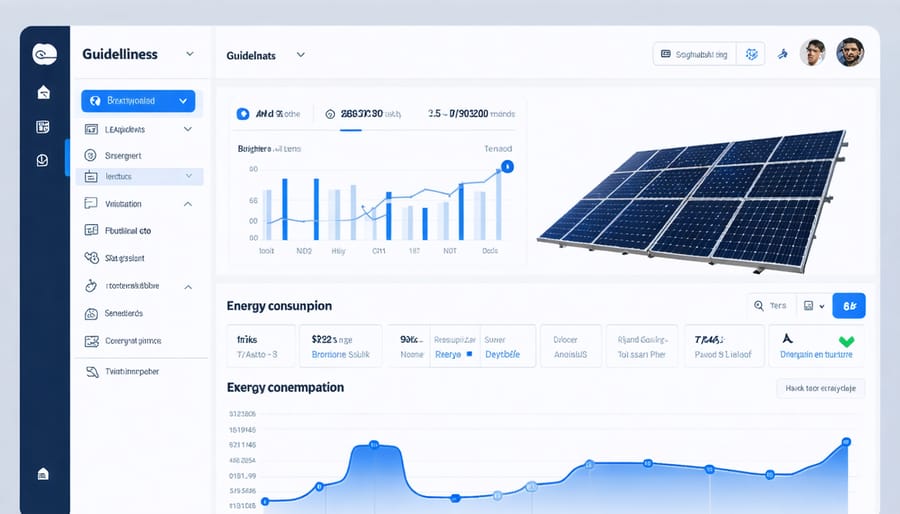
Transform your Raspberry Pi into a powerful energy monitoring hub with this innovative smart home project. By connecting your Pi to smart power meters or energy monitoring sensors, you can create a real-time dashboard that tracks and visualizes your home’s energy consumption patterns.
The system uses Python to collect data from connected sensors and displays it through an intuitive web interface built with Flask and Chart.js. You’ll be able to monitor power usage across different rooms or appliances, view historical consumption data, and receive alerts when usage exceeds predetermined thresholds.
To get started, you’ll need a Raspberry Pi (3 or newer recommended), compatible energy monitoring sensors, and basic knowledge of Python programming. The project can be expanded by adding features like automated appliance control, integration with smart home platforms, or even machine learning algorithms to predict energy usage patterns.
Key components of this project include:
– Real-time power consumption graphs
– Daily, weekly, and monthly usage reports
– Cost calculation based on your electricity rates
– Email or mobile notifications for unusual consumption patterns
– Temperature and humidity monitoring integration
This project not only helps you understand your energy usage but can lead to significant cost savings by identifying energy-hungry appliances and optimizing your consumption patterns. It’s an excellent way to contribute to environmental sustainability while learning about IoT and data visualization.
Retro Gaming Innovations
Cloud-Enabled Gaming Station
Transform your Raspberry Pi into a versatile gaming station that combines classic gaming nostalgia with modern cloud convenience. By leveraging the Pi’s retro gaming capabilities and adding cloud storage integration, you can create a system that not only runs your favorite classic games but also securely stores your save files and game progress in the cloud.
Start by installing RetroPie as your base operating system, then configure Rclone to connect with your preferred cloud storage service (Google Drive, Dropbox, or OneDrive). Set up automatic synchronization for your save states and configuration files, ensuring your gaming progress is always backed up and accessible from anywhere.
This project requires minimal additional hardware beyond your Raspberry Pi, though you’ll want to invest in a good controller and possibly a case with cooling capabilities for extended gaming sessions. The cloud integration adds a modern twist to classic gaming, allowing you to continue your progress on different devices or restore your setup quickly if needed.
For advanced users, consider adding features like automatic ROM organization, online multiplayer capabilities, or even a web interface for managing your game library remotely.
Portable Gaming System
Transform your Raspberry Pi into a powerful handheld gaming system that combines retro nostalgia with modern functionality. Using a compact LCD screen, battery pack, and 3D-printed case, you can create a portable gaming device that rivals commercial handhelds. The project supports multiple emulators, allowing you to enjoy classics from NES, SNES, PlayStation, and other popular consoles.
Start by selecting a Raspberry Pi Zero W or Pi 4 as your base, depending on the gaming performance you desire. Add a 3.5-inch or larger LCD touchscreen for crisp visuals, and incorporate physical buttons for authentic gaming feel. Power your system with a compact 4000mAh LiPo battery for extended gaming sessions.
RetroPie and Lakka are excellent operating system choices, offering user-friendly interfaces and extensive game compatibility. Include a small speaker for audio output, and consider adding features like Bluetooth connectivity for wireless controllers or headphones.
For enhanced functionality, integrate a USB port for game transfers and a power management circuit to monitor battery levels. Advanced builders can add extras like shoulder buttons, analog sticks, or even a mini keyboard for maximum versatility. The finished product makes an impressive DIY achievement and provides endless entertainment on the go.

Educational STEM Projects
Weather Station with Data Analytics
Transform your Raspberry Pi into a sophisticated weather monitoring system that not only tracks current conditions but also predicts weather patterns using machine learning capabilities. This project combines environmental sensors with data analytics to create a powerful meteorological tool for your home or garden.
Start by connecting a BME280 sensor to measure temperature, humidity, and barometric pressure, along with an anemometer for wind speed and a rain gauge for precipitation. The Pi collects this data at regular intervals and stores it in a local database. Using Python libraries like Pandas and Scikit-learn, you can implement basic predictive algorithms that analyze historical data patterns to forecast weather conditions.
The system can be enhanced with a web interface that displays real-time readings, historical graphs, and weather predictions through a Flask or Django server. Add features like email alerts for extreme weather conditions or integrate with smart home systems to automatically adjust your heating or irrigation systems based on weather data.
For more advanced implementations, incorporate machine learning models trained on public weather databases to improve prediction accuracy. Connect your station to weather networks like Weather Underground to contribute to citizen science efforts while comparing your readings with nearby stations.
This project is perfect for data enthusiasts and provides valuable hands-on experience with sensor integration, database management, and predictive analytics. Consider adding a solar panel to make it energy independent and suitable for remote locations.
Robotics Learning Platform
Transform your Raspberry Pi into an engaging robotics learning platform that makes getting started with robotics accessible and fun. This project combines hardware assembly with programming fundamentals, creating an ideal educational environment for both individual learners and classroom settings.
Using readily available components like servos, motors, and sensors, you can build a customizable robot that responds to your code. The platform supports both Python and Scratch programming languages, making it suitable for beginners while offering enough complexity for advanced users to explore sophisticated robotics concepts.
Key features include a user-friendly interface for controlling robot movements, real-time sensor feedback, and the ability to implement basic autonomous behaviors. Students can start with simple line-following exercises and gradually progress to more complex tasks like obstacle avoidance and environmental mapping.
The platform’s modular design allows for easy expansion with additional sensors, cameras, or actuators. You can integrate computer vision capabilities using the Pi Camera module, enabling your robot to recognize objects and respond to visual cues. This scalability ensures the platform grows with your skills and interests.
For educators, the project includes downloadable lesson plans and project ideas, making it an excellent tool for introducing STEM concepts in an engaging, hands-on way.
The boundless creativity and innovation demonstrated by the Raspberry Pi community continue to push the boundaries of what’s possible with this versatile single-board computer. From sophisticated AI applications to sustainable energy solutions, these projects showcase the remarkable potential of combining affordable hardware with imaginative programming.
As we’ve explored throughout this article, the latest wave of Raspberry Pi projects reflects broader technological trends while maintaining the platform’s core appeal of accessibility and educational value. The integration of machine learning, IoT capabilities, and environmental monitoring systems demonstrates how makers and developers are addressing real-world challenges using these compact yet powerful devices.
Looking ahead, the future of Raspberry Pi projects appears incredibly promising. With the continuous improvement in processing power and the growing availability of specialized hardware add-ons, we can expect to see even more sophisticated applications emerge. The rise of edge computing and AI will likely inspire new projects that push computational boundaries while remaining energy-efficient and cost-effective.
For beginners and experienced makers alike, these projects serve as stepping stones to deeper technical understanding and practical problem-solving skills. The beauty of the Raspberry Pi ecosystem lies in its supportive community, where knowledge sharing and collaborative improvement drive innovation forward.
Whether you’re interested in home automation, environmental conservation, or educational tools, there’s never been a better time to start your own Raspberry Pi project. The examples we’ve discussed are just the beginning – the only real limit is your imagination. We encourage you to take these ideas, adapt them, and create something uniquely your own, contributing to the ever-growing landscape of Raspberry Pi innovations.