


In an era where cyber threats evolve at breakneck speed, AI-powered cybersecurity stands as our most formidable defense against sophisticated digital attacks. By leveraging machine learning algorithms and neural networks, modern security systems can now detect and neutralize threats in real-time, often before human analysts even recognize the danger. This revolutionary approach transforms traditional security paradigms, moving from reactive defense to proactive threat prevention.
The fusion of artificial intelligence with cybersecurity has unlocked unprecedented capabilities: pattern recognition that spots anomalies in network traffic within milliseconds, behavioral analysis that identifies suspicious user activities before breaches occur, and automated response systems that contain threats instantly. For organizations and individuals alike, this technological convergence represents not just an upgrade to existing security measures, but a fundamental shift in how we protect our digital assets.
As cyber attacks become increasingly automated and sophisticated, AI-powered security solutions offer the scalability, speed, and intelligence needed to maintain robust digital defenses. Whether defending against ransomware, phishing attempts, or zero-day exploits, these systems learn and adapt continuously, staying one step ahead of emerging threats while reducing the burden on human security teams.
How AI Transforms Raspberry Pi Security
Real-time Threat Detection
AI-powered cybersecurity systems excel at processing vast amounts of network data in real-time, identifying potential threats before they can cause significant damage. These intelligent systems continuously monitor network traffic patterns, system logs, and user behavior, utilizing machine learning algorithms to establish a baseline of normal activity. When anomalies occur, the AI can instantly flag suspicious behavior and trigger appropriate responses.
For example, in many cybersecurity projects, AI algorithms analyze packet data, looking for patterns that might indicate a DDoS attack or unauthorized access attempts. The system learns from each interaction, becoming more accurate over time at distinguishing between legitimate traffic and potential threats.
What makes AI-based threat detection particularly effective is its ability to adapt to new types of attacks. Unlike traditional signature-based security systems, AI can identify previously unknown threats by detecting subtle deviations from normal behavior. This proactive approach is crucial in today’s rapidly evolving threat landscape, where new attack vectors emerge constantly.
The real-time aspect means that threats can be neutralized within milliseconds of detection, often before any damage occurs. This immediate response capability is especially valuable for protecting sensitive data and maintaining network integrity.
Adaptive Learning Systems
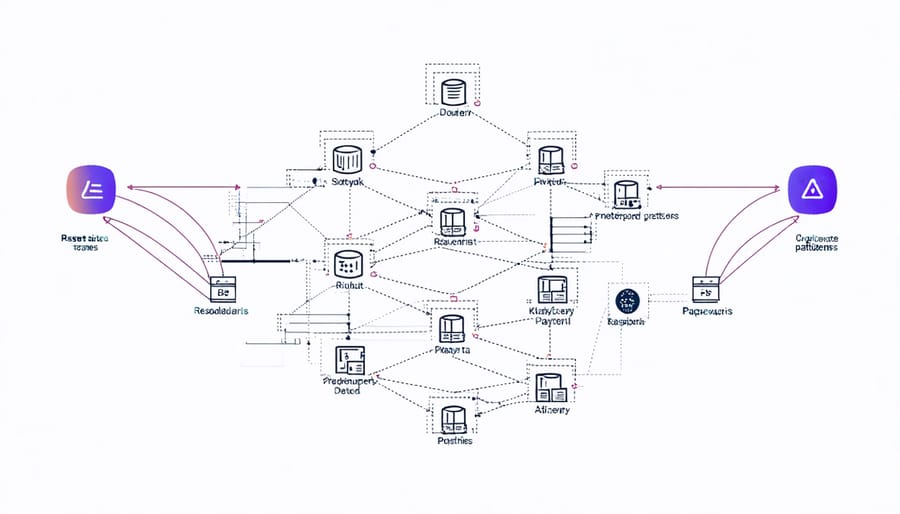
Adaptive learning systems represent one of the most exciting aspects of AI-powered cybersecurity solutions. These systems continuously monitor network traffic, system behaviors, and potential threats, learning from each interaction to improve their defensive capabilities. Much like a security guard who becomes more skilled with experience, AI security systems build an increasingly sophisticated understanding of what constitutes normal versus suspicious activity.
When implemented on a Raspberry Pi, these adaptive systems start with baseline security rules but quickly evolve based on your specific network patterns. For instance, if your Pi serves as a home automation hub, the AI will learn the typical communication patterns of your smart devices and flag any unusual deviations. This learning process happens through various mechanisms, including pattern recognition, anomaly detection, and behavior analysis.
The system’s effectiveness improves over time as it encounters and responds to different types of threats. False positives decrease as the AI better understands your network’s legitimate traffic patterns, while real threats are identified more quickly and accurately. This continuous improvement cycle makes adaptive learning systems particularly valuable for long-term security deployments on resource-constrained devices like the Raspberry Pi.
Essential Components for Your AI Security Setup
Hardware Requirements
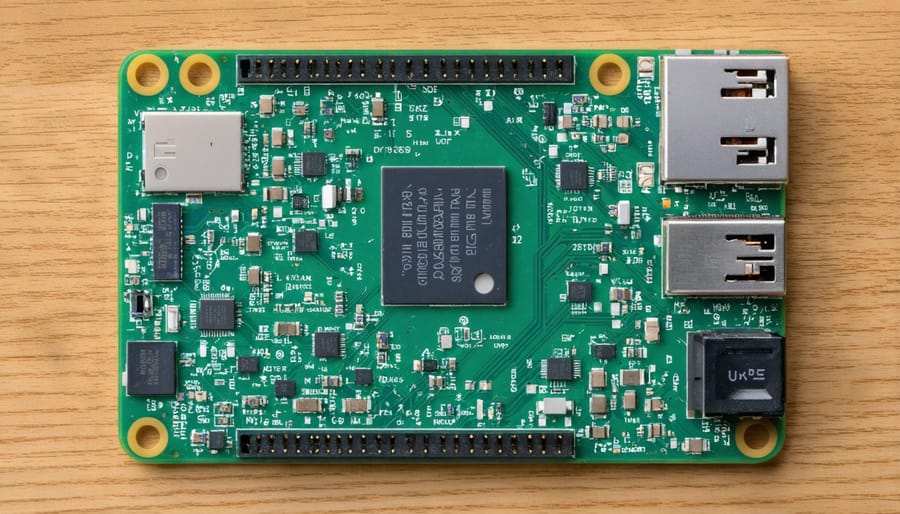
To build an AI-powered cybersecurity system with your Raspberry Pi, you’ll need several essential components. At the core, a Raspberry Pi 4 Model B with at least 4GB RAM is recommended, as AI processing requires significant computational resources. While the 2GB version can work, you might experience slower performance with complex security algorithms.
Essential accessories include:
– A high-quality microSD card (32GB minimum, Class 10 or higher)
– 5V/3A USB-C power supply
– Protective case with proper ventilation
– Ethernet cable for stable network connection
– USB webcam (if implementing visual security features)
– GPIO sensors (motion detectors, door sensors) as needed
For optimal performance, consider these additional components:
– Active cooling system (fan or heatsinks)
– External SSD for faster data processing and storage
– USB hub for multiple peripheral connections
– Real-time clock module for accurate timestamp logging
– Backup power supply (UPS) for system reliability
To ensure your setup runs smoothly, avoid using generic power supplies or low-quality SD cards, as they can cause system instability. The components listed above provide a solid foundation for running AI security applications while maintaining system reliability and performance. Remember to purchase from reputable suppliers to ensure component compatibility and longevity.
Software and Framework Options
When implementing AI-powered cybersecurity on your Raspberry Pi, several software solutions and frameworks are available to transform your device into a powerful cloud security hub. Popular options include Snort with machine learning capabilities, which offers real-time traffic analysis and packet logging, and Wazuh, an open-source security monitoring solution with built-in AI features.
TensorFlow Lite, specifically optimized for Raspberry Pi, enables you to run machine learning models for threat detection. Combined with Pi-hole, it creates an intelligent DNS-level threat blocking system. For network monitoring, PISDNSensor provides AI-enhanced intrusion detection specifically designed for Raspberry Pi’s architecture.
OpenCV with Python offers computer vision capabilities for security camera implementations, while Keras-Pi enables deep learning applications for advanced threat pattern recognition. For beginners, the Raspberry Pi-compatible version of SecurityOnion provides a comprehensive suite of security tools with AI integration.
Remember that these solutions vary in resource requirements. While some like Pi-hole with basic AI features run smoothly on all Pi models, more intensive applications like TensorFlow-based solutions work best on Raspberry Pi 4 or newer models with adequate RAM. Consider starting with lighter solutions and gradually expanding your security capabilities as you become more familiar with the system.
Implementation Steps
Initial Setup and Configuration
Before diving into AI-powered cybersecurity, it’s essential to secure your Raspberry Pi and set up the necessary software components. Start by downloading the latest Raspberry Pi OS and flashing it to a microSD card using the Raspberry Pi Imager. Once booted, open the terminal and update your system:
“`
sudo apt update
sudo apt upgrade -y
“`
Install the required Python packages for AI implementation:
“`
sudo apt install python3-pip
pip3 install tensorflow scikit-learn numpy pandas
“`
For optimal performance, ensure your Raspberry Pi has adequate cooling and a stable power supply rated at least 3A. Enable SSH and configure a strong password for remote access. Consider setting up a dedicated user account for running AI security processes.
Install additional security tools:
“`
sudo apt install fail2ban ufw
sudo ufw enable
“`
Configure your firewall rules to allow only necessary ports and services. Install monitoring tools to track system resources:
“`
sudo apt install htop iftop
“`
These basic configurations create a solid foundation for implementing AI-powered security features. Remember to regularly update all installed packages and maintain proper system logs for security analysis.
Training Your AI Model
Training your AI security model is a crucial step in creating an effective cybersecurity system for your Raspberry Pi. Begin by collecting high-quality training data that represents both normal network traffic and potential security threats. This data should include various types of attacks, such as DDoS attempts, malware signatures, and suspicious login patterns.
Start with a pre-trained model as your foundation, which can save significant time and computational resources. Popular choices include TensorFlow Lite models or smaller versions of established security frameworks that can run efficiently on a Raspberry Pi. These base models can then be fine-tuned to your specific needs.
When training your model, focus on these key aspects:
– Use balanced datasets that include both threat and non-threat scenarios
– Implement cross-validation to ensure your model isn’t overfitting
– Start with a smaller dataset and gradually increase it as you verify accuracy
– Monitor system resources to ensure the model runs efficiently on your Pi
Consider implementing transfer learning techniques to adapt existing models to your specific use case. This approach is particularly effective when you have limited training data or computational resources. Regular retraining sessions with new data help keep your model current with emerging threats.
Remember to validate your model’s performance using metrics like false positive rates and detection accuracy. Start with a conservative approach that minimizes false positives, then gradually adjust the sensitivity based on your security needs.

Testing and Optimization
Testing an AI-powered cybersecurity system on your Raspberry Pi is crucial for ensuring optimal performance and reliable threat detection. Start by creating a controlled testing environment where you can safely simulate various cyber threats without risking your actual network.
Begin with basic penetration testing using tools like Metasploit to verify your system’s response to common attack vectors. Monitor how your AI model reacts to these simulated threats and document both successful detections and false positives. This data will be invaluable for fine-tuning your system.
To optimize performance, regularly analyze your system’s logs and adjust the AI model’s parameters accordingly. Pay special attention to detection speed, accuracy rates, and resource usage on your Raspberry Pi. If you notice your Pi struggling with processing loads, consider implementing batch processing or reducing sampling rates to maintain stability.
Consider implementing A/B testing by running two slightly different versions of your AI model simultaneously. This approach helps identify which configuration delivers better results in your specific environment. Remember to test during different network load conditions to ensure consistent performance.
For continuous improvement, establish a feedback loop where detected threats are automatically logged and used to retrain your AI model. This iterative process helps your system become more accurate over time while adapting to new threat patterns. Keep your training data diverse and regularly updated to maintain robust protection against emerging cyber threats.
Remember to regularly benchmark your system’s performance against established security metrics and adjust your optimization strategy based on real-world results.
Best Practices and Security Considerations
Security Hardening
When implementing AI-powered cybersecurity on your Raspberry Pi, it’s crucial to protect the AI system itself from potential threats. Start by following these essential security hardening steps to create a strong foundation. Regularly update your AI models and ensure they’re stored in encrypted containers to prevent tampering. Implement strict access controls and authentication mechanisms for any APIs or interfaces that interact with your AI system.
Monitor your AI’s resource usage patterns and set up alerts for unusual behavior that might indicate compromise. Use secure channels for data transmission and maintain separate environments for training and deployment. Consider implementing a fallback mechanism that can detect and respond to potential AI system failures or manipulation attempts.
Keep your training data secure and regularly audit your AI’s decision-making processes to detect any potential bias or manipulation. Finally, maintain comprehensive logs of all AI system activities and regularly back up your configurations in a secure location.
Performance Optimization
To maintain optimal performance in your AI-powered cybersecurity system on Raspberry Pi, focus on resource management and efficient configuration. Start by monitoring CPU and memory usage regularly using built-in tools like ‘top’ or ‘htop’. Set up automatic alerts when resource usage exceeds 80% to prevent system slowdowns.
Implement data preprocessing to reduce computational load. This includes filtering out irrelevant network traffic and normalizing data before it reaches your AI models. Consider using lightweight AI models specifically optimized for edge devices like Raspberry Pi.
Schedule regular maintenance tasks during off-peak hours. This includes model retraining, system updates, and log rotation. Use caching mechanisms to store frequently accessed data and reduce processing overhead.
For better performance, consider overclocking your Raspberry Pi with appropriate cooling solutions. However, monitor temperature levels carefully to prevent thermal throttling. Enable GPU acceleration when available for AI model inference, and utilize multi-threading capabilities effectively by distributing tasks across available cores.
Remember to regularly clean up old logs and temporary files to maintain sufficient storage space, as this directly impacts system performance.
The integration of AI-powered cybersecurity solutions with Raspberry Pi represents a significant leap forward in making advanced security measures accessible to hobbyists and small-scale projects. As we’ve explored throughout this article, the combination of machine learning capabilities with the versatility of Raspberry Pi creates powerful, cost-effective security solutions that were previously available only to large organizations.
The benefits are clear: real-time threat detection, automated response systems, and adaptive security measures that continuously learn and improve. Whether you’re protecting your home network, securing IoT devices, or building a learning environment for cybersecurity education, AI-powered security on Raspberry Pi provides the tools and flexibility needed for effective protection.
Looking ahead, the future of AI security on Raspberry Pi appears incredibly promising. As machine learning models become more efficient and Raspberry Pi hardware continues to evolve, we can expect to see even more sophisticated security applications. The open-source community’s ongoing contributions will likely lead to more innovative solutions, making it easier for enthusiasts to implement advanced security features.
For those just starting their journey with AI-powered security, remember that the learning curve might seem steep, but the community support and available resources make it an achievable goal. Whether you’re implementing basic intrusion detection or developing complex security systems, the combination of AI and Raspberry Pi provides an excellent platform for exploration and innovation in cybersecurity.