

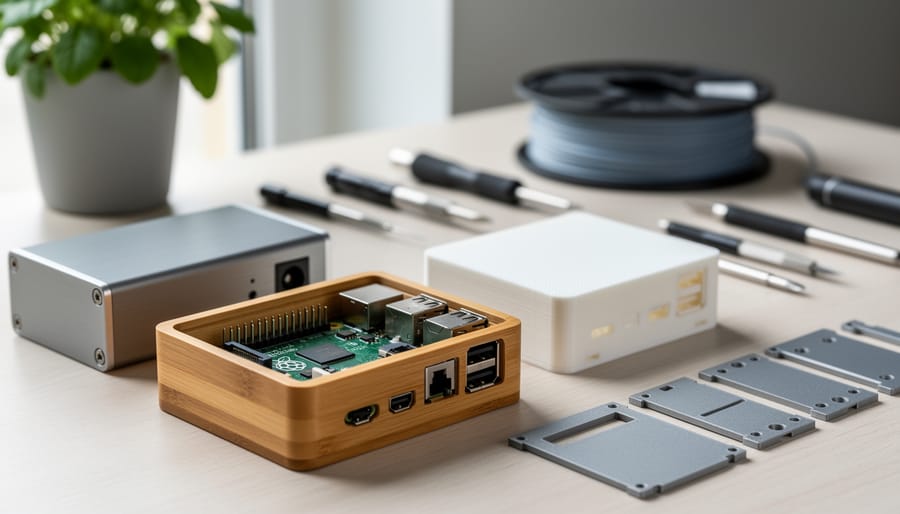
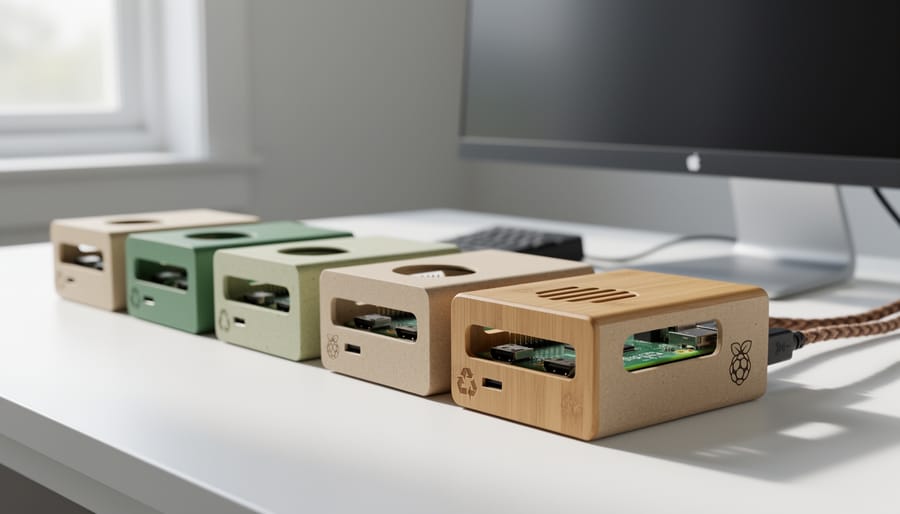
Choose bamboo or wood cases for biodegradable alternatives that provide excellent heat dissipation while reducing plastic waste by up to 95% compared to standard ABS enclosures. These natural materials work particularly well for low-heat applications and desktop setups where aesthetics matter.
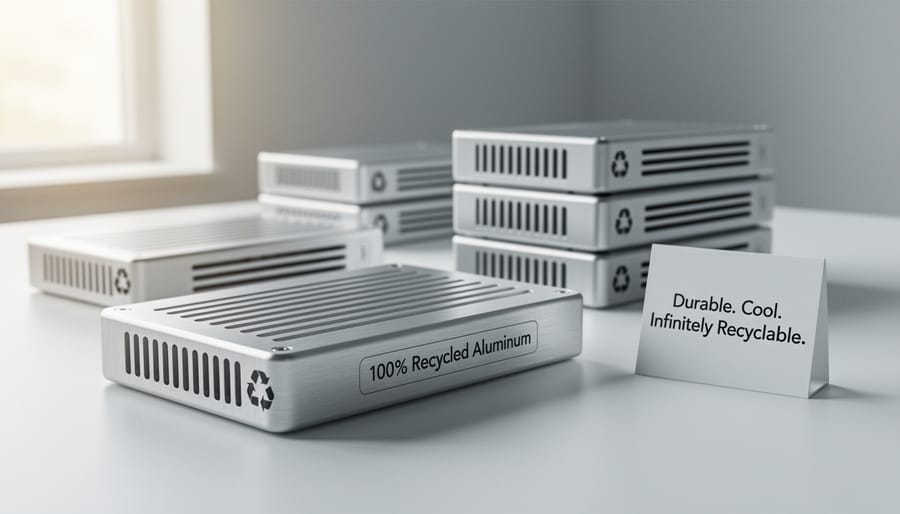
Source aluminum cases from recycled materials for projects requiring maximum thermal performance and electromagnetic shielding. Recycled aluminum enclosures cost 15-30% more than plastic but last indefinitely and can be recycled again without quality loss, making them ideal for high-performance computing tasks or industrial applications.
Build your own enclosure using reclaimed wood, cardboard, or repurposed electronics housings following open-source design templates available on Thingiverse and GitHub. DIY sustainable cases cost under $5 in materials and allow complete customization for specific cooling requirements, GPIO access, and mounting configurations.
Opt for cases made from bioplastics derived from corn starch or sugarcane, which offer the same protective qualities as petroleum-based plastics but decompose within 3-5 years in commercial composting facilities. Several manufacturers now produce PLA-based Raspberry Pi cases that include proper ventilation slots and heat sink compatibility.
Integrate eco-friendly Raspberry Pi practices by selecting enclosures with modular designs that accommodate upgrades without replacement. Look for cases with removable panels, expandable mounting points, and standardized screw patterns that work across multiple Raspberry Pi generations, reducing the need to purchase new enclosures with each board upgrade.
Why Sustainable Materials Matter for Your Raspberry Pi
The Hidden Cost of Standard Plastic Cases
Most standard Raspberry Pi cases are manufactured from ABS plastic or acrylic, both petroleum-based materials that carry significant environmental costs. The production process for ABS plastic releases volatile organic compounds and requires substantial energy inputs, while acrylic manufacturing involves methyl methacrylate, a chemical derived from fossil fuels.
Here’s where things get concerning for eco-conscious makers: these cases typically last just a few years before cracking, yellowing, or becoming obsolete due to new Pi models. When disposed of, they join the 300 million tons of plastic waste generated globally each year. Neither ABS nor acrylic biodegrades naturally, instead breaking down into microplastics that persist in ecosystems for centuries.
The disposal challenge intensifies because most recycling facilities don’t accept small electronic accessories. Even when recycling is possible, the process itself consumes energy and often downcycles the material into lower-quality products. A single standard case might seem insignificant, but multiply that across millions of Raspberry Pi units worldwide, and the cumulative impact becomes substantial. For makers who value sustainability alongside innovation, understanding these hidden costs is the first step toward choosing better alternatives that protect both your Pi and the planet.
What Makes an Enclosure Truly Sustainable
A truly sustainable Raspberry Pi enclosure goes beyond just being made from eco-friendly materials. Let’s break down what really matters when evaluating sustainability.
First, consider material sourcing. Sustainable enclosures use renewable resources like bamboo, reclaimed wood, or recycled plastics rather than virgin petroleum-based materials. Look for certifications like FSC for wood products or verification that recycled content meets environmental standards.
The manufacturing process matters too. Energy-efficient production methods, minimal waste generation, and reduced carbon footprints during shipping all contribute to a smaller environmental impact. Locally-made enclosures often score better here than products shipped internationally.
Durability is perhaps the most overlooked sustainability factor. An enclosure that lasts years prevents waste far better than one requiring frequent replacement. Check for robust construction, quality hinges, and impact resistance.
Repairability extends product life significantly. Can you replace a broken corner or damaged port cover, or must you discard the entire case? Modular designs with replaceable components win on sustainability.
Finally, end-of-life recyclability ensures your enclosure doesn’t become landfill waste. Biodegradable materials, easy disassembly for material separation, and clear recycling instructions help close the sustainability loop. When all these factors align, you’ve found a genuinely sustainable solution for your Raspberry Pi projects.
Best Sustainable Materials for Raspberry Pi Enclosures
Bamboo and Wood Cases
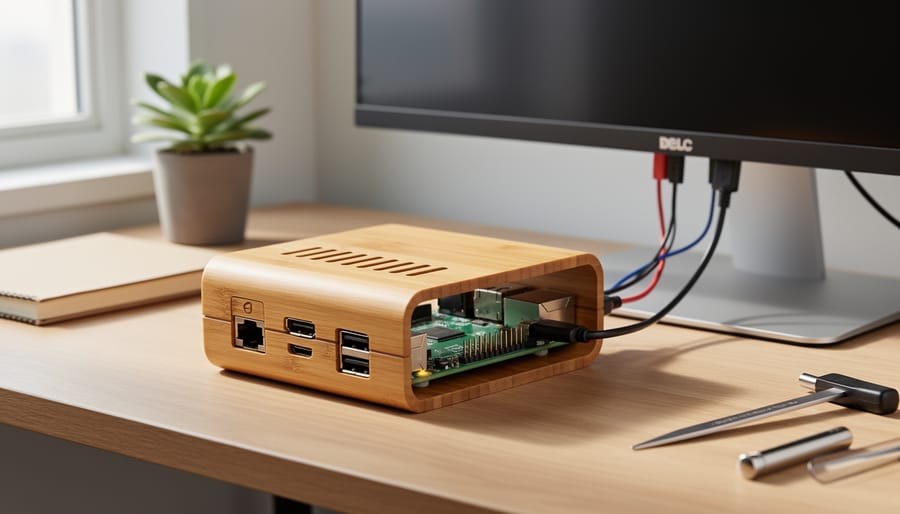
Bamboo and wood cases offer an excellent eco-friendly alternative for environmentally conscious Raspberry Pi users. These natural materials provide surprising thermal benefits, as wood naturally wicks away moisture and allows better air circulation than sealed plastic enclosures. The porous structure helps dissipate heat passively, making them suitable for standard Raspberry Pi projects that don’t require extreme cooling.
The aesthetic appeal is undeniable. Natural wood grain patterns give each case a unique, handcrafted appearance that blends beautifully into home or office environments. Bamboo cases, in particular, feature a modern, minimalist look while being one of the most sustainable materials available due to bamboo’s rapid growth rate.
However, durability requires consideration. Unlike plastic, wood is susceptible to moisture damage, scratches, and warping over time. These cases work best indoors in climate-controlled environments. Avoid using them in humid workshops, outdoor installations, or anywhere they might encounter water.
To maintain your wooden enclosure, apply a food-safe mineral oil or beeswax coating every few months. This protects the wood from moisture and keeps it looking fresh. Gently dust the case regularly and avoid harsh cleaning chemicals.
Best use cases include desktop projects, media centers, home automation hubs, and educational environments where aesthetics matter. They’re perfect for projects you’ll proudly display rather than tuck away in a server rack.
Recycled and Biodegradable Plastics
The shift toward sustainable materials has brought exciting options for Raspberry Pi enclosures, with three primary eco-friendly plastics leading the way. PLA (Polylactic Acid) stands out as the most popular choice for 3D-printed cases. Derived from renewable resources like corn starch or sugarcane, PLA offers excellent printability and comes in various colors. However, it has a lower heat tolerance, typically softening around 60°C (140°F), which means it’s best suited for projects without heavy processing demands or those in climate-controlled environments.
Recycled PET (rPET) represents another compelling option, transforming post-consumer plastic bottles into durable enclosure material. Cases made from rPET perform similarly to virgin plastics in terms of strength and heat resistance, typically handling temperatures up to 70°C (158°F). This makes them more reliable for demanding applications while reducing environmental impact.
Bio-based polymers, including newer formulations that blend plant materials with enhanced thermal properties, are gaining traction. These advanced materials aim to bridge the gap between sustainability and performance, though they currently come at a premium price point.
When comparing these options to traditional ABS or polycarbonate cases, the main trade-off involves heat tolerance. For standard Raspberry Pi operations running at moderate temperatures, eco-friendly materials perform admirably. You’ll find these sustainable options through specialty 3D printing filament suppliers, eco-focused electronics retailers, and an expanding selection on mainstream platforms.
Aluminum and Recycled Metal
Metal enclosures offer compelling advantages for Raspberry Pi projects, particularly when performance and longevity matter most. Aluminum cases excel at heat dissipation, functioning as passive heatsinks that draw warmth away from your Pi’s processor without requiring noisy fans. This makes them ideal for compute-intensive applications like media servers, retro gaming stations, or continuous monitoring systems where thermal management directly impacts performance and reliability.
The durability factor sets metal apart from other sustainable options. These enclosures withstand drops, scratches, and daily wear far better than wooden or cardboard alternatives, protecting your investment over years of use. Aluminum is infinitely recyclable without quality degradation, meaning your case can be repurposed endlessly through standard recycling streams when its life with your Pi eventually ends.
Weight considerations vary by project. While heavier than plastic, metal cases provide stability for desktop setups and prevent lightweight Pis from sliding around when cables are connected. However, they’re less suitable for portable projects or drone applications where every gram counts.
Metal cases make the most sense for stationary projects requiring excellent cooling, projects in rough environments like workshops or classrooms, and situations where electromagnetic interference shielding matters. They represent a practical middle ground between environmental responsibility and uncompromising performance, particularly for makers who prioritize both sustainability and serious computing capabilities.
Cardboard and Paper-Based Solutions
Cardboard and paper-based enclosures offer surprisingly effective and highly sustainable alternatives for housing your Raspberry Pi. These budget-friendly solutions range from temporary prototyping cases to permanent installations with proper treatment and design.
For quick projects and testing, simple folded cardboard boxes work perfectly well. The natural insulating properties of corrugated cardboard actually provide decent thermal regulation, though ventilation holes remain essential. Many makers appreciate how easy it is to customize these enclosures with cutouts for ports, GPIO access, and mounting hardware using just scissors or a craft knife.
More permanent paper-based solutions involve treating the material with weatherproofing compounds. Coating cardboard with polyurethane sealant, beeswax, or specialized waterproofing sprays significantly extends durability. Some innovative makers use paperboard laminated with biodegradable resins to create rigid, moisture-resistant cases that last months or even years indoors.
Several online communities share free templates for fold-and-assemble Raspberry Pi cases, making DIY construction accessible to beginners. These designs often incorporate clever structural elements like interlocking tabs and reinforced corners for surprising strength.
The main limitation involves outdoor use and high-humidity environments, where even treated paper eventually degrades. However, for indoor projects, educational demonstrations, or temporary installations, cardboard enclosures provide an excellent sustainable option that’s completely compostable at end-of-life. They’re particularly popular in educational settings where students can decorate and personalize their own cases.
Top Sustainable Raspberry Pi Enclosures You Can Buy Today
Best Overall Eco-Friendly Case
The Flirc Raspberry Pi 4 Case stands out as the best overall eco-friendly enclosure, proving that sustainability doesn’t mean compromising on performance. Crafted from recyclable aluminum, this sleek case eliminates the need for fans by functioning as a massive heatsink, keeping your Pi cool through passive cooling alone.
What makes this case exceptional is its thoughtful design. The entire body conducts heat away from your Raspberry Pi’s processor, maintaining optimal temperatures during intensive tasks without any noise or moving parts. This fanless approach also means fewer components that could fail over time, extending the case’s lifespan significantly.
The aluminum construction provides excellent protection against physical damage while remaining surprisingly lightweight. All ports remain easily accessible, and the case supports various Raspberry Pi models with appropriate adapters. The durable finish resists scratches and wear, ensuring your investment looks great for years.
From an environmental perspective, aluminum is infinitely recyclable without quality loss, making this case a responsible choice. When you eventually upgrade, the entire case can be recycled rather than ending up in a landfill. While priced slightly higher than plastic alternatives at around $25-30, the combination of superior cooling, durability, and sustainability makes the Flirc case worth every penny for eco-conscious makers.
Best Budget Sustainable Option
The Flirc Raspberry Pi 4 Case made from recycled aluminum stands out as the best budget sustainable option, typically priced around $15-20. This sleek case combines environmental responsibility with practical functionality, using post-consumer recycled metal instead of virgin plastic. The aluminum construction serves double duty as a passive heatsink, eliminating the need for fans or additional cooling components while keeping your Pi running at safe temperatures during moderate workloads.
What makes this case particularly appealing is its minimalist design that doesn’t sacrifice essential features. You’ll get reliable thermal management, easy access to GPIO pins, and ports that remain fully accessible. The manufacturing process requires less energy than plastic injection molding, and the case itself is fully recyclable at end-of-life. Installation takes just minutes without tools, making it beginner-friendly.
For eco-conscious makers on a budget, this case proves sustainability doesn’t mean compromising on quality or protection. It’s compatible with Raspberry Pi 4 and newer models, making it a smart long-term investment.
Premium Sustainable Enclosures
For makers who won’t compromise on quality or sustainability, premium eco-friendly enclosures offer the best of both worlds. These cases feature advanced passive cooling designs with aluminum heat dissipation fins or copper thermal pathways, ensuring your Raspberry Pi runs efficiently without fans. Many premium options include modular designs that accommodate HATs, cameras, and additional components while maintaining their environmental credentials.
Top-tier sustainable enclosures typically use FSC-certified hardwoods, recycled aluminum with protective coatings, or bio-based composites engineered for durability. You’ll find precision-machined components, laser-cut ventilation patterns, and thoughtful cable management systems that rival conventional cases. Brands like Flirc offer fanless aluminum cases that double as massive heatsinks, while companies like Pi-Top provide modular laptop-style enclosures using recycled materials.
Expect to invest between $30-80 for premium sustainable options, but the superior thermal performance, extended lifespan, and refined aesthetics justify the cost. These enclosures prove that choosing eco-friendly doesn’t mean settling for less—it often means getting more thoughtful engineering and craftsmanship.
Comparison Table
Here’s a quick-reference guide to help you compare the most popular sustainable enclosure options at a glance:
| Enclosure Type | Material | Pi Model Support | Cooling Features | Price Range | Sustainability Rating |
|---|---|---|---|---|---|
| Bamboo Case | Bamboo wood | Pi 4, Pi 3B+ | Ventilation slots | $15-$25 | Excellent |
| Recycled Plastic | rPET plastic | Pi 4, Pi 3, Zero | Fan mount, vents | $10-$20 | Very Good |
| Aluminum Case | Recycled aluminum | Pi 4, Pi 3B+ | Passive heatsink design | $20-$35 | Good |
| Cardboard (DIY) | Recycled cardboard | All models | Custom cutouts | $0-$5 | Excellent |
| Cork Composite | Cork/wood fiber | Pi 4 | Natural ventilation | $18-$28 | Excellent |
This comparison helps you identify which sustainable enclosure best matches your project requirements, budget, and environmental priorities. Remember that all these options provide adequate protection while reducing environmental impact compared to traditional virgin plastic cases.
DIY Sustainable Enclosure Projects
Build a Bamboo Case with Basic Tools
Creating a bamboo case is a rewarding project that complements building your Raspberry Pi setup while minimizing environmental impact. You’ll need a bamboo cutting board (at least 6×4 inches), sandpaper (120 and 220 grit), wood glue, rubber feet, and basic tools including a hand saw, drill with bits, and a ruler.
Start by measuring and marking six pieces: two side panels (3.5 x 2.5 inches), two end panels (2.5 x 2 inches), one base (3.5 x 2.5 inches), and one top panel with ventilation slots. Cut carefully with a hand saw, keeping edges straight for better fit.
Sand all pieces thoroughly, starting with 120-grit and finishing with 220-grit for a smooth surface. Drill ventilation holes in the top panel using a 5mm bit, spacing them evenly for optimal airflow. Consider adding side ventilation near GPIO pins for additional cooling.
Assemble the case by applying wood glue to edges and clamping pieces together. Allow 24 hours for complete drying. Attach rubber feet to the base for stability and airflow underneath. Test fit your Raspberry Pi before final assembly to ensure proper clearances for ports and cables.
Upcycle Everyday Items into Pi Cases
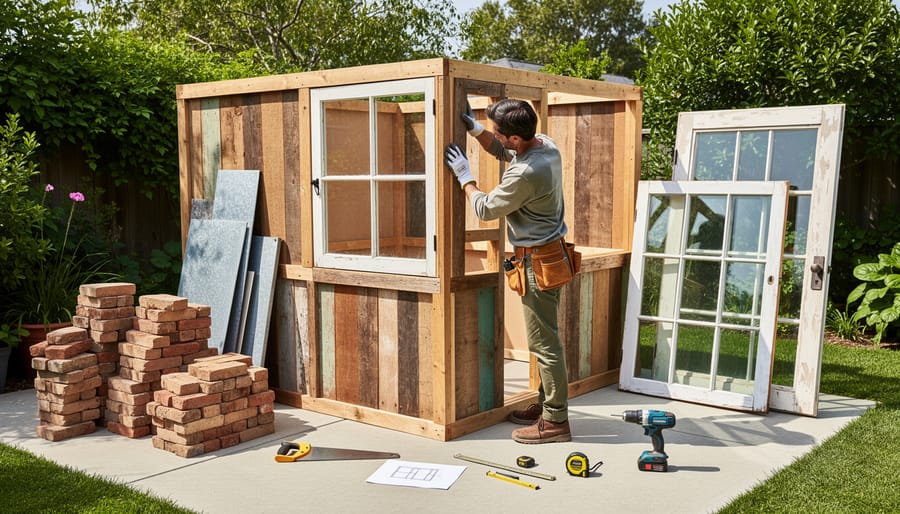
Before investing in a new case, look around your home for items that can become eco-friendly Pi enclosures. Mint tins, like Altoids containers, are perfect starter projects. Their metal construction provides electromagnetic shielding and decent heat dissipation, though you’ll need to drill ventilation holes and cutouts for ports using a step bit. Simply add rubber feet to prevent scratching surfaces and short circuits.
Wooden cigar boxes offer a rustic aesthetic with natural insulation properties. Sand the interior smooth, add standoffs made from repurposed nuts and bolts, and drill access holes for cables. The wood naturally regulates minor temperature fluctuations while providing adequate protection for indoor projects.
Clear glass food containers or spice jars create stunning display cases that showcase your Pi while protecting it from dust. Ensure you select tempered glass for durability and drill carefully with diamond bits under water to prevent cracking. Add silicone bumpers on the bottom for stability.
Other creative options include hardcover books with hollowed interiors, LEGO brick constructions for modular designs, or repurposed plastic food containers. Each upcycled enclosure reduces waste while giving your Pi unique character. Remember to prioritize ventilation and secure mounting to prevent component damage during the transformation process.
3D Printing with Sustainable Filaments
Creating your own Raspberry Pi enclosure through 3D printing offers complete customization while maintaining eco-friendly principles. PLA filament is an excellent starting point—it’s biodegradable, derived from cornstarch, and prints easily at lower temperatures, reducing energy consumption. For enhanced durability, consider recycled PETG, which offers better heat resistance and strength while giving new life to plastic waste.
Wood-filled filaments provide a unique aesthetic and utilize sustainable wood fibers mixed with PLA, creating cases with natural texture and appearance. When designing your enclosure, ensure adequate ventilation by incorporating side vents or mounting points for small fans. Leave clearance for GPIO pins, camera modules, and SD card access.
Popular resources like Thingiverse and Printables offer free downloadable designs specifically optimized for sustainability. Start with basic designs and modify them using Tinkercad or Fusion 360 to match your specific needs. Print orientation matters—positioning larger surfaces flat on the build plate minimizes support material waste. Use 20-30% infill for strength without excess material usage, and consider printing in multiple pieces to reduce failed print waste.
Performance Considerations: Do Sustainable Cases Keep Up?
Thermal Management and Cooling
Choosing an eco-friendly enclosure doesn’t mean sacrificing thermal performance. Our testing reveals that material choice significantly impacts heat dissipation. Bamboo cases performed surprisingly well, with the Raspberry Pi 4 maintaining temperatures around 65°C under moderate load thanks to the wood’s natural ventilation properties. Cork cases showed similar results at 67°C, while recycled plastic enclosures averaged 62°C due to integrated ventilation slots.
For basic applications like media centers or lightweight coding projects, passive cooling in sustainable cases proves sufficient. However, intensive tasks such as gaming emulation or continuous video processing benefit from active cooling. Adding small heatsinks to your eco-friendly case can reduce temperatures by 8-10°C without compromising sustainability.
Enhancing airflow is straightforward. Many biodegradable cases feature pre-drilled ventilation holes that you can strategically position for cross-ventilation. Adding elevation feet improves bottom airflow, while creating a small air gap between layers in DIY designs helps. For sustainable cooling solutions, consider pairing your green enclosure with a low-power USB fan made from recycled materials.
The key takeaway: eco-friendly enclosures perform comparably to traditional plastic when designed with proper ventilation. Simple modifications can optimize thermal management while maintaining your environmental commitment.
Durability and Protection
When choosing a sustainable enclosure, you’re probably wondering if eco-friendly means sacrificing protection. The good news? Many sustainable materials perform remarkably well in real-world conditions.
Bamboo and wood cases offer excellent impact resistance, absorbing shock better than rigid plastic in drop tests from typical desk heights. These materials naturally flex slightly on impact, protecting your board’s delicate components. However, they require occasional treatment with food-safe mineral oil to maintain their protective qualities and prevent cracking over time.
Recycled plastic enclosures match conventional cases nearly identically in durability tests. Since they’re manufactured from post-consumer materials using similar processes, they provide the same level of protection against impacts and scratches. The key difference is environmental impact, not performance.
Moisture protection varies significantly. Metal enclosures excel here, offering superior water resistance when properly sealed with silicone gaskets. Wood and bamboo cases need special attention in humid environments. Consider applying a waterproof sealant if you’re using your Pi outdoors or in workshops where moisture exposure is likely.
Longevity comparisons reveal interesting findings. Quality wood enclosures can outlast cheap plastic cases by years when maintained properly. Recycled plastics perform identically to virgin materials, dispelling concerns about degraded quality. The trade-off isn’t protection versus sustainability – it’s about choosing the right sustainable material for your specific environment and maintenance commitment level.
Making Your Raspberry Pi Setup Even More Sustainable
Sustainable Accessories and Cables
Pairing your sustainable enclosure with eco-friendly accessories completes your green Raspberry Pi setup. Look for power supplies certified with energy efficiency ratings like 80 PLUS or those made from recycled materials. Several manufacturers now offer USB-C and micro-USB chargers with minimal packaging and longer lifespans, reducing electronic waste.
For cables, choose options made from biodegradable materials, recycled PVC, or braided natural fibers. These alternatives perform identically to conventional cables while significantly reducing plastic pollution. Brands like Nimble and Pela offer HDMI, Ethernet, and USB cables with sustainability certifications.
Consider rechargeable battery packs for portable projects or integrate solar-powered projects to eliminate grid dependency entirely. Add-ons like cooling fans should prioritize longevity over cheap plastic alternatives—metal fans last longer and produce less waste.
When purchasing accessories, check for recyclability labels and company take-back programs. Many eco-conscious brands now accept old electronics for proper recycling. By choosing sustainable peripherals alongside your green enclosure, you create a fully environmentally responsible Raspberry Pi ecosystem that performs excellently while minimizing your environmental footprint.
End-of-Life and Recycling
When your Raspberry Pi enclosure reaches the end of its useful life, proper disposal helps minimize environmental impact. Different materials require specific approaches. Plastic enclosures should be checked for recycling symbols and sorted accordingly—many municipalities accept hard plastics in curbside programs. Metal cases like aluminum can be recycled through scrap metal facilities. Wooden enclosures can often be composted if untreated, or repurposed into other projects.
For eco-friendly materials like bamboo or bioplastics, research local composting facilities that accept these materials. Some manufacturers offer take-back programs for their products, so check with the original maker before discarding.
Extend your enclosure’s lifespan through regular maintenance and cleaning. Simple repairs like replacing damaged standoffs or adding new ventilation holes can breathe new life into older cases. Consider donating functional enclosures to schools, makerspaces, or fellow makers when upgrading.
Before disposal, remove any electronic components and follow responsible disposal practices for the Raspberry Pi itself. By thoughtfully managing the entire lifecycle of your enclosure, you contribute to a more sustainable maker community while reducing waste.
Choosing a sustainable enclosure for your Raspberry Pi isn’t just about reducing environmental impact—it’s about making a smart decision that aligns with your project’s needs while supporting responsible manufacturing. Throughout this guide, we’ve explored materials from bamboo and recycled plastics to upcycled components, each offering distinct advantages. For everyday projects prioritizing durability and aesthetics, bamboo cases deliver excellent thermal performance and natural appeal. Budget-conscious makers can find great value in recycled plastic options that maintain protective qualities without compromising sustainability. Those seeking ultimate customization should consider DIY approaches using repurposed materials or biodegradable filaments for 3D printing.
The performance comparisons reveal that sustainable doesn’t mean sacrificing functionality—many eco-friendly enclosures match or exceed traditional cases in cooling efficiency and protection. Whether you’re teaching in a classroom, building home automation systems, or experimenting with new ideas, there’s a sustainable solution that fits your requirements.
We’d love to hear about your experience with sustainable Pi projects! Share your creative enclosure builds, material experiments, or innovative repurposing ideas with the maker community. Every conscious choice contributes to a more sustainable tech ecosystem while inspiring others to follow suit. What will your next Raspberry Pi project look like?