

Solar energy stands at the forefront of renewable resources, harnessing the limitless power of our sun through innovative technology and sustainable practices. Unlike fossil fuels that deplete over time, solar power represents a truly renewable energy source that will remain available for billions of years. Tech enthusiasts and environmentally conscious individuals increasingly turn to solar solutions, particularly in DIY projects and smart home applications, to reduce their carbon footprint while exploring cutting-edge technology.
As Raspberry Pi enthusiasts integrate solar power into their projects, understanding the renewable nature of solar energy becomes crucial for developing sustainable solutions. The sun delivers more energy to Earth in a single hour than humanity uses in an entire year, making solar power not just renewable but incredibly abundant. This virtually inexhaustible energy source, combined with rapidly advancing solar technology and decreasing implementation costs, positions solar power as a key player in both personal projects and global energy solutions.
Solar Energy’s Renewable Nature
The Science Behind Solar Renewability
Solar energy functions through a fascinating process that makes it inherently renewable. When sunlight hits photovoltaic (PV) cells, it triggers the photovoltaic effect, where photons excite electrons in the silicon material, generating electrical current. This conversion process doesn’t consume or deplete the sun’s energy – instead, it simply harnesses a tiny fraction of the constant stream of solar radiation reaching Earth.
The sun, essentially a massive fusion reactor, continuously generates energy by converting hydrogen into helium. Scientists estimate it will continue this process for another 5 billion years. Each hour, the Earth receives more solar energy from the sun than humanity uses in an entire year, making it a practically inexhaustible resource.
Unlike fossil fuels, which take millions of years to form and are depleted when used, solar energy replenishes itself daily with each sunrise. The PV cells themselves may eventually need replacement (typically after 25-30 years), but the energy source they capture remains constant and unlimited, making solar power one of the most sustainable renewable energy sources available.
Solar Panel Lifespan and Sustainability
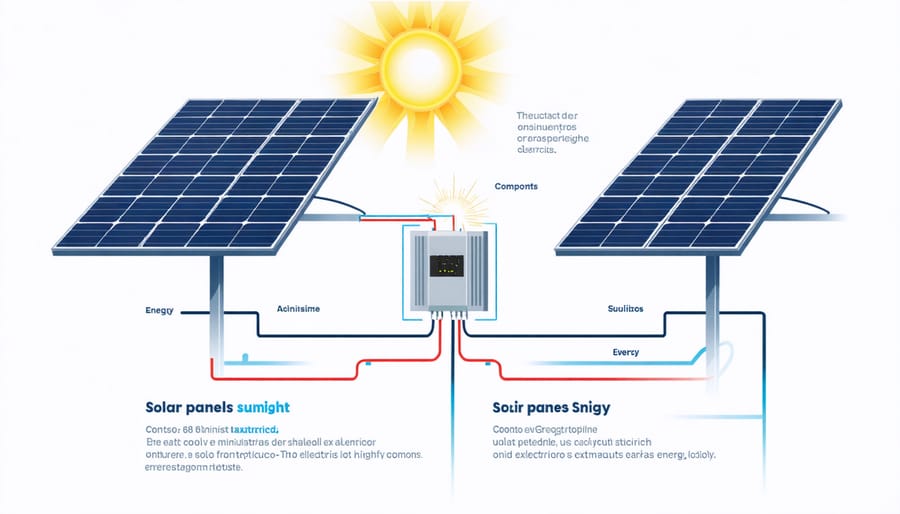
Modern solar panels typically last 25-30 years while maintaining over 80% of their original efficiency. This impressive lifespan makes them a sustainable energy solution for long-term projects. While panels do degrade slightly each year (about 0.5-1%), they don’t stop working completely after their warranty period – they just produce energy at a slightly reduced rate.
The manufacturing process of solar panels does require energy and resources, but most panels offset their production energy footprint within 2-3 years of operation. After this “energy payback period,” they continue producing clean energy for decades. Additionally, many manufacturers now offer recycling programs for end-of-life panels, recovering valuable materials like silicon, glass, and aluminum for reuse in new panels or other products.
This combination of longevity, energy payback, and recyclability makes solar panels a truly sustainable technology choice.
Implementing Solar Power with Raspberry Pi
Required Components and Setup
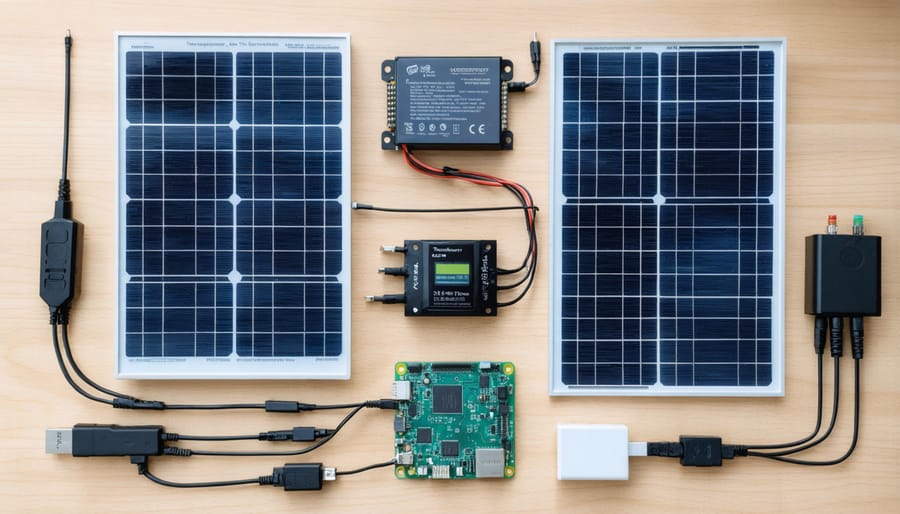
To build a solar-powered Raspberry Pi system, you’ll need several key components working together. The heart of the system is a solar panel, typically rated between 10W to 30W depending on your power requirements. This should be paired with a solar charge controller (rated 12V/24V) to regulate the power flow and protect your battery.
A deep-cycle battery (12V) serves as your energy storage solution – lithium-ion or sealed lead-acid batteries work well for this purpose. You’ll also need a DC-to-DC buck converter to step down the voltage to the 5V required by the Raspberry Pi.
Essential accessories include:
– MC4 connectors for solar panel connections
– Weatherproof junction box
– Heat shrink tubing
– Wire strippers and crimpers
– Basic hand tools
– Mounting brackets for the solar panel
For monitoring capabilities, consider adding:
– Current sensor module
– Voltage divider
– Temperature sensor
– GPIO extension board
Remember to choose weather-resistant components if your setup will be outdoors. All connections should be properly insulated and secured to ensure long-term reliability and safety.
Power Management Solutions
Effective power management is crucial when implementing solar energy solutions with Raspberry Pi projects. To maximize the potential of solar power while maintaining reliable edge computing capabilities, several key components and monitoring systems need to be carefully integrated.
The heart of any solar power management system is the charge controller, which regulates the voltage and current coming from solar panels to prevent battery overcharging. Modern charge controllers use Maximum Power Point Tracking (MPPT) technology to extract the maximum available power from solar panels under varying conditions.
To optimize power consumption, implement a monitoring system that tracks both power generation and usage. Popular options include open-source solutions like Home Assistant or custom Python scripts that collect and analyze power data. These systems can help you:
– Monitor battery charge levels and health
– Track solar panel performance in real-time
– Analyze power consumption patterns
– Trigger automated responses to power events
– Generate usage reports and predictions
Consider incorporating a backup power system using deep-cycle batteries to ensure continuous operation during low-light conditions. Modern lithium iron phosphate (LiFePO4) batteries offer excellent cycle life and safety features, making them ideal for Raspberry Pi solar projects.
For optimal efficiency, implement power-saving modes that automatically adjust system performance based on available solar power. This might include reducing CPU clock speeds during low-power situations or scheduling resource-intensive tasks during peak solar hours.
Real-World Applications
Remote Monitoring Systems
Solar-powered Raspberry Pi systems have revolutionized remote environmental monitoring, making it both sustainable and cost-effective. A notable example is the Wildlife Conservation Project in Kenya, where researchers deployed solar-powered Raspberry Pi cameras to track animal movements across vast savanna regions. The setup combines a 20W solar panel, a 10000mAh battery bank, and a Raspberry Pi 4, operating continuously for months without maintenance.
Similar systems are being used in agricultural settings, where Pi-based weather stations monitor soil moisture, temperature, and sunlight levels. These installations typically require just 5-10W of solar power, demonstrating how minimal energy requirements can yield significant data collection capabilities.
The Mountain Research Initiative showcases another successful implementation, using solar-powered Raspberry Pis to monitor glacial movements in the Alps. Their system includes weatherproof housing and operates reliably even in harsh winter conditions, proving that solar-powered monitoring systems can function effectively in challenging environments.
These projects highlight how solar energy’s renewable nature perfectly complements the low-power requirements of Raspberry Pi devices, creating sustainable solutions for long-term environmental monitoring.
IoT Applications
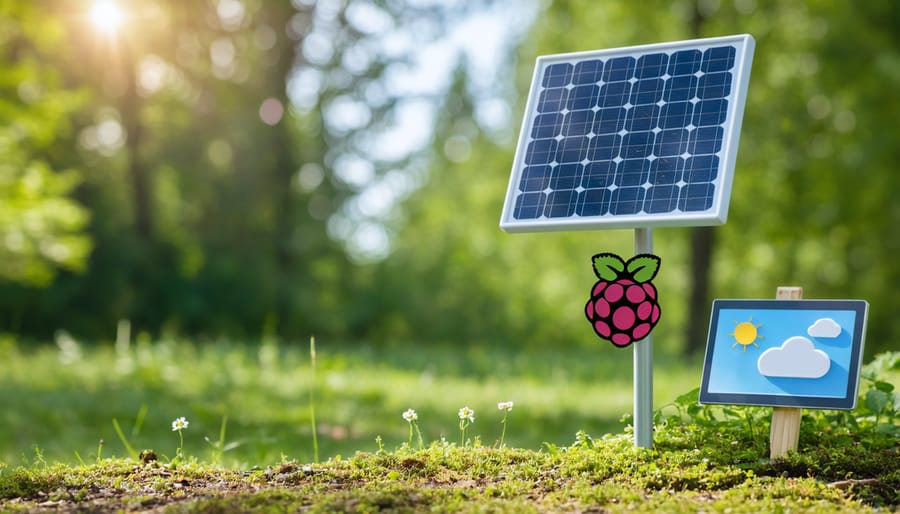
Solar energy has become increasingly popular in IoT projects with Raspberry Pi, particularly in environmental monitoring and smart home applications. Makers are creating solar-powered weather stations that track temperature, humidity, and air quality, operating completely off-grid. Smart garden systems utilize solar panels to power sensors that monitor soil moisture and automatically control irrigation systems, making sustainable agriculture accessible to hobbyists.
Another innovative application is solar-powered security cameras that can be installed in remote locations without access to traditional power sources. These systems often incorporate power management features that optimize energy usage based on available sunlight and battery levels. Environmental monitoring stations powered by solar energy can collect and transmit data about wildlife patterns, water quality, or forest conditions, contributing to conservation efforts while demonstrating the practical benefits of renewable energy in IoT implementations.
Smart city projects are also embracing solar-powered IoT devices for traffic monitoring, air quality sensing, and public lighting control, showcasing how renewable energy can power the future of urban technology.
Solar energy stands as a prime example of a truly renewable resource, harnessing the endless power of sunlight to generate clean, sustainable electricity. This fundamental understanding makes it an ideal power source for Raspberry Pi projects, offering makers and enthusiasts an eco-friendly way to power their innovations. By implementing solar panels in your Pi projects, you’re not only creating self-sustaining systems but also contributing to environmental conservation.
The practical applications are diverse and exciting. From solar-powered weather stations and garden monitoring systems to off-grid security cameras, the combination of solar energy and Raspberry Pi opens up endless possibilities for sustainable tech projects. The renewable nature of solar power ensures that these projects can run indefinitely with minimal maintenance, making them perfect for remote installations or educational demonstrations.
As we continue to face environmental challenges, incorporating solar energy into your Raspberry Pi projects represents a forward-thinking approach to maker culture. It’s a practical way to learn about both renewable energy systems and embedded computing while creating meaningful, sustainable solutions for real-world problems.