
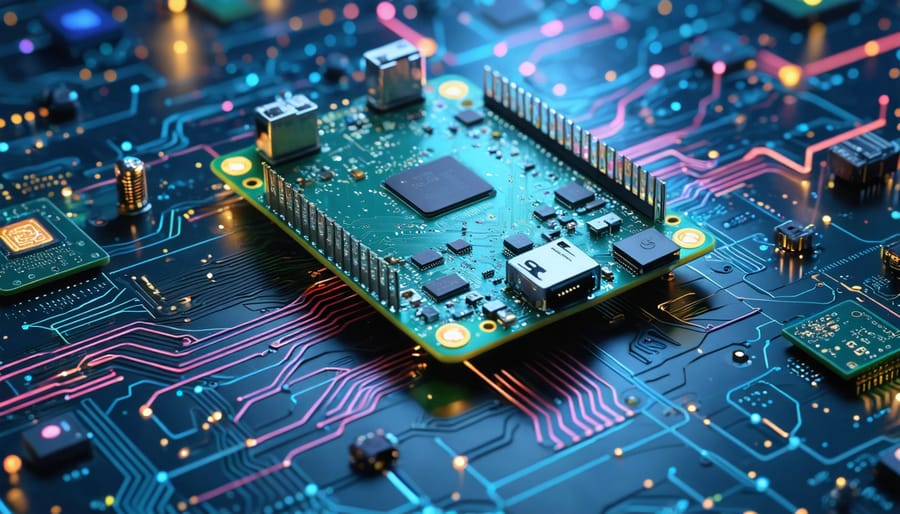
The Raspberry Pi’s heart beats with ARM architecture, powering millions of projects worldwide from basic computing to advanced AI applications. As a complete ARM-based computer system, every Raspberry Pi model – from the original Pi 1 to the latest Pi 4 – utilizes ARM processors designed by ARM Holdings and manufactured by Broadcom. This architectural choice delivers an optimal balance of power efficiency and computing capability, making these pocket-sized computers ideal for everything from educational projects to sophisticated IoT deployments. ARM’s RISC (Reduced Instruction Set Computing) architecture provides the foundation for the Pi’s remarkable versatility, enabling it to run full Linux distributions while consuming minimal power. Understanding this ARM foundation is crucial for developers and hobbyists looking to maximize their Pi’s potential, especially when working with specialized applications or custom firmware development.
Understanding ARM Architecture in Raspberry Pi
ARM vs. x86: Key Differences
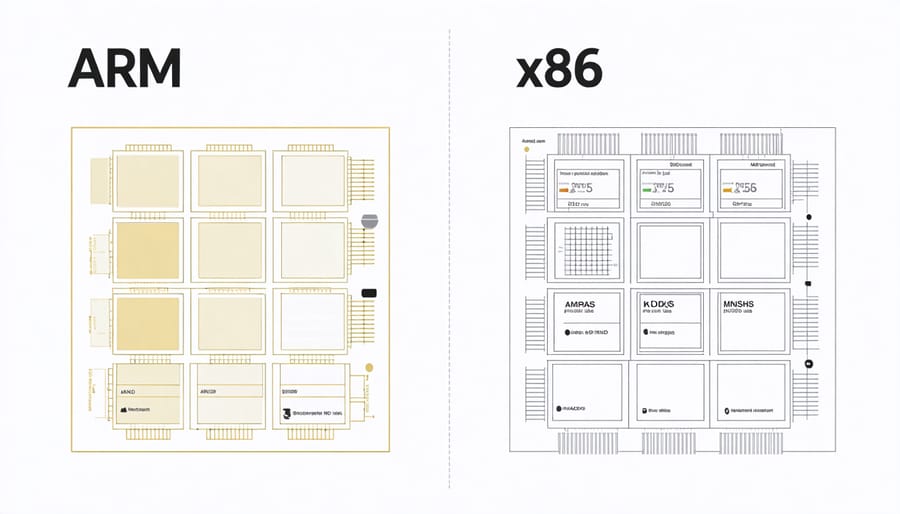
When comparing ARM and x86 architectures, several key differences emerge that influence their performance and use cases. ARM architecture fundamentals showcase a simpler, more streamlined design focused on power efficiency. Unlike x86 processors, which use Complex Instruction Set Computing (CISC), ARM employs Reduced Instruction Set Computing (RISC), resulting in lower power consumption and heat generation.
X86 processors, commonly found in desktop computers and laptops, excel at handling complex tasks simultaneously but require more power and cooling. ARM processors, on the other hand, prioritize energy efficiency and are ideal for mobile devices and embedded systems like the Raspberry Pi.
The instruction set architecture also differs significantly. ARM’s simpler instruction set means fewer transistors are needed, leading to cheaper manufacturing costs and better battery life. While x86 processors might offer higher raw performance in some scenarios, ARM’s efficiency and cost-effectiveness make it the perfect choice for devices where power consumption and size matter most.
ARM’s Energy Efficiency Advantage
One of the most significant advantages of ARM architecture in Raspberry Pi devices is their exceptional energy efficiency, making them ideal for AI applications and edge computing. ARM processors are designed with power optimization at their core, consuming significantly less energy compared to traditional x86 processors while maintaining impressive performance levels.
For AI applications, this energy efficiency is particularly crucial. When running machine learning models or processing sensor data, Raspberry Pi devices can operate continuously for extended periods without generating excessive heat or requiring elaborate cooling systems. This makes them perfect for battery-powered projects and remote deployments where power consumption is a critical factor.
The power efficiency of ARM processors also translates to cost savings in the long run. Whether you’re setting up a home automation system or developing an AI-powered surveillance camera, the lower power consumption means reduced electricity bills and longer battery life. This efficiency doesn’t come at the expense of performance, as modern ARM processors in Raspberry Pi devices are specifically optimized for tasks like neural network inference and real-time data processing.
ARM’s Role in AI Processing
Neural Network Performance
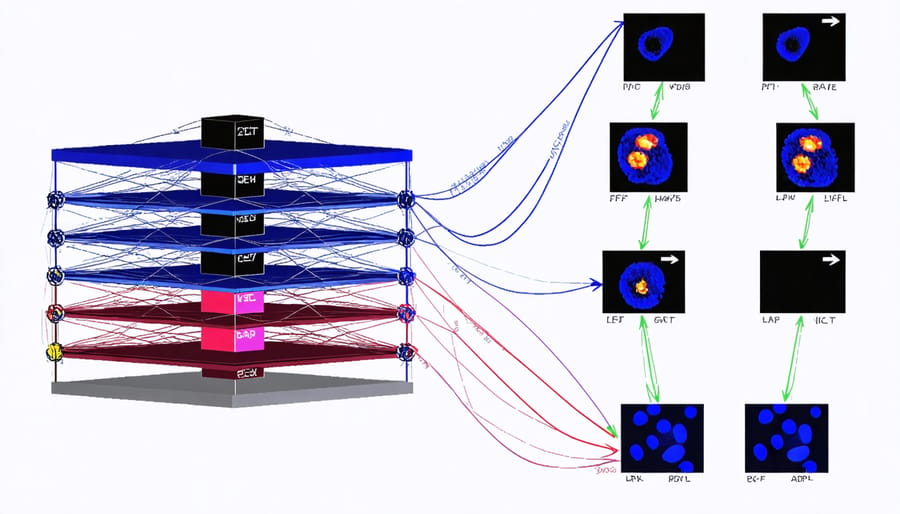
ARM processors in Raspberry Pi devices have made significant strides in handling neural networks, particularly with recent models like the Pi 4 and Pi 5. While they may not match the raw processing power of dedicated GPU systems, these ARM-based devices can effectively run various machine learning applications when properly configured. To optimize neural network performance, users can leverage frameworks like TensorFlow Lite and PyTorch Mobile, which are specifically designed for ARM architectures.
The ARM architecture’s efficiency in handling parallel processing tasks makes it surprisingly capable for lightweight neural network applications. Many developers have successfully implemented image recognition, natural language processing, and even real-time object detection projects on their Raspberry Pi devices. The key lies in using quantized models and optimized libraries that take advantage of ARM’s NEON technology for enhanced vector processing.
For hobbyists and educators, this means being able to create AI-powered projects without investing in expensive hardware. Common applications include smart home automation, computer vision projects, and voice recognition systems. While there are limitations to consider, the ARM architecture in Raspberry Pi provides an accessible entry point into the world of neural networks and machine learning.
Machine Learning Optimization
The ARM architecture of Raspberry Pi makes it particularly well-suited for machine learning optimization, especially when working with frameworks specifically designed for ARM processors. TensorFlow Lite and OpenCV have been optimized to run efficiently on ARM-based systems, allowing developers to leverage these tools for AI projects without excessive resource consumption.
To maximize machine learning performance on your Raspberry Pi, consider using quantization techniques to reduce model size and computational requirements. This involves converting floating-point weights to fixed-point or integer values, which execute faster on ARM processors while maintaining reasonable accuracy. Edge Impulse and similar platforms offer tools specifically designed for optimizing ML models on ARM devices like the Raspberry Pi.
For real-time inference, utilizing the Pi’s GPU through OpenGL ES can significantly boost performance when running convolutional neural networks. The VideoCore GPU, while not as powerful as desktop alternatives, can still accelerate certain ML tasks when properly optimized.
Remember to monitor CPU temperature and power consumption during ML operations, as intensive processing can strain the system. Using lightweight models and implementing efficient data preprocessing can help maintain stable performance while extending the lifespan of your Raspberry Pi.
Real-World AI Applications
Computer Vision Projects
The ARM architecture of Raspberry Pi makes it particularly well-suited for computer vision applications, offering an excellent platform for image processing and recognition projects. Using popular libraries like OpenCV and TensorFlow Lite, enthusiasts can create sophisticated vision systems without breaking the bank.
One of the most accessible projects is creating a smart security camera that can detect motion and identify objects. By combining a Raspberry Pi Camera Module with pre-trained machine learning models, you can build a system that sends alerts when it detects people, animals, or specific objects in frame.
Plant monitoring systems represent another exciting application, where the Pi can analyze leaf health through color detection and pattern recognition. These systems can automatically alert gardeners about potential disease or nutrient deficiencies in their plants.
For makers interested in quality control, Raspberry Pi can power automated inspection systems. These setups can detect defects in manufacturing processes or sort items based on visual characteristics, demonstrating the industrial potential of ARM-based computing.
Educational projects like facial recognition door locks or gesture-controlled interfaces help beginners understand both computer vision concepts and ARM architecture capabilities. These projects typically run efficiently on the Pi’s ARM processor, thanks to optimized libraries and the processor’s ability to handle parallel processing tasks effectively.
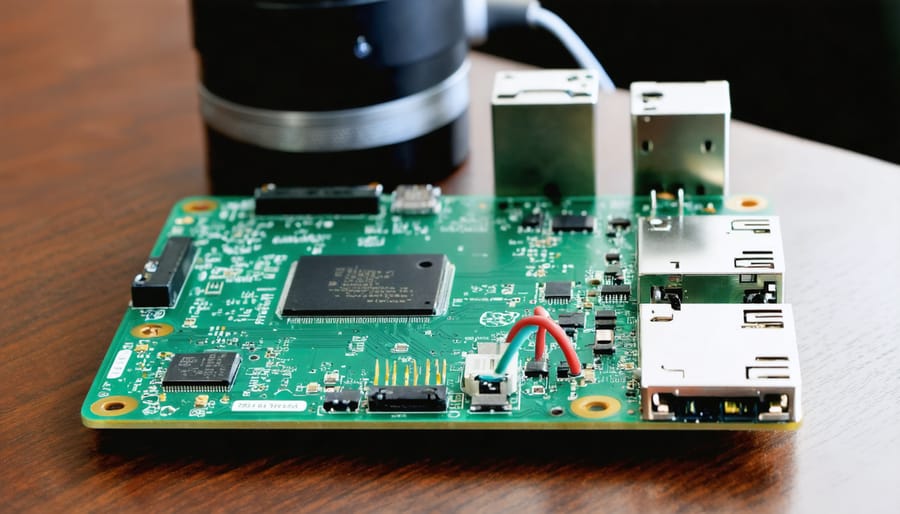
Edge Computing Solutions
The ARM architecture of Raspberry Pi makes it an excellent platform for edge computing solutions, particularly in AI and machine learning applications. Edge computing brings data processing closer to where it’s generated, reducing latency and bandwidth requirements while enhancing privacy and real-time capabilities.
Raspberry Pi’s ARM-based processors are particularly well-suited for edge AI applications due to their efficient power consumption and capable processing power. Popular edge computing projects include real-time image recognition, voice assistants, and sensor data analysis. For instance, you can build a smart security camera that processes footage locally rather than sending it to the cloud, or create an IoT weather station that analyzes environmental data in real-time.
TensorFlow Lite, specifically designed for edge devices, runs efficiently on Raspberry Pi’s ARM architecture. This allows developers to deploy trained machine learning models for tasks like object detection, facial recognition, and natural language processing directly on the device. Other frameworks like OpenCV also perform well on Raspberry Pi, enabling computer vision applications at the edge.
The combination of ARM architecture and readily available AI frameworks makes Raspberry Pi an accessible and cost-effective solution for edge computing. Developers can prototype and deploy edge AI solutions without significant infrastructure investments, making it ideal for both educational purposes and proof-of-concept projects in professional settings.
Maximizing ARM Performance for AI
To maximize AI performance on your Raspberry Pi’s ARM processor, focus on optimizing both your software implementation and hardware utilization. Start by using lightweight AI frameworks specifically designed for ARM architecture, such as TensorFlow Lite or ONNX Runtime. These frameworks are optimized for mobile and embedded devices, ensuring better performance on your Pi.
Consider implementing model quantization, which reduces the precision of your AI model’s weights from 32-bit floating-point to 8-bit integers. This technique significantly decreases memory usage and computational requirements while maintaining acceptable accuracy levels. For image processing tasks, utilize OpenCV with ARM NEON acceleration to boost performance.
Memory management is crucial for AI workloads. Increase your swap space and adjust the GPU memory split based on your specific needs. For neural network inference, allocate more memory to the GPU when running computer vision tasks, but favor CPU memory for natural language processing applications.
Take advantage of multi-threading capabilities by distributing AI workloads across multiple cores. The Raspberry Pi 4’s quad-core processor can handle parallel processing effectively when properly utilized. Additionally, consider using edge computing techniques by pre-processing data locally before sending it to your AI model, reducing computational overhead.
For real-time AI applications, optimize your Python code by using NumPy vectorization and implementing critical sections in C++ through Python bindings. This hybrid approach leverages ARM’s native performance while maintaining code readability and ease of development.
The ARM architecture of Raspberry Pi has proven to be a game-changer for AI applications, offering an ideal balance of power efficiency and computational capability. Its ability to handle neural networks and machine learning algorithms while maintaining low power consumption makes it perfect for edge computing and IoT projects. The ARM-based processors in Raspberry Pi enable developers and enthusiasts to create sophisticated AI applications without requiring expensive hardware setups. As AI continues to evolve, the ARM architecture’s scalability and growing ecosystem of AI-optimized tools and libraries position Raspberry Pi as an invaluable platform for experimentation and learning. Whether you’re building a computer vision system, developing natural language processing applications, or creating smart home automation solutions, the ARM architecture provides the foundation needed to bring your AI projects to life.