
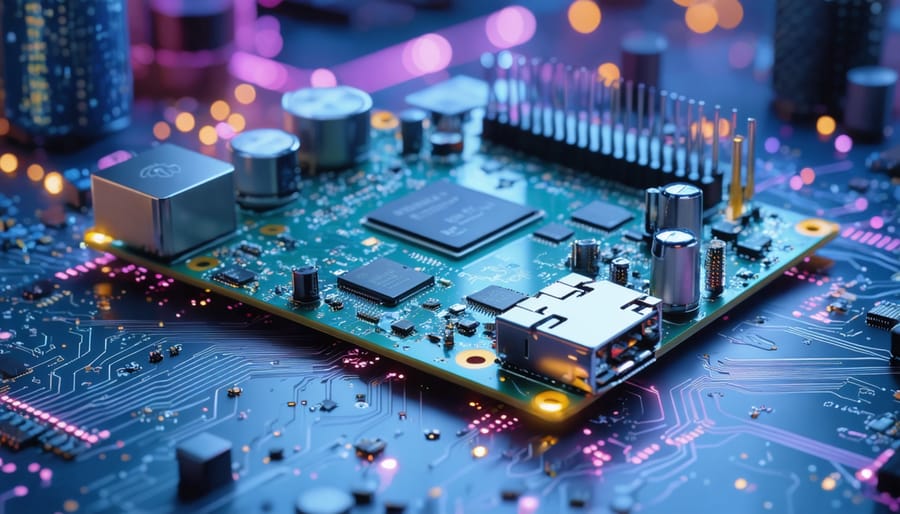
The Raspberry Pi 5 marks a revolutionary leap forward from the previous Raspberry Pi 4, delivering unprecedented performance that transforms home computing and DIY electronics. Powered by a 2.4GHz quad-core 64-bit ARM Cortex-A76 processor, this compact powerhouse delivers up to 2-3x performance gains across real-world applications. Makers, developers, and educators can now tackle machine learning projects, run multiple 4K displays, and handle desktop-class applications with remarkable efficiency.
The addition of PCIe 2.0 connectivity, dual 4K@60Hz display outputs, and enhanced GPIO performance opens new possibilities for robotics, home automation, and educational projects. With improved thermal management and power delivery systems, the Pi 5 maintains stable performance under heavy loads while remaining energy efficient.
The Raspberry Pi Foundation’s commitment to accessibility continues with a starting price of $60 for the 4GB model, making cutting-edge computing power available to enthusiasts worldwide. Whether you’re building a retro gaming console, setting up a home server, or teaching computer science, the Pi 5 represents a significant milestone in single-board computing evolution.
Revolutionary Performance Upgrades
2.4GHz Quad-Core CPU
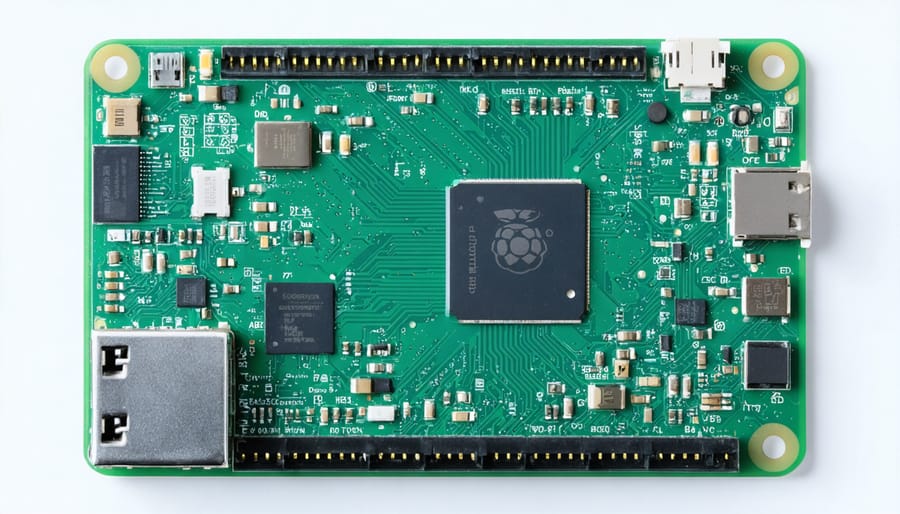
At the heart of the Raspberry Pi 5’s revolutionary upgrades lies its powerful 2.4GHz quad-core CPU, built on ARM Cortex-A76 architecture. This significant leap forward delivers up to three times the performance of its predecessor, making it a game-changer for demanding projects and applications.
Early benchmarks show impressive results, with the Pi 5 scoring consistently higher in both single-thread and multi-thread performance tests. Real-world applications like web browsing, code compilation, and video processing now run notably smoother, with reduced lag and faster response times.
The new processor handles multitasking with remarkable efficiency, allowing users to run multiple applications simultaneously without the slowdown commonly experienced in previous models. This enhancement is particularly beneficial for developers working on complex projects or educators managing classroom demonstrations.
For makers and hobbyists, this processing boost means faster 3D printing calculations, smoother gaming emulation, and more responsive home automation systems. The improved CPU architecture also brings better power efficiency, maintaining optimal performance while managing heat output more effectively.
Enhanced Graphics Performance
The Raspberry Pi 5 introduces the powerful VideoCore VII GPU, marking a significant leap forward in graphics performance. This new graphics processor delivers up to 8 times the performance of its predecessor, enabling smooth 4K video playback at 60fps and enhanced gaming capabilities. The GPU supports OpenGL ES 3.1 and Vulkan 1.2, opening up new possibilities for 3D rendering and graphics-intensive applications.
For makers and enthusiasts, this means the ability to run more demanding applications, create sophisticated digital signage, and develop more complex visual projects. The VideoCore VII supports hardware-accelerated decode for H.265 and H.264 video codecs, making it an excellent choice for media center applications and streaming services.
The improved GPU architecture also benefits machine learning applications, with enhanced support for computer vision and AI processing tasks. Developers can now implement more sophisticated visual recognition systems and real-time image processing applications. Whether you’re building a retro gaming console, digital art installation, or advanced robotics project, the VideoCore VII’s capabilities provide the necessary graphics muscle to bring your ideas to life.
Memory and Storage Innovations
The Raspberry Pi 5 brings significant improvements to memory and storage capabilities, offering enhanced performance for demanding projects. The new board comes in two RAM configurations: 4GB and 8GB LPDDR4X, running at 4267MT/s. This faster memory provides substantially improved bandwidth compared to the Pi 4, enabling smoother multitasking and faster data processing.
Storage options have also received a major upgrade with the new PCIe 2.0 interface, supporting NVMe SSDs through a dedicated connector. This allows for dramatically faster storage speeds compared to traditional microSD cards, with sequential read speeds up to 400MB/s. The microSD card slot hasn’t been forgotten either, featuring improved transfer rates thanks to the enhanced SDIO interface.
For users working with data-intensive applications or running multiple containers, these memory and storage improvements represent a significant leap forward in the Pi’s capabilities.
New Connectivity Features
Dual Display Support
The Raspberry Pi 5 introduces enhanced dual display capabilities, marking a significant improvement over its predecessors. This new model features two micro HDMI ports, both capable of driving 4K displays at an impressive 60Hz refresh rate simultaneously. This is a substantial upgrade from the Pi 4, which could only manage 4K at 30Hz on one of its ports.
For creators and developers working on multi-monitor setups, this advancement opens up new possibilities. Whether you’re building a digital signage solution, creating a multi-screen gaming system, or setting up a compact workstation, the dual 4K60 support ensures smooth, high-quality visual output across both displays.
The display subsystem benefits from the new silicon design, which includes an upgraded GPU and dedicated display pipeline. This means you can run two high-resolution monitors without experiencing the performance bottlenecks that were common in previous models. The micro HDMI ports are also more durable and secure than their full-size counterparts, ensuring a reliable connection for your displays.

Enhanced USB and Network Performance
The Raspberry Pi 5 brings significant improvements to its connectivity options, with USB 3.0 support being one of the most notable upgrades. Users can now enjoy transfer speeds of up to 5 Gbps through the dual USB 3.0 ports, marking a substantial improvement over the Pi 4’s performance. This enhancement means faster data transfers for external SSDs, cameras, and other high-bandwidth peripherals.
The networking capabilities have also received a major boost. The Pi 5 maintains the reliable Gigabit Ethernet port but includes improved controller hardware that delivers more consistent throughput and reduced CPU overhead. This optimization means better network performance even under heavy loads, making the Pi 5 more suitable for network-intensive applications like media servers and network-attached storage solutions.
Another significant improvement is the enhanced PCIe interface, which now provides dedicated lanes for USB and networking operations. This architectural change prevents bandwidth bottlenecks that were sometimes observed in previous models when multiple high-speed devices were operating simultaneously.
For makers and developers working on IoT projects, these improvements translate to more reliable real-time data collection and streaming capabilities. The enhanced USB performance also opens up new possibilities for using the Pi 5 in applications requiring high-speed external storage or video capture devices.
Power Management and Cooling
Active Cooling Solutions
The Raspberry Pi 5 introduces more powerful components that generate significantly more heat, making active cooling essential for optimal performance. Unlike its predecessors, the new model comes with a dedicated power management IC and can benefit greatly from proper cooling solutions to prevent thermal throttling.
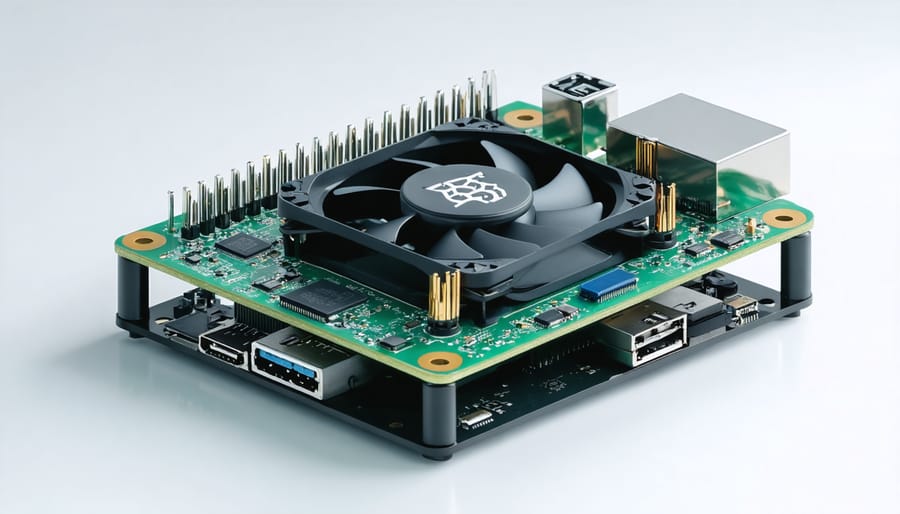
The official Raspberry Pi 5 Active Cooler, featuring a compact yet efficient fan design, is highly recommended for users planning to run demanding applications or overclock their device. This purpose-built cooling solution attaches directly to the board using spring-loaded pins and operates quietly while maintaining temperatures well within safe limits.
For those preferring alternative cooling options, several third-party manufacturers have developed compatible heatsinks and fan combinations. These solutions range from low-profile aluminum heatsinks to more elaborate dual-fan setups. When choosing a cooling solution, consider your specific use case – lightweight projects might work fine with passive cooling, while intensive tasks like machine learning or media transcoding will definitely require active cooling.
Remember that proper cooling not only extends the lifespan of your Raspberry Pi 5 but also ensures consistent performance during extended use periods.
Power Efficiency Features
The Raspberry Pi 5 introduces significant improvements in power efficiency while delivering enhanced performance. The board features advanced power management capabilities that automatically adjust power consumption based on workload demands. When idle, the system can reduce power usage to conserve energy, while seamlessly ramping up when more processing power is needed.
A notable addition is the new active cooling system, which works in conjunction with the power management features to maintain optimal operating temperatures. The official active cooler is designed to be more energy-efficient than previous solutions, operating only when necessary and adjusting its speed based on temperature readings.
Users can now monitor and control power consumption through the improved firmware settings, allowing for customized power profiles that balance performance and energy usage. The board also includes enhanced sleep states and the ability to disable unused components, making it more suitable for battery-powered projects.
For those running headless applications or IoT devices, the new power features can significantly extend battery life while maintaining reliable performance. These improvements make the Raspberry Pi 5 more versatile for both plugged-in and portable applications.
Real-World Applications and Use Cases
Desktop Computing Potential
The Raspberry Pi 5’s enhanced processing power and improved graphics capabilities mark a significant step toward viable desktop computing. With its quad-core 2.4GHz processor and up to 8GB of RAM, the Pi 5 can handle everyday computing tasks like web browsing, document editing, and basic multimedia creation with noticeably less lag than its predecessors.
Running popular Linux distributions like Ubuntu or Raspberry Pi OS, users can expect a smooth desktop experience when managing multiple browser tabs, working with LibreOffice documents, or editing photos. The dual 4K display support at 60Hz opens new possibilities for productivity setups, making it a compelling option for home office use or educational environments.
However, it’s important to maintain realistic expectations. While the Pi 5 can handle most daily computing tasks, it’s not designed to replace high-end desktop computers. Resource-intensive applications like video editing software or modern gaming titles may still pose challenges. The system performs best when running optimized applications and lighter desktop environments.
For users seeking an energy-efficient, compact desktop solution for basic computing needs, the Pi 5 presents an attractive option. Its improved thermal management and power delivery system ensure stable performance during extended use, making it suitable for long working sessions without thermal throttling concerns.
Advanced Project Possibilities
The Raspberry Pi 5’s enhanced processing power and improved GPU capabilities open up a world of exciting project possibilities that were previously challenging or impossible on older models. Machine learning enthusiasts can now run complex neural networks and computer vision applications with significantly reduced latency, making real-time object detection and facial recognition projects more practical.
The upgraded GPU enables smooth 4K video playback and advanced gaming emulation, perfect for creating retro gaming consoles or modern media centers. Home automation developers will appreciate the increased processing power for running multiple simultaneous tasks, from security camera monitoring to smart device control.
The dual-display support at 4K resolution creates opportunities for digital signage projects, advanced monitoring stations, and immersive educational displays. Content creators can leverage the improved performance for lightweight video editing workstations or streaming setups.
For robotics enthusiasts, the enhanced processing capabilities support more sophisticated motion control algorithms and real-time sensor processing. The improved USB bandwidth allows for connecting multiple high-resolution cameras or sensors simultaneously, ideal for advanced robotics projects or environmental monitoring stations.
These capabilities, combined with the familiar Raspberry Pi ecosystem, make the Pi 5 an excellent platform for both learning and creating sophisticated IoT solutions, multimedia applications, and automated systems.
Pricing and Availability
The Raspberry Pi 5 launched on October 23, 2023, with a starting price of $60 for the 4GB RAM model and $80 for the 8GB variant. Following the anticipated release timeline, initial availability was limited to ensure fair distribution among enthusiasts and developers.
The board is available through official Raspberry Pi resellers, including Element14, OKdo, and PiShop, as well as approved regional distributors worldwide. To combat scalping and ensure genuine users have access, many retailers have implemented purchase limits and queue systems.
Essential accessories like the new active cooler ($5) and updated power supply ($12) are also available through the same channels. The official case, priced at $10, provides protection while maintaining optimal airflow for the enhanced thermal management system.
For those planning to purchase, it’s recommended to sign up for stock notifications from authorized sellers and join waiting lists where available. While initial demand has created some supply constraints, production is steadily increasing to meet market needs. Educational institutions and approved industrial customers may receive priority access through specialized channels.
Remember to factor in the cost of necessary accessories when budgeting for your Raspberry Pi 5 project, as the new model’s power and cooling requirements differ from previous versions.
The Raspberry Pi 5 represents a significant leap forward in single-board computing, offering substantial improvements that make it a compelling choice for both newcomers and seasoned makers. With its dramatically enhanced CPU performance, improved GPU capabilities, and robust connectivity options, this latest iteration opens up new possibilities for projects ranging from home automation to advanced machine learning applications.
The addition of PCIe and dual-display support, coupled with improved thermal management, positions the Pi 5 as a more viable alternative to traditional desktop computers. These improvements not only benefit current users but also attract a broader audience to the Raspberry Pi ecosystem, potentially accelerating innovation in the maker community.
Looking ahead, the Pi 5’s capabilities suggest a future where single-board computers play an increasingly important role in education, prototyping, and real-world applications. While the price increase may give some users pause, the significant performance gains and new features justify the investment for those seeking a more powerful and versatile platform. As the ecosystem continues to grow with new accessories and software optimizations, the Raspberry Pi 5 sets a new standard for what we can expect from affordable computing platforms.