


University hackathons transform casual coders into innovative problem-solvers over intense 24-48 hour sprints of creativity, collaboration, and caffeine. These high-energy events bring together hundreds of students from diverse academic backgrounds to tackle real-world challenges using technology. Whether building AI-powered apps, crafting IoT solutions, or developing groundbreaking web platforms, participants gain invaluable hands-on experience while connecting with industry mentors and potential employers.
Beyond the impressive technical projects, hackathons serve as vibrant ecosentials of entrepreneurship and learning. Students master rapid prototyping, perfect their pitch presentations, and develop crucial teamwork skills under pressure. Major tech companies frequently sponsor these events, offering workshops, networking opportunities, and often recruiting talented participants directly from the hackathon floor.
For universities, hackathons have become powerful catalysts for innovation, helping bridge the gap between academic theory and practical application. They showcase student talent, strengthen industry partnerships, and inspire the next generation of tech leaders. Whether you’re a coding veteran or just starting your programming journey, university hackathons provide an unparalleled platform to push boundaries, learn new skills, and potentially launch the next big tech innovation.
Why University Hackathons Matter for Pi Enthusiasts
Innovation Breeding Grounds
University hackathons serve as dynamic incubators where innovation thrives through collaborative problem-solving. These events create the perfect environment for students to transform ambitious ideas into working prototypes, particularly in the realm of open source Pi projects and other technological innovations. The time-constrained nature of hackathons pushes participants to think creatively and act decisively, often leading to breakthrough solutions that might not emerge in traditional academic settings.
These events typically provide essential resources like hardware components, mentorship, and technical support, enabling students to experiment with cutting-edge technologies without financial barriers. The competitive yet collaborative atmosphere encourages cross-pollination of ideas between different disciplines, resulting in unique solutions that blend hardware, software, and creative thinking.
Many successful startups and widely-used applications have originated from university hackathons, demonstrating their effectiveness as launching pads for innovation. The rapid prototyping environment also helps students develop crucial skills in project management, team collaboration, and creative problem-solving that prove invaluable in their future careers.

Real-world Problem Solving
University hackathons have yielded numerous practical solutions to real-world challenges. Students have developed innovative healthcare applications, like a smart pill dispenser that helps elderly patients maintain their medication schedules using Raspberry Pi and IoT sensors. Environmental monitoring systems have emerged from hackathons, with teams creating devices that track air quality and water pollution levels in urban areas.
One notable example is a student team that developed a low-cost assistive technology device for visually impaired individuals, using computer vision and haptic feedback to navigate indoor spaces. Another successful project created a smart agriculture system that optimizes water usage and monitors crop health through soil sensors and automated irrigation controls.
Social impact projects are also common, with teams developing platforms to connect food banks with donors, or creating emergency response systems for natural disasters. These solutions often combine hardware prototyping with software development, demonstrating how hackathons foster practical innovation. Many of these projects continue beyond the event, evolving into startups or open-source initiatives that benefit communities worldwide.
Popular Raspberry Pi Hackathon Categories
IoT and Smart Solutions
IoT and smart solutions have become increasingly popular categories at university hackathons, with students leveraging Raspberry Pi boards to create innovative connected devices. Teams frequently develop projects ranging from smart home automation systems to environmental monitoring solutions. The versatility of Raspberry Pi, combined with various sensors and actuators, enables participants to build proof-of-concept IoT devices that address real-world challenges.
Common projects include smart campus solutions that monitor classroom occupancy, automated greenhouse systems, and wearable health monitoring devices. Participants often face challenges with network connectivity solutions and data management, pushing them to develop creative workarounds and efficient protocols.
Successful IoT projects typically incorporate cloud platforms like AWS IoT or Google Cloud IoT Core, allowing devices to communicate and process data effectively. Many teams also implement mobile apps as user interfaces, creating comprehensive ecosystem solutions. These projects not only demonstrate technical prowess but also provide valuable experience in working with emerging technologies that are increasingly relevant in today’s connected world.
Security Applications
Security-focused hackathon projects often tackle real-world cybersecurity challenges, with students developing innovative solutions for threat detection, encryption, and network protection. Popular implementations include intrusion detection systems, secure authentication methods, and vulnerability scanning tools. Teams frequently create projects that address emerging security concerns like IoT device protection, blockchain security, and mobile app vulnerabilities.
Many successful security projects have emerged from university hackathons, including advanced password managers, encrypted messaging applications, and network monitoring tools. These projects often incorporate machine learning algorithms to detect unusual patterns and potential security breaches. Students also develop solutions for common security issues like cross-site scripting (XSS) prevention and SQL injection protection.
The hands-on experience gained through security-focused hackathon projects helps participants understand practical cybersecurity challenges while building valuable skills sought after by employers in the information security industry. Many of these projects continue to evolve after the hackathon, with some becoming open-source tools used by the broader security community.
Educational Tools
University hackathons frequently spawn innovative educational tools that transform learning experiences. Teams often develop interactive learning platforms, coding tutorials, and classroom management systems that address real educational challenges. Popular projects include language learning apps that utilize speech recognition, virtual lab simulators for science experiments, and gamified math learning platforms.
Notable examples include automated grading systems that help teachers save time, collaborative study platforms that facilitate peer-to-peer learning, and adaptive learning tools that personalize content based on student performance. Many teams leverage hardware components to create hands-on learning experiences, such as interactive circuit boards for teaching electronics or augmented reality systems for visualizing complex concepts.
These educational projects often find their way into actual classrooms, with successful implementations benefiting both students and educators. The open-source nature of many hackathon projects allows for continuous improvement and adaptation by the broader education community, creating lasting impact beyond the event itself.
Getting Started with University Hackathons
Essential Equipment and Preparation
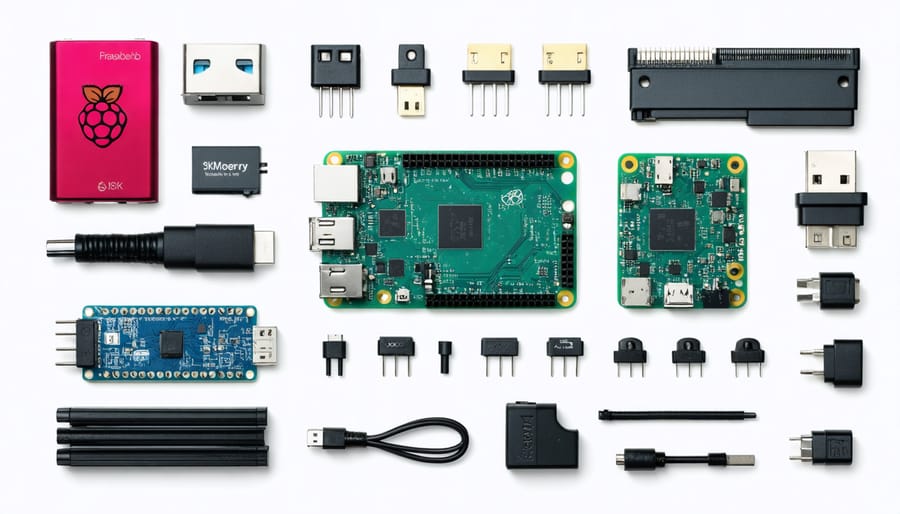
Proper preparation is crucial for a successful hackathon experience. Start with your primary development device – typically a laptop with your preferred programming environment already set up. If you’re planning to work with Raspberry Pi, ensure you’re comfortable with connecting via SSH and have all necessary peripherals.
Essential items to pack:
– Laptop and charger
– Power strip or extension cord
– USB drives for file transfers
– Notebook and pen for brainstorming
– Basic electronics toolkit if working with hardware
– Raspberry Pi and components (if required)
– Comfortable headphones
– Water bottle and snacks
– Personal hygiene items
– A small pillow or neck support
Before the event, install all necessary development tools, SDKs, and frameworks you might need. Create offline documentation archives to avoid dependency on internet connectivity. Test your development environment thoroughly and ensure your laptop’s battery is in good condition.
Consider preparing a project starter template or boilerplate code to save time during the event. Join the hackathon’s Discord or Slack channel early to network with potential teammates and familiarize yourself with the event’s rules and requirements. Get plenty of rest the night before – you’ll need the energy for the intensive coding sessions ahead.
Finding and Joining Events
Finding the right hackathon can be an exciting first step in your tech journey. Several popular platforms serve as excellent starting points for discovering university hackathons. Major League Hacking (MLH), the official student hackathon league, maintains a comprehensive calendar of events across North America and Europe. Their website lets you filter events by location, date, and focus area.
DevPost is another valuable resource that lists both in-person and virtual hackathons, often featuring events specifically focused on emerging technologies and innovative computing platforms. Many of these events welcome projects utilizing single-board computers and IoT devices.
Social media platforms, particularly Discord servers and LinkedIn groups dedicated to hackathons, can help you connect with event organizers and fellow participants. Following university tech clubs and computer science departments on Twitter or Instagram often yields announcements about upcoming events.
To join a hackathon, typically you’ll need to register through the event’s official website or platform. Most university hackathons welcome students from other institutions, though some may have specific eligibility requirements. When registering, you’ll usually need to provide basic information about your skills, interests, and any project ideas you might have.
Remember to register early, as popular events can fill up quickly. Many hackathons also offer team-building sessions or Discord channels where you can find teammates before the event begins.
Success Stories and Project Showcases
Award-Winning Projects
University hackathons have produced numerous groundbreaking projects that demonstrate students’ innovative problem-solving abilities. One standout example is “SmartCane,” developed at MIT’s HackMIT, which transformed a regular walking cane into an IoT-enabled device using a Raspberry Pi. The project won first place for its practical application in helping visually impaired individuals navigate urban environments through haptic feedback and real-time obstacle detection.
At HackGT, Georgia Tech’s premier hackathon, a team created “GreenThumb,” an automated plant care system powered by Raspberry Pi that earned the Sustainability Innovation Award. The system monitors soil moisture, light levels, and temperature while implementing machine learning to optimize growing conditions for different plant species.
The University of California Berkeley’s CalHacks saw the emergence of “SafeSpace,” a mental health monitoring platform that combines Raspberry Pi sensors with AI to detect stress levels in shared living spaces. This project earned both the Health Tech Award and Community Impact Prize for its innovative approach to wellness in university dormitories.
Success at hackathons often comes down to not just technical execution but also documenting your projects effectively. The “EcoRoute” project from Stanford’s TreeHacks exemplifies this, winning Best Documentation alongside Technical Excellence for their comprehensive guide to creating a sustainable transportation routing system using Raspberry Pi and open-source mapping tools.
These award-winning projects showcase how university hackathons serve as launching pads for innovative solutions that address real-world challenges while demonstrating the versatility of platforms like Raspberry Pi in prototype development.

From Hackathon to Market
University hackathons have proven to be fertile ground for innovative startups and market-ready products. One notable success story is Scan, which began as a QR code scanning project at a University of Southern California hackathon. The team later secured funding on Shark Tank and was eventually acquired by Snapchat for $54 million, demonstrating the potential for hackathon projects to evolve into valuable business ventures.
ThoughtSpot, now a major player in business intelligence software, traces its roots to a hackathon project at Stanford University. What started as a search-driven analytics prototype has grown into a company valued at over $4.2 billion, employing hundreds of people worldwide.
More recent success stories include Envision, which began as an AI-powered assistant for visually impaired users at a Dutch university hackathon. Within two years, the project transformed into a full-fledged startup, securing multiple rounds of funding and helping thousands of users worldwide.
Not all successful transitions from hackathon to market need to be massive enterprises. Many projects find their niche in smaller but equally impactful markets. For instance, StudyStream, conceived at a Berkeley hackathon, started as a virtual study room platform during the pandemic and quickly grew to serve over 400,000 students globally.
These success stories share common elements: they identified real problems, developed practical solutions during hackathons, and most importantly, persisted with their ideas long after the event ended. The hackathon environment provides the initial spark, but it’s the dedication to refining and scaling the solution that transforms a weekend project into a market success.
University hackathons have emerged as powerful catalysts for Raspberry Pi innovation, fostering a vibrant ecosystem of creativity and technological advancement. These events have consistently demonstrated their ability to push the boundaries of what’s possible with single-board computers, resulting in groundbreaking projects that address real-world challenges. From smart home solutions to environmental monitoring systems, hackathon participants have showcased the versatility and potential of Raspberry Pi platforms.
The impact extends far beyond the event itself. Many successful projects born at university hackathons have evolved into full-fledged products or open-source initiatives, benefiting the broader maker community. These events have also played a crucial role in bridging the gap between academic learning and practical application, helping students develop essential skills in programming, hardware design, and project management.
For those considering participation in a university hackathon, the opportunities are boundless. Whether you’re a beginner or an experienced maker, these events provide an ideal environment to learn, collaborate, and innovate. The supportive community, mentorship opportunities, and resource availability make hackathons an invaluable experience for anyone interested in Raspberry Pi development.
Looking ahead, university hackathons will continue to drive innovation in the Raspberry Pi ecosystem, creating new possibilities for technology education and development. By participating in these events, you’re not just building projects – you’re becoming part of a movement that’s shaping the future of educational computing and DIY technology.