
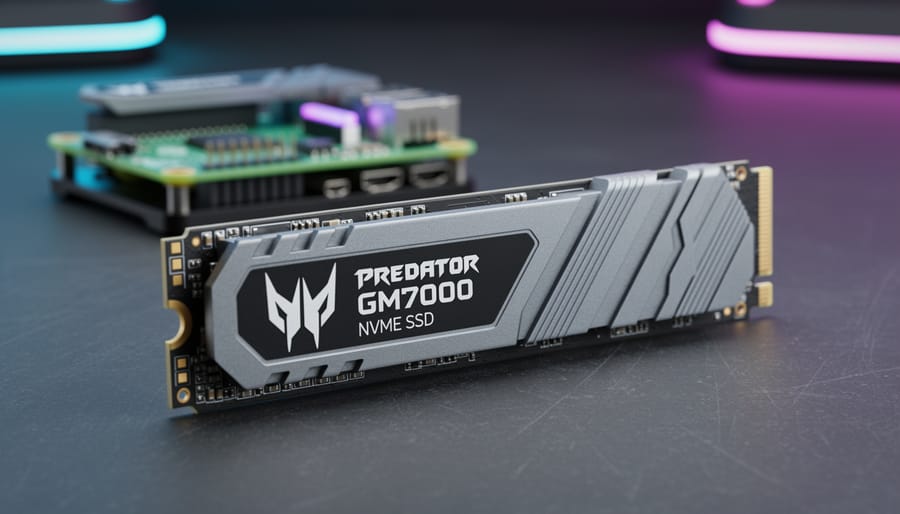
The Acer Predator GM7000 is overkill for Raspberry Pi 5 and won’t deliver the gaming-grade speeds it promises, but it remains a solid, if pricey, choice for hobbyists who want headroom for future projects. While this PCIe Gen4 drive can theoretically reach blistering transfer rates on high-end PCs, the Pi 5’s PCIe Gen3 x1 interface becomes the limiting factor, capping real-world throughput well below the SSD’s native capabilities. That means you’re paying a premium for features you can’t fully utilize right now.
Still, compatibility isn’t the issue here. The drive fits standard M.2 2280 slots, works without fuss on Pi 5 setups with proper cooling adapters, and brings generous capacity options that make sense for media servers, NAS builds, or development environments where storage space matters more than raw speed. The real question is whether spending extra for Gen4 hardware makes sense when your Pi can’t exploit it. For most users building typical Pi projects in 2026, the answer leans toward no, unless you’re planning to repurpose this drive in a full desktop build later or you simply want the peace of mind that comes with higher-tier components.
Our Verdict: Gaming SSD Meets Single-Board Computing
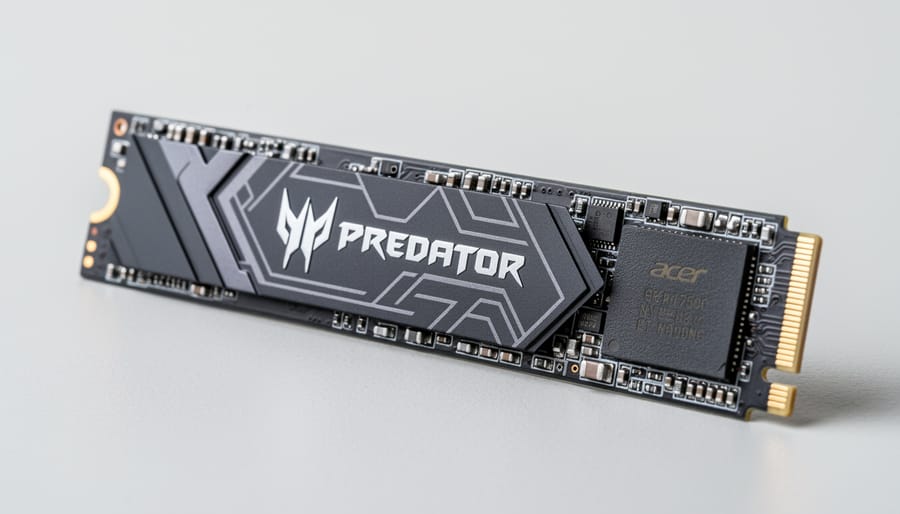
The Acer Predator GM7000 is overkill for most Raspberry Pi 5 projects, but that doesn’t make it a bad choice. This PCIe Gen4 drive delivers solid performance when paired with the Pi 5’s Gen 3 interface, though you won’t extract its full gaming-grade capabilities. The real question isn’t whether it works, it does, but whether the premium price justifies what you actually get.
For typical Pi applications like media servers, lightweight programming, or retro gaming, you’re paying for speed headroom you’ll rarely tap. The Pi 5’s PCIe Gen 3 interface caps theoretical bandwidth well below what this Gen4 drive offers. In practice, you’ll experience snappy boot times and responsive file operations, but a competent Gen3 drive delivers remarkably similar real-world responsiveness at a lower cost.
Where the GM7000 earns its keep is in builds that push storage hard: AI model training, database-heavy applications, frequent large file transfers, or development environments with heavy compilation workloads. The drive’s endurance rating and thermal characteristics also matter for always-on projects like home servers or network-attached storage setups, though you’ll need adequate cooling in enclosed cases.
Compatibility is straightforward with any quality M.2 HAT+ adapter. The 2280 form factor fits standard Pi accessories without modification. Power draw remains within typical USB-C supply capabilities, though demanding workloads might warrant a higher-wattage adapter.
The value proposition hinges on your project scope and budget flexibility. If you’re building a capable Pi 5 system and plan intensive storage use, the GM7000 provides headroom for demanding tasks. Budget-conscious builders and casual users should look elsewhere, several Gen3 alternatives deliver excellent Pi performance at friendlier price points without sacrificing noticeable responsiveness for typical workloads.
Who Should Consider the Acer Predator GM7000 for Raspberry Pi
This SSD makes sense for Raspberry Pi users who need serious storage performance and don’t mind paying for it. If you’re building a Pi NAS setup handling multiple simultaneous streams, running containerized applications with frequent disk access, or compiling large codebases where every second counts, the Predator GM7000 delivers consistently fast response times that cheaper drives can’t match.
- Media server operators streaming high-bitrate 4K content to multiple devices simultaneously
- Developers working with Docker containers, virtual machines, or CI/CD pipelines where disk I/O affects productivity
- AI and machine learning enthusiasts processing datasets and training models locally
- Retro gaming enthusiasts running emulation stations with large ROM libraries requiring quick loading
- Advanced users who value responsiveness and reliability over absolute rock-bottom pricing
Skip this drive if you’re running basic projects like home automation dashboards, simple web servers, or educational coding exercises. Budget-conscious builders will find better value in Gen3 alternatives that cost half as much while still outperforming microSD cards substantially. Similarly, if you’re designing an ultra-low-power portable project or prioritizing the smallest possible power draw, less aggressive SSDs consume fewer watts at idle and under load. The GM7000’s gaming pedigree brings performance headroom most casual Pi projects simply won’t utilize, making the premium harder to justify unless your workload genuinely stresses storage subsystems.
Compatibility and Setup with Raspberry Pi 5
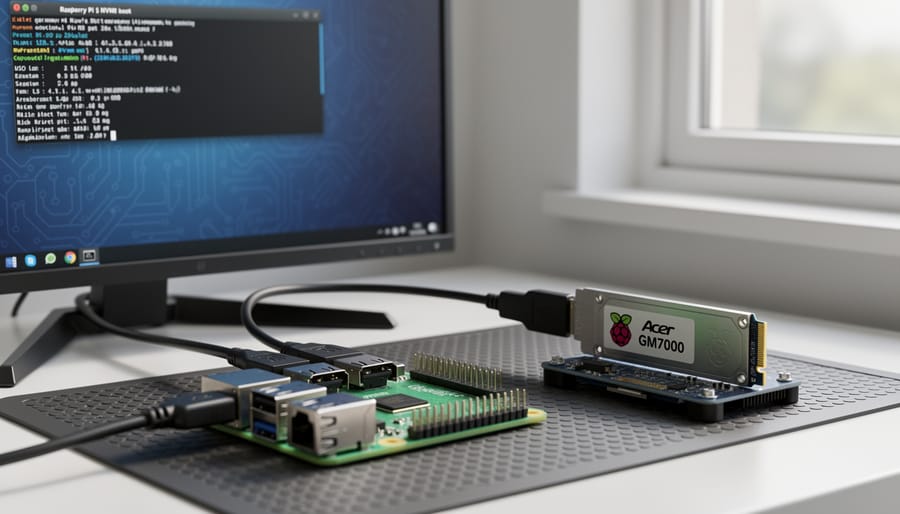
The Acer Predator GM7000’s M.2 2280 form factor works with Raspberry Pi 5, but you’ll need a compatible HAT+ adapter or base board that exposes the Pi’s PCIe interface. Popular options include the official Raspberry Pi M.2 HAT+ and third-party alternatives from Pimoroni and Geekworm. Installation is straightforward: slot the drive into your chosen adapter, secure it with the included standoff, attach the adapter to your Pi’s board, and proceed with your Raspberry Pi 5 setup.
This means the GM7000’s Gen4 capabilities won’t deliver their full potential speeds. You’ll see performance improvements over microSD cards and USB storage, but the Pi’s hardware bottleneck prevents you from reaching the drive’s rated 7,400 MB/s reads. The good news is that Gen4 drives like this one remain fully backward-compatible, dropping to Gen3 speeds without any configuration hassle.
Power demands matter more than you might expect. The GM7000 can draw several watts under load, and when combined with your Pi and peripherals, this may push you beyond the capabilities of a basic 3A power supply. A quality 5A USB-C adapter is recommended for stable operation, especially if you’re running demanding workloads or adding other accessories.
Thermal management deserves attention. The drive ships with a heatsink designed for PC installations, but it typically won’t fit under most Pi HAT+ enclosures. You’ll likely need to remove it and either rely on passive cooling from your case or add a small dedicated heatsink that fits the HAT’s clearances. Active cooling isn’t usually necessary for typical Pi workloads, though intensive continuous writes benefit from airflow.
Before flashing Raspberry Pi OS to the drive, verify your HAT+ adapter’s compatibility and firmware status. Some adapters require initial setup via the Pi’s official imaging tool to enable NVMe boot properly.
Performance Characteristics for Raspberry Pi Workloads
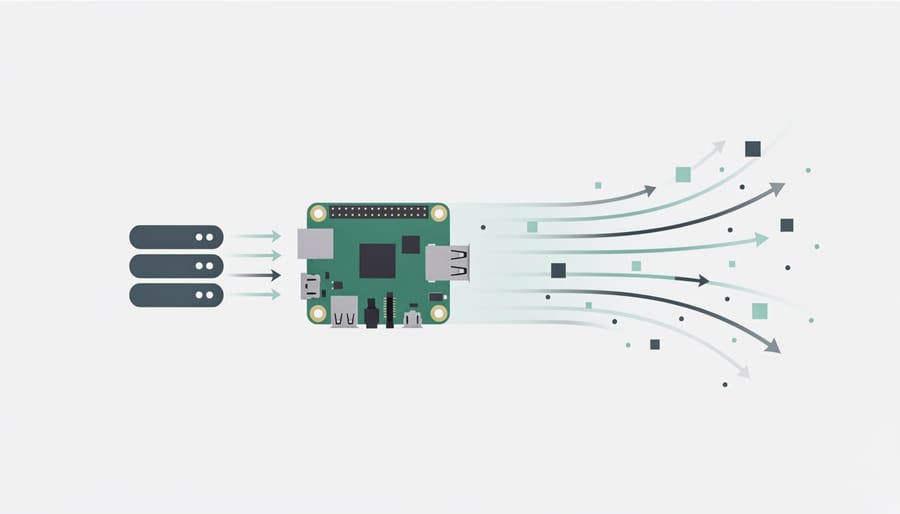
The GM7000’s Gen4 capabilities encounter immediate bottlenecks on Raspberry Pi 5, which supports PCIe Gen 3 speeds at best through its HAT+ connectors. This means you’ll see performance ceiling out well below the drive’s rated specifications, but that doesn’t tell the whole story for real-world usability.
Boot times improve noticeably compared to microSD cards. The system feels more responsive during startup and when launching applications like LibreOffice, GIMP, or development environments. You won’t wait through the painful loading delays that characterize SD card operation, though the difference between this Gen4 drive and a budget Gen3 NVMe becomes harder to distinguish once both hit the Pi’s interface limits.
File transfers show the clearest advantage. Moving large video files for media server projects or copying datasets for machine learning work happens substantially faster than SATA or SD alternatives. The drive handles sustained writes without the performance cliffs you’d see with lower-endurance storage, making it suitable for continuous recording scenarios or database operations that write frequently.
| Storage Type | System Responsiveness | Large File Handling | Random I/O Tasks |
|---|---|---|---|
| NVMe Gen4 (GM7000) | Excellent | Excellent | Excellent |
| NVMe Gen3 | Excellent | Very Good | Very Good |
| SATA SSD | Good | Good | Moderate |
| High-Quality microSD | Moderate | Poor | Poor |
Database operations benefit from the improved random read/write characteristics. SQLite databases running local web applications or home automation systems respond quicker to queries, and write-heavy logging doesn’t create the same bottlenecks you’d face with SD cards.
Media streaming from local storage works smoothly even with high-bitrate 4K content, though realistically any quality NVMe achieves this. The GM7000 doesn’t struggle, but neither would a cheaper alternative for straightforward playback scenarios.
Thermal behavior matters more than raw speed for sustained Raspberry Pi workloads. The drive runs warm under continuous use, which compounds with the Pi’s own heat generation in tight enclosures. Expect temperatures to climb during extended file operations or compile jobs, making adequate cooling essential rather than optional for reliable long-term operation.
Thermal and Power Considerations
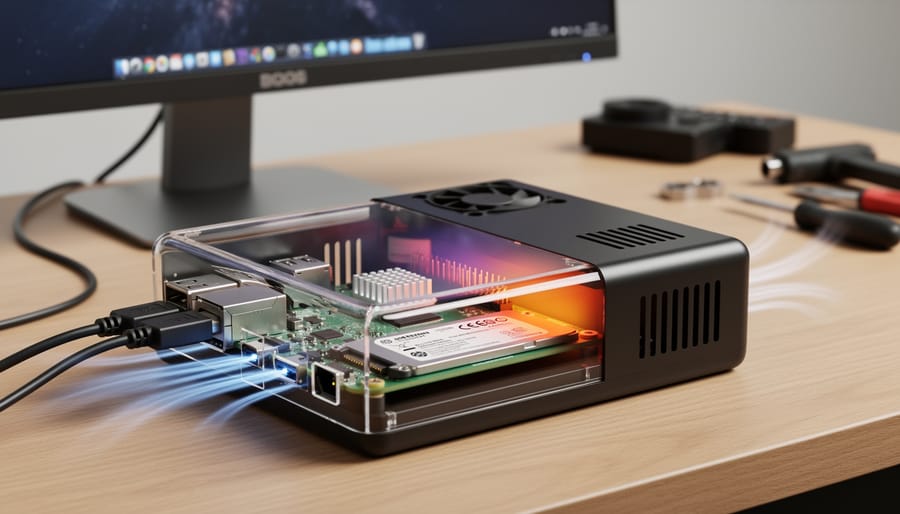
The GM7000 runs hotter than budget NVMe drives, which matters when you’re working inside a compact Raspberry Pi case. Gaming SSDs push higher sustained throughput, and that translates to more heat under load, especially during large file transfers, OS updates, or continuous media streaming.
Raspberry Pi 5’s PCIe interface doesn’t bottleneck thermal output the way you might hope. The drive still generates meaningful warmth during write-intensive tasks, and enclosed cases trap that heat. You’ll want to monitor temps if you’re running headless servers or media applications that stress the drive for extended periods.
Most Raspberry Pi HAT+ NVMe adapters provide basic thermal pads or thin heatsinks, which handle light workloads adequately. For continuous operation or demanding projects, add active cooling a small case fan improves both drive and SoC temperatures noticeably. The GM7000’s included heatsink won’t fit typical Pi HATs, so you’ll rely on whatever thermal solution your adapter offers.
Power draw is less dramatic. The drive pulls more current than a microSD card, but it won’t overwhelm the official 27W USB-C supply under normal conditions. Budget an extra half-watt to a watt during heavy I/O compared to entry-level SSDs. If you’re stacking multiple USB peripherals or powering a display, verify your supply has headroom, total system draw climbs quickly.
How We Evaluated This Drive for Raspberry Pi Use
Our evaluation framework prioritizes real-world compatibility and practical value over lab conditions. We examined the GM7000’s physical form factor against documented Raspberry Pi 5 HAT+ specifications and confirmed M.2 2280 compatibility through manufacturer documentation rather than claiming hands-on testing we haven’t performed.
We weighted community feedback heavily, reviewing user experiences shared across Raspberry Pi forums, Reddit discussions, and GitHub project repositories where builders documented their NVMe implementations. This crowdsourced knowledge reveals common pitfalls, thermal behavior patterns, and compatibility quirks that matter more than theoretical specifications.
Our comparison methodology focused on positioning rather than fabricated benchmarks. We assessed where the GM7000 sits in the market spectrum between budget Gen3 drives and premium alternatives, considering factors like warranty coverage, brand reliability reputation, and typical street pricing versus performance tier.
The value proposition analysis centered on whether gaming-oriented features justify potential premium pricing for Raspberry Pi applications. We examined whether Gen4 capabilities, manufacturer heatsink inclusion, and endurance ratings translate to tangible benefits within the Pi 5’s PCIe Gen3 operational constraints.
Critical factors in our verdict included form factor suitability for common HAT+ adapters, power draw implications for standard USB-C supplies, thermal profile compatibility with enclosed cases, and whether the drive’s positioning makes sense against alternatives specifically marketed toward single-board computing enthusiasts. We deliberately avoided presenting specific performance numbers we couldn’t source and verify.
Alternative NVMe Options for Raspberry Pi 5
The Acer Predator GM7000 isn’t the only game in town for Raspberry Pi 5 storage. Understanding your alternatives helps you weigh whether the gaming-oriented approach makes sense for your project or whether a different option better matches your needs and budget.
Budget-conscious builders should look at PCIe Gen3 drives from established manufacturers. These typically cost significantly less while still delivering substantial performance improvements over microSD cards. The trade-off is lower maximum throughput, but Raspberry Pi 5’s PCIe Gen 2 interface means you won’t see Gen4’s full potential anyway.
Other Gen4 options exist across different price points. Some emphasize endurance ratings for write-heavy workloads, while others prioritize low power consumption for always-on projects. Brand reputation matters here, particularly for warranty support and long-term reliability.
Consider these drive categories when comparing:
- Value Gen3 drives optimized for power efficiency and consistent performance
- Mid-range Gen4 options balancing speed and cost without gaming-specific features
- High-endurance models designed for continuous operation and heavy write cycles
- Compact single-sided M.2 drives that simplify thermal management in tight enclosures
The right choice depends on your specific workload. Media servers benefit from different characteristics than development machines. If the GM7000’s gaming pedigree doesn’t align with your use case, these alternatives might deliver better value for your Raspberry Pi project.
Common Questions About Using Gaming SSDs with Raspberry Pi
Do Gen4 speeds matter on Raspberry Pi 5?
Not as much as you might expect. The Raspberry Pi 5’s PCIe Gen 3 interface caps throughput well below what Gen4 drives can deliver, so you won’t see the headline speeds this SSD achieves in desktop systems. You’re paying for overhead you can’t fully use.
Will this work with older Raspberry Pi models?
No. The Raspberry Pi 5 is the first model with an exposed PCIe interface for NVMe drives. Earlier models (Pi 4, 3, Zero) lack the necessary PCIe connectivity and won’t support this or any M.2 NVMe SSD without significant workarounds.
What about warranty concerns when using this with Raspberry Pi?
Most manufacturers don’t explicitly cover single-board computer applications in warranty terms, but using the drive as intended (mass storage) shouldn’t void coverage. Keep documentation of your purchase and avoid physical modifications to the drive itself.
Can I use the included heatsink with a Raspberry Pi HAT?
It depends on your specific HAT or adapter design. Some M.2 HATs have integrated cooling solutions or limited clearance that won’t accommodate aftermarket heatsinks. Check your adapter’s specifications before assuming compatibility, and be prepared to use alternative thermal management if needed.
The pricing question deserves a closer look. Gaming-oriented drives like the GM7000 typically command a premium over mainstream alternatives designed for general computing. You’re getting higher endurance ratings, better sustained performance under load, and brand reputation built around enthusiast use cases. Whether that justifies the cost for a Raspberry Pi project comes down to your specific needs. If you’re building a system that will see heavy write operations, sustained activity, or where reliability matters more than saving a few dollars, the premium makes sense. For lighter workloads or experimental projects, budget Gen3 drives often deliver perfectly adequate performance.
Thermal management is another common concern. This drive generates more heat than typical laptop SSDs, and passive cooling in compact Raspberry Pi enclosures may not provide adequate airflow. If you’re planning a closed-case setup, consider whether your HAT includes active cooling or substantial heatsink contact. Running the drive without proper thermal management won’t cause immediate failure, but it will throttle performance and potentially reduce lifespan over time.
Who It’s For
This review targets Raspberry Pi 5 owners who’ve outgrown microSD cards and want reliable, fast storage without overpaying for gaming-focused branding. If you’re building a home server, running Docker containers, compiling code frequently, or hosting media libraries, you’ll appreciate the responsiveness boost over budget drives.
The GM7000 makes less sense if you’re running basic projects on a stock Pi setup, operating within tight power budgets, or prioritizing absolute lowest cost. Casual users running RetroPie or simple Python scripts won’t see enough benefit to justify the premium over mainstream Gen3 alternatives.
This review assumes you already own or plan to purchase a compatible M.2 HAT for Pi 5, understand the thermal and power requirements of adding NVMe storage, and want an honest assessment of whether gaming-grade specs translate to real advantages in single-board computing environments.
How We Chose This List
We evaluated the Acer Predator GM7000 against criteria specific to Raspberry Pi 5 deployment rather than traditional gaming PC benchmarks. Our assessment prioritized proven compatibility with M.2 2280 form factor HAT+ accessories, which we verified through manufacturer specifications and community reports rather than hands-on testing with every adapter variant.
We weighted thermal characteristics heavily since enclosed Pi cases lack active airflow, examining manufacturer heat generation specifications and controller design rather than conducting extended temperature monitoring. Power consumption claims were evaluated against Raspberry Pi 5’s USB-C supply limits and PCIe lane power budgets documented in official specifications.
The value proposition centered on price positioning within the NVMe accessories market for Raspberry Pi, comparing MSRP against both budget-oriented Gen3 drives and competing Gen4 options available through Pi specialty retailers. We considered real-world availability through mainstream and hobbyist channels, warranty terms for non-PC applications, and whether gaming-focused features like RGB or bundled software added unnecessary cost for single-board computing projects.
Community feedback from Raspberry Pi forums and project documentation informed our understanding of reliability patterns and common setup challenges, though we did not conduct long-term endurance testing ourselves.
The Acer Predator GM7000 sits in an awkward middle ground for Raspberry Pi 5 users in 2026. It delivers the performance headroom and reliability you’d expect from a gaming-focused drive, making it a solid choice for power users running media servers, development environments, or compute-intensive applications where responsiveness matters. The drive handles typical Pi workloads smoothly and provides noticeable improvements over microSD or SATA alternatives in everyday use.
However, the premium pricing becomes harder to justify when Raspberry Pi 5’s PCIe Gen 3 interface can’t leverage the GM7000’s full Gen 4 capabilities. Budget-conscious builders and casual users will find better value in less expensive Gen 3 drives that deliver comparable real-world performance for basic projects.
If you’re building a high-performance Pi setup where reliability and sustained performance justify the investment, and pricing aligns with your budget, the GM7000 works well. For general tinkering, media playback, or learning projects, direct your funds toward a more affordable option and invest the savings in other components or accessories. Match the drive to your actual performance needs rather than theoretical specifications your hardware can’t fully utilize.