

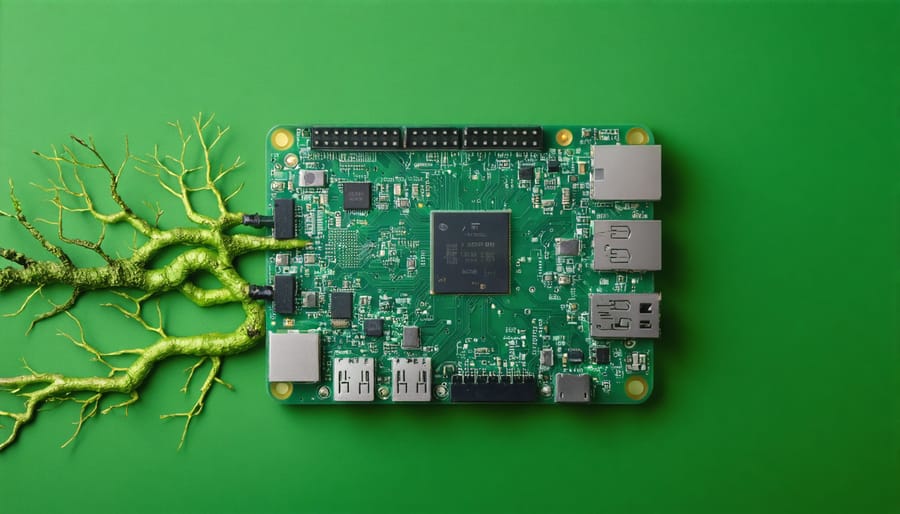
Green computing has emerged as a critical frontier in our battle against climate change, transforming how we approach technology infrastructure and development. Today’s environmental challenges demand smarter, more efficient computing solutions that minimize energy consumption while maximizing performance. By implementing green computing initiatives, organizations and individuals can reduce their carbon footprint by up to 40% while simultaneously cutting operational costs.
The convergence of cloud computing, energy-efficient hardware, and smart power management systems has revolutionized sustainable computing practices. From data centers powered by renewable energy to intelligent workload distribution algorithms, these innovations are reshaping the tech industry’s environmental impact. Major tech companies have already demonstrated that green computing isn’t just environmentally responsible—it’s economically advantageous, with companies reporting significant reductions in energy costs and improved system performance.
For developers, system administrators, and tech enthusiasts, understanding and implementing green computing practices has become essential. Whether optimizing code for energy efficiency, selecting eco-friendly hardware, or designing power-aware applications, every technical decision now carries environmental implications. This shift towards sustainable computing represents not just a trend, but a fundamental transformation in how we approach technology development and deployment.
Power-Efficient Computing with Raspberry Pi
Real Power Usage Numbers
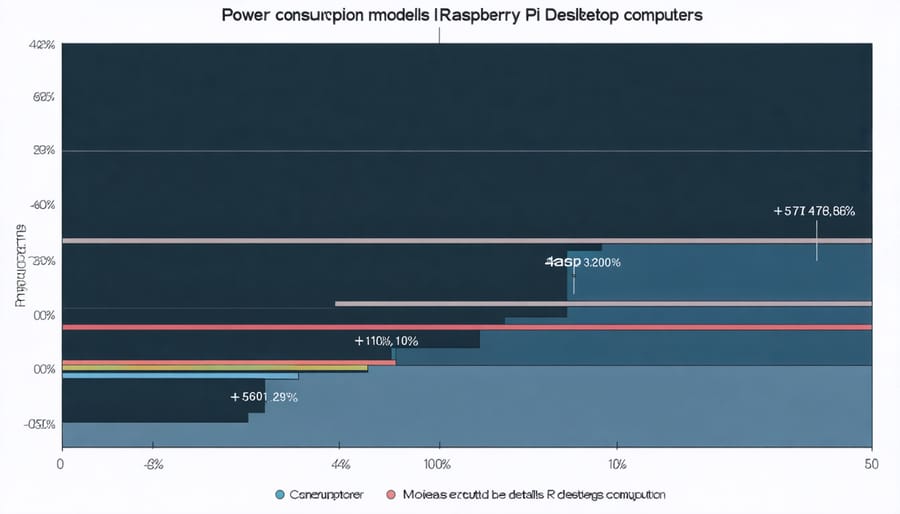
Recent power consumption analysis reveals that a standard Raspberry Pi 4 draws approximately 3.4W when idle and up to 7.6W under full load, making it significantly more energy-efficient than traditional desktop computers that consume between 60-250W. In comparison, earlier models like the Pi 3B+ use even less power, drawing only 2.7W idle and 5.1W at maximum load.
When running basic server applications, a Raspberry Pi typically maintains a modest 4.5W power draw, resulting in an annual electricity consumption of around 39.4 kWh. This translates to roughly $5-7 in electricity costs per year, depending on local rates. Multiple Raspberry Pi clusters can replace more power-hungry servers while maintaining similar functionality for many applications.
For perspective, replacing a single 150W desktop server with a Raspberry Pi could reduce annual power consumption by over 1,200 kWh, equivalent to saving approximately $150 yearly on electricity bills while significantly decreasing carbon footprint.
Smart Power Management Techniques
Implementing effective power management strategies is crucial for reducing energy consumption in Raspberry Pi projects. To optimize power management, start by configuring your Pi’s CPU governor to operate in “ondemand” or “powersave” mode when full performance isn’t required. This simple adjustment can reduce power consumption by up to 30%.
Enable automatic USB port power management by adding “max_usb_current=0” to your config.txt file. This ensures USB devices enter sleep mode when idle. For peripherals, implement a scheduled power-down routine using GPIO pins to control power delivery to sensors and displays that aren’t constantly needed.
Consider implementing sleep states for your Pi during periods of inactivity. Using the ‘rtcwake’ command, you can schedule wake-up times for specific tasks while keeping power usage minimal during downtime. For battery-powered projects, incorporate a voltage monitoring system to prevent deep discharge and extend battery life.
Monitor your power consumption using tools like PowerTop or custom Python scripts with voltage sensors. This data helps identify power-hungry processes and optimize your system accordingly. Remember to disable unnecessary services and LED indicators, as even small power savings add up over time.
When designing your project enclosure, ensure proper ventilation to maintain optimal operating temperatures, as cooler systems typically consume less power and have longer lifespans.
Sustainable Hardware Solutions
Solar-Powered Pi Projects
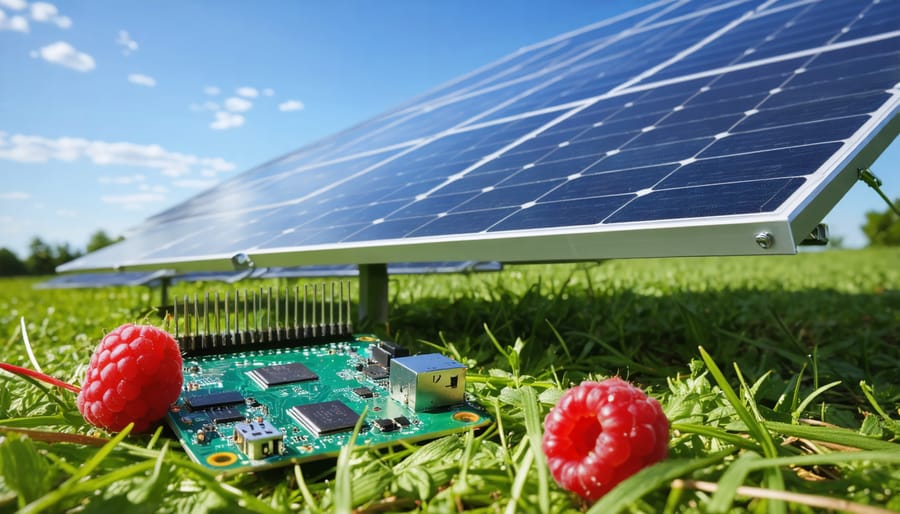
Harnessing solar power for Raspberry Pi projects offers an eco-friendly approach to computing while providing reliable, off-grid functionality. Creating a solar-powered Raspberry Pi setup is both cost-effective and environmentally conscious, making it ideal for outdoor monitoring stations, garden automation systems, and remote sensing applications.
To implement a solar solution, you’ll need a solar panel (typically 10W-20W), a charge controller, a suitable battery (preferably lithium-based for efficiency), and the necessary connecting hardware. The key to success lies in proper sizing – your solar panel should generate enough power to run your Pi and charge the battery during daylight hours, while your battery capacity should support operation during non-sunny periods.
Popular solar-powered Pi applications include weather stations, wildlife cameras, and irrigation controllers. These systems can run continuously while maintaining a zero-carbon footprint. When designing your setup, consider implementing sleep modes and power-efficient coding practices to minimize energy consumption.
For optimal performance, position your solar panel at the correct angle for your latitude and ensure it receives maximum sunlight exposure. Adding a real-time power monitoring system helps track energy usage and system efficiency, allowing you to fine-tune your setup for better performance.
Recycled Components Integration
Integrating recycled components into Raspberry Pi projects isn’t just environmentally conscious—it’s also cost-effective and educational. Salvaged electronics, when properly tested and refurbished, can significantly extend the life of electronic components while reducing e-waste. Start by sourcing components from decommissioned computers, printers, and other electronic devices. Hard drives can be repurposed as external storage, while old laptop displays can serve as monitors for your Pi projects.
When working with recycled components, always test them thoroughly before integration. Use a multimeter to check power connections and ensure voltage requirements match your Pi’s specifications. Fans from old desktop computers can be easily adapted for Pi cooling solutions, while salvaged USB ports and connectors can expand your project’s connectivity options.
Remember to clean all recycled components carefully using isopropyl alcohol and compressed air. For safety, avoid using components with visible damage or from devices that have been exposed to water. Document the specifications of recycled parts you integrate, as this information will be valuable for future maintenance and troubleshooting.
Consider creating a small testing station for recycled components before permanent installation. This practice helps identify potential issues early and ensures reliable performance in your final project. By incorporating recycled components thoughtfully, you’re not only reducing electronic waste but also building more sustainable and cost-effective Pi-based solutions.
Green Software Optimization
Energy-Efficient Operating Systems
Operating systems play a crucial role in managing power consumption, and choosing the right one can significantly impact your Raspberry Pi’s energy efficiency. Several lightweight Linux distributions are specifically optimized for minimal power usage while maintaining essential functionality.
Debian Lite stands out as an excellent choice for energy-efficient computing, featuring a streamlined kernel and minimal background processes. Its lightweight nature not only reduces power consumption but also improves overall system performance. Ubuntu Server, another popular option, includes advanced power management features that automatically adjust CPU frequency and disable unused components.
For maximum energy efficiency, Alpine Linux deserves special attention. This distribution’s minimal footprint and efficient resource management make it ideal for green computing initiatives. It uses less than 100MB of storage and runs entirely from RAM, reducing storage device power draw.
When configuring your operating system for optimal energy efficiency, consider these key practices:
– Disable unnecessary services and daemons
– Implement aggressive sleep modes
– Enable CPU frequency scaling
– Optimize display brightness settings
– Configure automatic shutdown during inactive periods
The choice of operating system, combined with proper configuration, can reduce power consumption by up to 30% compared to standard distributions. This makes a significant difference in long-term energy usage, especially for always-on applications like servers or monitoring systems.
Resource-Conscious Programming
Resource-conscious programming plays a vital role in creating energy-efficient applications for your Raspberry Pi projects. By implementing smart coding practices, you can significantly reduce power consumption while maintaining optimal performance.
Start by minimizing CPU-intensive operations through efficient algorithms and data structures. Choose lightweight loops and avoid unnecessary iterations. For instance, replace nested loops with single-pass operations where possible, and utilize generator expressions instead of list comprehensions for memory-intensive tasks.
Memory management is equally important. Release unused resources promptly, and implement proper garbage collection practices. When working with large datasets, consider streaming data instead of loading everything into memory at once. This not only reduces memory usage but also decreases CPU load and power consumption.
Consider implementing sleep modes or low-power states when your application is idle. In Python, you can use time.sleep() for short intervals or create more sophisticated power management systems using GPIO pins to control hardware components.
Database operations can be optimized by using efficient queries, implementing proper indexing, and batching operations when possible. Instead of making multiple small database calls, combine them into single transactions to reduce processing overhead.
For network-connected applications, implement caching mechanisms and compress data before transmission. This reduces both network traffic and processing power needed for data transfer.
When developing GUI applications, use event-driven programming to update the interface only when necessary, rather than continuous polling or refresh cycles. This approach significantly reduces unnecessary CPU usage and power consumption.
These practices not only make your applications more environmentally friendly but also improve their overall performance and reliability.
Real-World Applications
Smart Home Energy Management
The Raspberry Pi serves as an excellent platform for monitoring and managing home energy consumption, offering a cost-effective solution for environmentally conscious homeowners. By connecting your Pi to smart power meters or energy monitoring sensors, you can track real-time electricity usage across your home’s devices and appliances.
Setting up a basic energy monitoring system requires a Pi, compatible power sensors, and energy monitoring software like Home Assistant or OpenEnergyMonitor. These tools allow you to collect detailed data about your power consumption patterns and identify energy-hungry devices that might need attention.
The real magic happens when you combine monitoring with automation. Your Pi can be programmed to automatically adjust smart thermostats, switch off idle devices, or dim lights based on occupancy and time of day. This intelligent control can lead to significant energy savings – many users report reducing their electricity consumption by 15-30% after implementing these systems.
For more advanced setups, you can integrate solar panel monitoring, battery storage management, and smart appliance control. The Pi can help optimize when to use stored energy versus grid power, especially during peak rate periods. You can even set up mobile notifications to alert you about unusual power consumption patterns or when specific devices are left running unnecessarily.
Remember to consider the Pi’s own power consumption – using a Pi Zero W for basic monitoring tasks can help minimize the system’s energy footprint while still providing robust functionality.
Environmental Monitoring Systems
Environmental monitoring systems represent a crucial aspect of green computing initiatives, offering real-time insights into energy consumption, temperature variations, and resource utilization. By leveraging Raspberry Pi’s versatility, you can create cost-effective monitoring solutions that help optimize your computing environment’s efficiency.
A basic environmental monitoring setup typically includes sensors for temperature, humidity, and power consumption. These sensors connect directly to the Raspberry Pi’s GPIO pins, providing continuous data streams that can be analyzed to identify patterns and opportunities for energy savings. The system can be expanded to monitor additional parameters such as air quality, light levels, and equipment performance.
The real power of these monitoring systems lies in their data collection and analysis capabilities. Using Python scripts, you can create automated logging systems that track environmental metrics over time. This historical data proves invaluable for identifying peak usage periods, understanding energy consumption patterns, and making informed decisions about resource allocation.
For maximum impact, consider implementing automated responses to environmental changes. For example, your system can automatically adjust cooling systems based on temperature readings or power down non-essential equipment during periods of high energy consumption. These automated responses not only reduce energy waste but also extend the lifespan of your computing equipment.
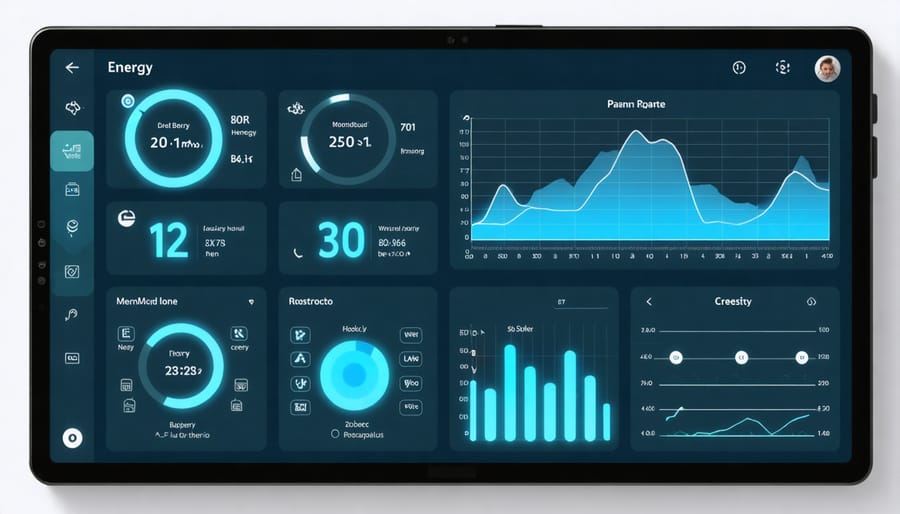
Remember to integrate your monitoring system with a user-friendly dashboard for easy visualization of environmental data. This makes it simpler to share insights with stakeholders and demonstrate the positive impact of your green computing initiatives.
The Raspberry Pi’s role in green computing initiatives represents a significant step forward in sustainable technology practices. By combining low power consumption with versatile computing capabilities, these compact devices demonstrate that environmental responsibility and technological advancement can go hand in hand. The impact of implementing Raspberry Pi-based solutions extends beyond individual energy savings, creating a ripple effect across educational institutions, small businesses, and home computing environments.
Looking ahead, the future of green computing with Raspberry Pi appears increasingly promising. As the platform continues to evolve, we can expect to see even more energy-efficient models and innovative applications that further reduce environmental impact. The growing community of developers and enthusiasts continues to create new solutions that maximize the device’s potential while minimizing its carbon footprint.
The success of Raspberry Pi in promoting sustainable computing practices serves as a model for the broader technology industry. It demonstrates that powerful computing solutions don’t need to come at the expense of environmental responsibility. By adopting these principles and implementing Raspberry Pi-based solutions, organizations and individuals can contribute to a more sustainable digital future while maintaining the functionality they need.
For those looking to start their green computing journey, the Raspberry Pi provides an accessible, cost-effective entry point. Whether through server consolidation, power management solutions, or educational projects, every small step toward more sustainable computing practices makes a difference in our collective environmental impact.