

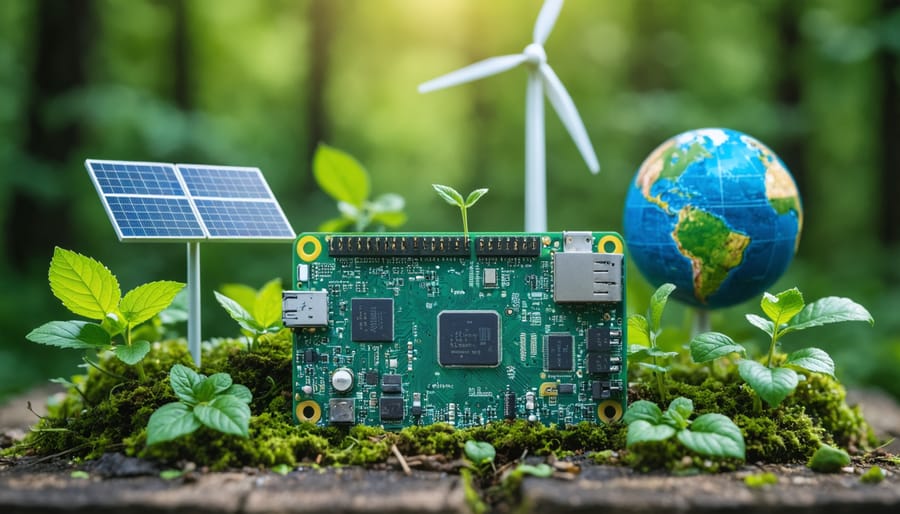
Green computing stands at the forefront of our battle against climate change, as the tech industry’s carbon footprint continues to grow at an alarming rate. Every year, data centers alone consume more electricity than many small countries combined, making the shift towards sustainable computing practices not just important, but crucial for our planet’s future. The Raspberry Pi emerges as a beacon of hope in this scenario, demonstrating how powerful computing doesn’t have to come at a heavy environmental cost.
With its energy-efficient design consuming just 2-5 watts of power compared to a traditional desktop’s 100-200 watts, Raspberry Pi represents a revolutionary approach to sustainable computing. This micro-computer proves that we can achieve significant computing capabilities while drastically reducing our energy consumption and electronic waste. From powering smart home automation systems to serving as energy-efficient web servers, these tiny computers are reshaping our understanding of green technology.
As we face increasing environmental challenges, embracing green computing isn’t just an option – it’s a responsibility that will determine the sustainability of our digital future.
The Environmental Impact of Traditional Computing
Power Consumption: The Hidden Cost
Traditional desktop computers can consume anywhere from 100 to 400 watts during regular operation, contributing significantly to both energy bills and carbon emissions. In contrast, a Raspberry Pi’s power consumption metrics show it using merely 2 to 5 watts under normal conditions. This dramatic difference means that running a Raspberry Pi for an entire year costs roughly the same as powering a traditional PC for just one month.
To put this into perspective, replacing ten standard desktop computers with Raspberry Pis in a small office could reduce annual power consumption by approximately 3,500 kilowatt-hours. This translates to both significant cost savings and a substantial decrease in carbon footprint. The efficiency gains become even more impressive when considering large-scale deployments in schools, libraries, or businesses where hundreds of computers might be running simultaneously.
E-Waste Crisis
Electronic waste has become one of the fastest-growing environmental challenges of our digital age. Every year, millions of computers, smartphones, and other electronic devices end up in landfills, releasing harmful toxins into our soil and water systems. The average desktop computer contains numerous hazardous materials, including lead, mercury, and flame retardants, which pose serious environmental and health risks when improperly disposed of.
Compact computing solutions, like single-board computers and energy-efficient devices, help address this crisis in several ways. Their smaller size requires fewer raw materials during manufacturing, resulting in less electronic waste when they reach end-of-life. Additionally, these devices often have longer lifespans due to their simpler construction and fewer moving parts, reducing the frequency of replacement. By choosing compact computing options, users can significantly reduce their electronic waste footprint while maintaining the functionality they need for most computing tasks.
Raspberry Pi: A Green Computing Champion
Low Power Architecture
The Raspberry Pi’s low-power architecture is a masterpiece of energy-efficient design, built around the ARM processor family known for its power-saving capabilities. At its core, the Pi uses ARM-based processors that typically consume between 2.5 and 5 watts of power during regular operation, a fraction of what traditional desktop computers require.
This remarkable efficiency is achieved through several key design elements. The System-on-Chip (SoC) integrates multiple components into a single unit, reducing power transmission losses. The processor also features dynamic voltage and frequency scaling, automatically adjusting its performance based on workload demands to conserve energy when full power isn’t needed.
The Pi’s memory management system is equally impressive, using LPDDR (Low-Power Double Data Rate) RAM that requires minimal power to maintain data. The board’s compact design minimizes the distance electrical signals need to travel, further reducing energy consumption.
Another clever feature is the Pi’s ability to enter low-power states when idle. The processor can quickly switch between active and sleep modes, consuming mere milliwatts when not actively processing tasks. This adaptive power management means your Pi only uses the energy it actually needs, making it an ideal platform for 24/7 running applications like home servers or monitoring systems.
For makers and environmentally conscious developers, this efficient architecture translates to lower electricity bills and a reduced carbon footprint while maintaining impressive computing capabilities.

Sustainable Computing Practices
Implementing sustainable computing practices with your Raspberry Pi can significantly reduce your environmental footprint while maintaining optimal performance. Start by following these eco-friendly Raspberry Pi practices to maximize energy efficiency.
Configure your Pi to automatically shut down or enter sleep mode during periods of inactivity. This can be easily achieved using built-in power management settings or simple shell scripts. Monitor your Pi’s power consumption using tools like PowerTop or a USB power meter to identify energy-hungry processes and optimize accordingly.
Consider underclocking your Raspberry Pi when running less demanding tasks. While the Pi already consumes minimal power compared to traditional computers, reducing the clock speed can further decrease energy consumption without significantly impacting performance for basic operations.
Use external storage devices only when necessary, as they contribute to power consumption. Opt for SSH connections instead of connecting peripherals like keyboards and monitors when possible. For cooling, passive solutions like heat sinks are more energy-efficient than active fans.
When developing projects, prioritize code optimization to reduce processing requirements. Efficient code not only runs faster but also consumes less power. Regular maintenance, including removing unnecessary services and updating software, helps maintain optimal performance while minimizing energy usage.
Remember to responsibly dispose of or repurpose old components, and consider using renewable energy sources like solar panels to power your Raspberry Pi setup.
Real-World Green Computing Applications
Smart Home Energy Management
The Raspberry Pi’s versatility shines in smart home energy management, offering an affordable and efficient way to monitor and optimize household energy consumption. By connecting sensors to your Pi, you can create a comprehensive energy monitoring system that tracks usage patterns across different appliances and rooms. This data-driven approach helps identify energy waste and opportunities for conservation.
Setting up a Pi-based energy management system typically involves power monitoring sensors, temperature sensors, and relay modules. These components work together to collect real-time data about your home’s energy usage, which can be visualized through custom dashboards created using platforms like Grafana or Node-RED. The system can automatically control smart plugs and thermostats based on usage patterns, leading to significant energy savings.
For maximum efficiency, consider integrating your Pi-based system with sustainable power solutions like solar panels. This combination not only reduces your carbon footprint but also provides valuable data about energy generation and consumption balance. Users typically report 15-30% reductions in energy bills after implementing these systems.
The Pi’s low power consumption makes it an ideal choice for 24/7 monitoring, requiring minimal energy to operate while helping you save much more through intelligent home automation. Additionally, the open-source nature of Pi projects means you can continuously improve and adapt your system as your needs change.
Eco-Friendly Server Solutions
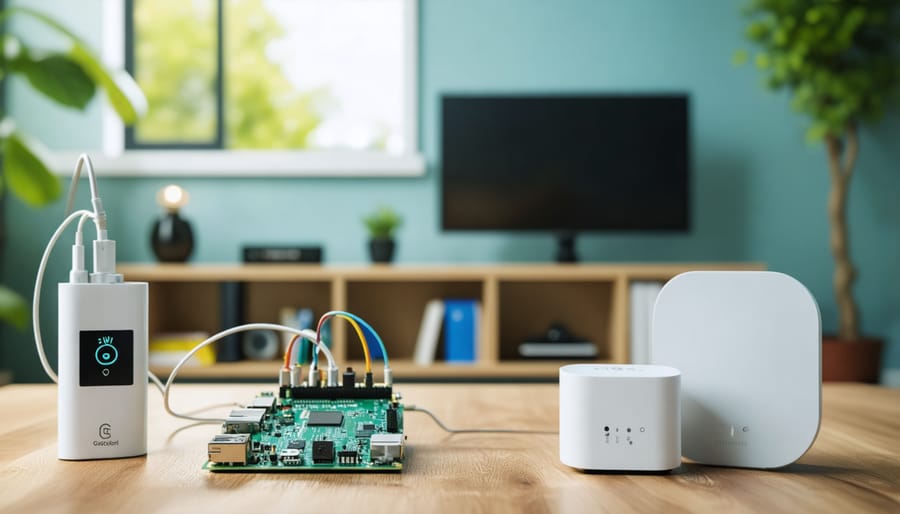
Raspberry Pi servers represent a revolutionary approach to eco-friendly computing, offering significant power savings compared to traditional server setups. These compact computers typically consume between 2.7 and 5 watts of power during regular operation, which is remarkably less than conventional servers that can draw anywhere from 100 to 400 watts.
The versatility of Pi servers makes them ideal for various home and small business applications. They excel at tasks like file sharing, media streaming, web hosting, and network monitoring, all while maintaining a minimal carbon footprint. A typical Raspberry Pi server running 24/7 might only add about $5 to your annual electricity bill, compared to hundreds of dollars for traditional servers.
Setting up a low-power Pi server cluster can significantly reduce your computing environmental impact. For instance, a cluster of four Raspberry Pis can handle many small business server needs while consuming less power than a single traditional server. This setup is particularly effective for distributed computing tasks, web hosting, and development environments.
To maximize energy efficiency, consider combining Pi servers with renewable energy sources like solar panels. Many enthusiasts have successfully created self-sustaining server setups using small solar arrays, making their computing infrastructure completely carbon-neutral. Additionally, the heat generation from Pi servers is minimal, reducing the need for energy-intensive cooling systems commonly required in traditional server rooms.
The Raspberry Pi’s role in green computing represents a significant step forward in our journey toward sustainable technology. By choosing these energy-efficient devices for our computing needs, we can collectively reduce our carbon footprint while enjoying powerful and versatile computing capabilities. The minimal power consumption, coupled with the device’s long lifespan and recyclable components, makes it an exemplary model for environmentally conscious computing.
As we’ve explored throughout this article, implementing green computing practices with Raspberry Pi isn’t just about environmental responsibility—it’s about smart, efficient computing that benefits both users and the planet. The potential for energy savings, particularly in educational institutions and small businesses, demonstrates that sustainable computing can be both practical and economical.
To make a meaningful impact, consider starting with simple steps: replace energy-hungry desktop computers with Raspberry Pi where appropriate, implement power management strategies in your projects, and explore solar-powered applications. Share your green computing experiences with others and encourage your community to adopt these sustainable practices.
The future of computing must prioritize environmental sustainability, and the Raspberry Pi community is perfectly positioned to lead this charge. By embracing green computing principles today, we’re not just reducing our environmental impact—we’re helping shape a more sustainable digital future for generations to come. Start your green computing journey with Raspberry Pi today, and be part of the solution to a more sustainable computing landscape.