

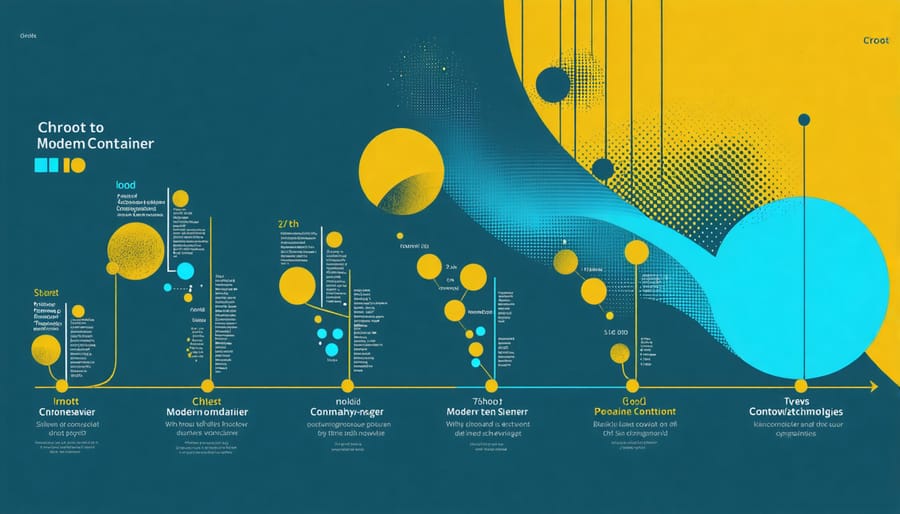
Containerization revolutionized software deployment long before Docker became a household name in tech circles. Born from the challenges of shipping cargo in the 1950s, the concept of standardized containers transformed from physical steel boxes to the virtual environments that power modern computing. Malcolm McLean’s shipping container innovation sparked a paradigm shift in transportation that would later inspire software engineers to solve similar challenges in application deployment and system isolation.
The journey from chroot in 1979 – Unix’s first implementation of process isolation – to today’s container orchestration platforms mirrors the evolution of computing itself. As systems grew more complex, the need for lightweight, portable, and consistent environments became critical. The introduction of Linux containers (LXC) in 2008 laid the groundwork for Docker’s game-changing arrival in 2013, making containerization accessible to developers worldwide.
Today, containerization forms the backbone of cloud computing, enabling everything from microservices architectures to scalable web applications. For Raspberry Pi enthusiasts and makers, containers offer a perfect blend of efficiency and flexibility, allowing multiple projects to run independently on a single device while maintaining optimal resource utilization. This technological evolution represents not just a shift in how we deploy software, but a fundamental change in how we think about application architecture and system design.

The Birth of Software Containers
From chroot to LXC
The journey toward modern containerization began in 1979 with the introduction of chroot (change root) in Unix V7. This simple yet powerful feature allowed system administrators to create isolated file system trees, marking the first step toward process isolation. While chroot primarily focused on file system separation, it laid the groundwork for more sophisticated containerization technologies.
The 1990s and early 2000s saw the emergence of FreeBSD Jails and Solaris Zones, which expanded upon chroot’s capabilities by adding process isolation and resource management. These developments demonstrated the growing need for lightweight alternatives to traditional virtualization benefits.
Linux Containers (LXC) arrived in 2008, representing a significant leap forward. LXC combined several Linux kernel features, including cgroups and namespace isolation, to create a comprehensive containerization solution. This technology allowed users to run multiple isolated Linux systems on a single host without the overhead of full virtualization.
For Raspberry Pi enthusiasts, this evolution is particularly relevant as LXC provides an efficient way to run multiple isolated environments on resource-constrained devices, making it possible to experiment with different configurations and applications while maintaining system stability.
The Docker Revolution
Docker’s introduction in 2013 marked a transformative moment in containerization history, making the technology accessible to developers worldwide. While containers weren’t new, Docker’s innovative approach standardized their implementation and provided user-friendly tools that revolutionized how we package and deploy applications.
The key to Docker’s success lay in its simple yet powerful concept: creating a standard container format that would work consistently across different systems. This standardization, combined with an intuitive command-line interface and excellent documentation, helped developers quickly adopt containerization in their workflows. Today, even Docker containers on Raspberry Pi have become commonplace, demonstrating the technology’s versatility across different platforms.
Docker’s impact extended beyond just technical implementation. The company built a thriving ecosystem around container technology, including Docker Hub, a central repository for container images. This marketplace approach made it easier for developers to share and reuse containerized applications, fostering a collaborative environment that accelerated container adoption across the industry.
By making containerization accessible and standardized, Docker transformed how we think about application deployment and system administration, paving the way for modern cloud-native development practices.
Key Milestones in Container Development
Rise of Container Orchestration
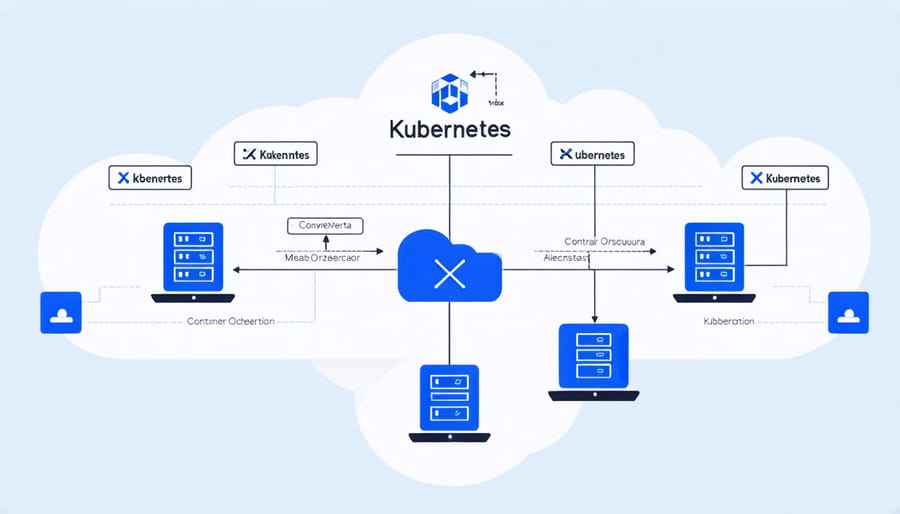
As containers gained popularity, managing multiple containers across different servers became increasingly complex. While individual containers simplified application deployment compared to traditional virtual machine management, orchestrating dozens or hundreds of containers presented new challenges. This need led to the development of container orchestration platforms, with Kubernetes emerging as the industry standard.
Originally developed by Google and released as open-source in 2014, Kubernetes revolutionized how we manage containerized applications. It introduced powerful features like automated deployment, scaling, and container management across clusters of hosts. For Raspberry Pi enthusiasts, this meant the ability to create mini-clusters that mirror enterprise-level deployments.
Other orchestration tools like Docker Swarm and Apache Mesos also emerged, offering simpler alternatives for smaller deployments. Docker Swarm, in particular, gained traction among hobbyists due to its easier learning curve and native integration with Docker.
The rise of container orchestration transformed containerization from a tool for individual application deployment into a comprehensive platform for managing complex, distributed systems. This evolution made it possible to run sophisticated applications on clusters of Raspberry Pis, enabling enthusiasts to experiment with enterprise-grade container orchestration in their home labs.
Container Standards and OCI
As containers gained widespread adoption, the need for standardization became increasingly apparent. In 2015, Docker, along with other industry leaders, formed the Open Container Initiative (OCI) under the Linux Foundation. This collaborative effort aimed to establish universal standards for container formats and runtimes, ensuring compatibility across different platforms and tools.
The OCI introduced two crucial specifications: the Runtime Specification and the Image Specification. The Runtime Spec defines how a container should be run, while the Image Spec standardizes how container images are built and stored. These specifications have made it possible for containers to work consistently across different systems, including single-board computers like the Raspberry Pi.
This standardization has been particularly beneficial for the maker community, as it enables easier sharing and deployment of containerized applications. Whether you’re running a container on a desktop computer or a Raspberry Pi, the same standards ensure your application behaves predictably.
The container ecosystem has flourished under these standards, with tools like Podman, CRI-O, and containerd emerging as alternatives to Docker runtime. For Raspberry Pi enthusiasts, this means more options for running containers and greater flexibility in choosing tools that best suit their projects. The OCI standards continue to evolve, incorporating feedback from the community and adapting to new technological requirements.
Cloud Native Movement
The rise of cloud computing marked a pivotal moment in containerization’s evolution, giving birth to what we now call the Cloud Native movement. This transformation began when organizations started migrating their applications to cloud platforms, realizing they needed more efficient ways to package and deploy software.
Docker’s emergence in 2013 catalyzed this shift by making containers accessible to developers everywhere. This accessibility led to the widespread adoption of microservices architecture, where applications are built as collections of small, independent services rather than monolithic structures. Each service runs in its own container, making it easier to develop, deploy, and scale applications independently.
The Cloud Native Computing Foundation (CNCF) was established in 2015 to help foster this new approach to building and running applications. Their flagship project, Kubernetes, became the de facto standard for container orchestration, helping organizations manage containerized applications at scale.
This movement fundamentally changed how we think about application development and deployment. Instead of treating servers as pets that need constant care and attention, the cloud native approach treats infrastructure as cattle – replaceable and automated. This shift enabled organizations to build more resilient, scalable, and maintainable applications while significantly reducing operational overhead.
These principles have become particularly relevant for developers working with resource-constrained devices, as containers help optimize resource usage and ensure consistent deployment across different platforms.
Containerization on Raspberry Pi
ARM Architecture Challenges
Running containers on ARM architecture presents unique challenges that developers and system administrators need to navigate carefully. Unlike x86 systems, ARM processors utilize a different instruction set, which can impact container compatibility and performance. This architectural difference means that containers built for x86 systems won’t run natively on ARM devices like the Raspberry Pi without proper consideration and modification.
One of the primary challenges is image availability. While Docker Hub and other repositories increasingly offer ARM-compatible images, many existing container images are still primarily built for x86 architectures. Developers often need to rebuild images specifically for ARM or use multi-architecture manifests to ensure compatibility.
Cross-compilation and ARM system emulation have become essential tools in addressing these challenges. However, emulation can introduce performance overhead, particularly when running complex applications or services.
Resource constraints pose another significant challenge. ARM-based systems, especially single-board computers like the Raspberry Pi, typically have limited RAM and processing power compared to traditional servers. This necessitates careful container optimization and resource management to ensure stable operation.
Despite these challenges, the containerization community has made significant strides in ARM support. Tools like Buildx and improved multi-architecture support in container registries have simplified the process of creating and deploying ARM-compatible containers, making it increasingly practical to run containerized applications on ARM devices.
Modern Container Solutions
Today’s Raspberry Pi enthusiasts benefit from several container solutions specifically optimized for ARM architecture. Docker leads the pack with its official ARM support, making it possible to run containerized applications efficiently on Pi devices. The platform offers a vast repository of pre-built ARM-compatible images, significantly simplifying deployment for Pi projects.
Balena Container Engine, designed specifically for IoT devices, provides a lightweight alternative that’s particularly well-suited for Raspberry Pi deployments. Its focus on resource efficiency makes it ideal for projects where power consumption and storage space are crucial considerations.
Podman has also gained traction in the Pi community, offering a daemonless container engine that’s more secure and resource-efficient than traditional solutions. Its compatibility with Docker commands makes it an easy transition for users familiar with Docker workflows.
For kubernetes enthusiasts, K3s presents a certified Kubernetes distribution that’s been streamlined for ARM devices. It requires less than 512MB of RAM to run, making it perfect for Raspberry Pi clusters and edge computing applications.
These modern solutions address historical containerization challenges unique to ARM devices, such as architecture compatibility and resource constraints. They provide standardized environments, simplified deployment processes, and efficient resource utilization – all while maintaining the flexibility that made containerization popular in the first place.
The Raspberry Pi community continues to benefit from these evolving container technologies, enabling everything from home automation systems to educational programming environments, all within isolated, manageable containers.
Containerization has revolutionized the way we develop, deploy, and manage applications, transforming from simple shipping containers to sophisticated software solutions. This evolution has made it possible for developers of all skill levels to create consistent, portable, and scalable applications across different platforms, including single-board computers like the Raspberry Pi.
The impact of containerization extends far beyond its original scope, enabling faster development cycles, improved resource utilization, and enhanced collaboration between development and operations teams. Today, containers are fundamental to modern cloud computing, microservices architecture, and DevOps practices, making it easier than ever to build and maintain complex applications.
Looking ahead, containerization technology continues to evolve with emerging trends like serverless containers, improved security features, and enhanced orchestration tools. For Raspberry Pi enthusiasts and hobbyists, this means even more opportunities to experiment with containerized applications on their devices, from home automation systems to personal cloud solutions.
As we move forward, container technology will likely become even more lightweight and resource-efficient, making it increasingly suitable for edge computing and IoT devices. This progression promises to open new possibilities for Raspberry Pi projects while maintaining the simplicity and portability that made containers revolutionary in the first place.