
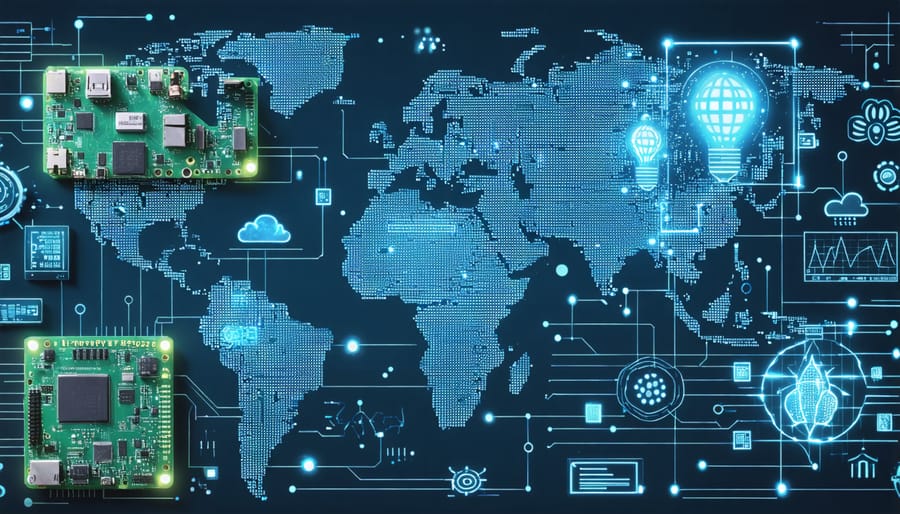
Transform everyday objects into smart devices and groundbreaking innovations with the versatile Raspberry Pi 4 Model B, a pocket-sized computer that’s revolutionizing DIY technology. From automated home security systems that detect intruders using machine learning to weather stations that collect real-time environmental data, makers worldwide are pushing the boundaries of what’s possible with this $35 microcomputer. Whether you’re building a retro gaming console, programming a robot assistant, or creating an IoT-enabled greenhouse, the Raspberry Pi’s combination of affordability, processing power, and extensive GPIO capabilities makes it the perfect platform for bringing imaginative projects to life. Join the global community of inventors who have already transformed their ideas into reality, and discover how this versatile device can power your next breakthrough innovation.
Healthcare Innovations That Save Lives
Remote Patient Monitoring Systems
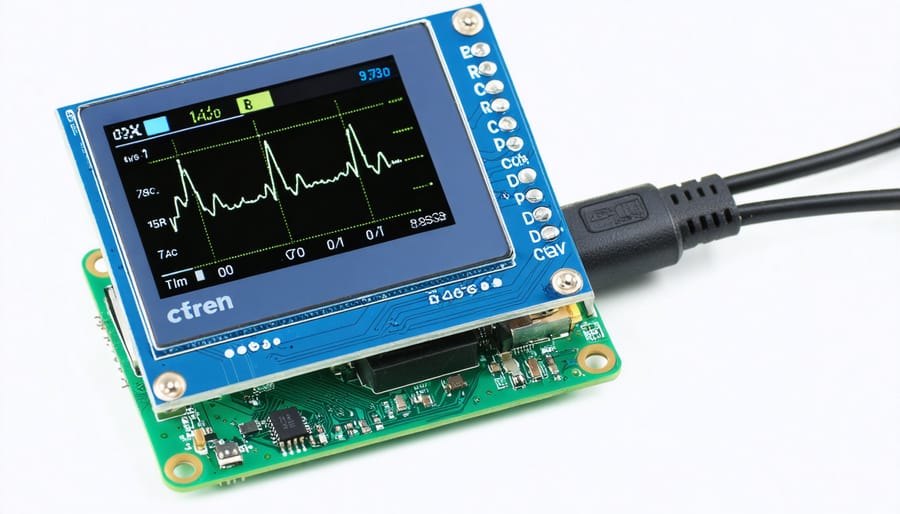
Remote patient monitoring has become increasingly important in healthcare, and the Raspberry Pi offers an affordable solution for creating medical monitoring devices. Using various sensors and modules, developers have created systems that can track vital signs, movement patterns, and medication adherence, all while maintaining a connection to healthcare providers through internet connectivity.
One notable implementation involves a compact vital signs monitor that uses affordable sensors to track heart rate, blood oxygen levels, and body temperature. The Raspberry Pi processes this data in real-time and sends alerts to healthcare providers when readings fall outside normal ranges. This system has proven particularly valuable for elderly care and chronic disease management, where continuous monitoring can prevent serious complications.
Another innovative application is a fall detection system that uses accelerometers and machine learning algorithms to identify when a patient has fallen. The Raspberry Pi processes the sensor data and can automatically alert caregivers or emergency services when necessary. These systems can be implemented for a fraction of the cost of commercial alternatives, making them accessible to more healthcare facilities and individuals.
Developers have also created medication reminder systems that use cameras and computer vision to verify when patients take their prescribed medications. The Raspberry Pi can maintain a detailed log of medication adherence and send regular reports to healthcare providers, helping ensure better treatment outcomes.
AI-Powered Diagnostic Tools
The integration of artificial intelligence with Raspberry Pi has revolutionized medical diagnostics, making advanced healthcare solutions more accessible and affordable. These compact yet powerful devices are being transformed into sophisticated diagnostic tools through machine learning algorithms and specialized sensors.
One notable application is in high-resolution medical imaging, where Raspberry Pi systems are being used to analyze X-rays and microscope images. By combining computer vision algorithms with neural networks, these systems can detect anomalies and assist healthcare professionals in making faster, more accurate diagnoses.
Several innovative projects have emerged in this space, including smart stethoscopes that can identify heart conditions through sound pattern analysis, and portable blood cell analyzers that use microscope attachments to detect various blood disorders. These tools are particularly valuable in remote or underserved areas where access to traditional medical equipment is limited.
The development process typically involves training machine learning models on medical datasets, then deploying them on Raspberry Pi devices using frameworks like TensorFlow Lite or OpenCV. This combination of affordable hardware and sophisticated AI capabilities has made it possible for makers and healthcare professionals to create cost-effective diagnostic solutions that can potentially save lives.
These projects demonstrate how Raspberry Pi can bridge the gap between advanced medical technology and accessibility, making healthcare innovations more democratic and widely available.
Environmental Solutions Making Impact
Smart Agriculture Systems
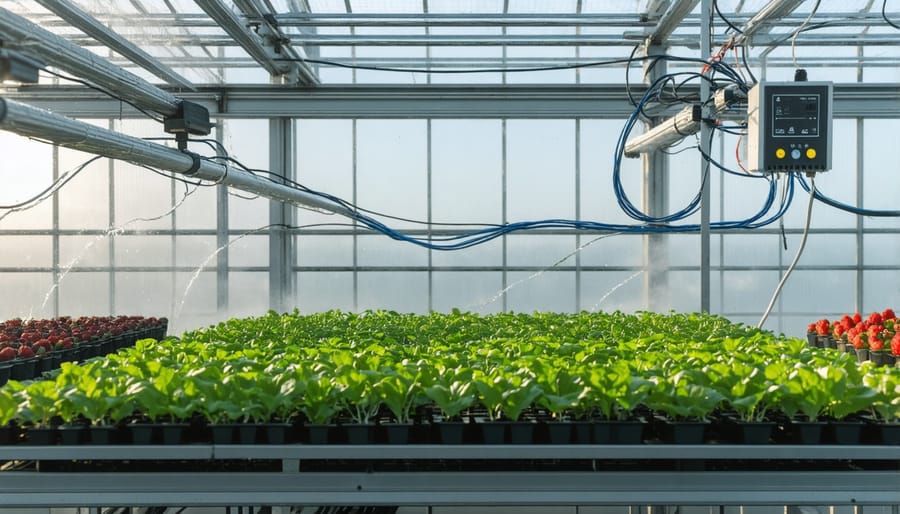
Smart agriculture systems powered by Raspberry Pi have revolutionized traditional farming practices by introducing automated monitoring and control solutions. These systems enable farmers to optimize resource usage and increase crop yields through precision agriculture techniques. With sensors for soil moisture, temperature, and humidity, Raspberry Pi-based irrigation systems can automatically water plants based on real-time data, significantly reducing water waste and labor costs.
Similar to how makers build and program robotics projects, agricultural enthusiasts can create sophisticated farming systems using readily available components. A typical setup includes moisture sensors connected to the Pi’s GPIO pins, a relay module for controlling water pumps, and a camera module for monitoring plant health through image analysis.
The Pi’s processing power enables advanced features like weather data integration, allowing the system to adjust watering schedules based on forecast predictions. Users can monitor their gardens remotely through web interfaces or mobile apps, receiving alerts when conditions require attention. These systems can be scaled from small home gardens to larger greenhouse operations, making them versatile solutions for both hobbyist gardeners and professional farmers.
Advanced implementations often incorporate machine learning algorithms to detect plant diseases, predict optimal harvesting times, and manage pest control measures, demonstrating the Pi’s capability to transform traditional farming into a data-driven, efficient operation.
Climate Monitoring Networks
Raspberry Pi’s versatility shines in environmental monitoring applications, where makers have created sophisticated climate monitoring networks that rival professional weather stations. These DIY systems collect crucial data about temperature, humidity, air quality, and atmospheric pressure, contributing to citizen science initiatives and local weather forecasting.
A popular configuration involves connecting DHT22 temperature and humidity sensors to a Raspberry Pi, along with BME280 pressure sensors and MQ135 air quality monitors. These components work together to create comprehensive environmental monitoring stations that can be deployed across multiple locations. Makers often incorporate solar panels and battery packs to create self-sustaining outdoor monitoring posts.
The real power comes from networking multiple Raspberry Pi climate stations together. Using WiFi or LoRaWAN connectivity, these devices can form mesh networks that provide detailed environmental data across neighborhoods or even entire cities. The collected data is typically stored in databases and visualized through web interfaces, allowing anyone to access real-time climate information.
Educational institutions have embraced these projects, using them to teach students about climate science, data analysis, and programming. Some schools have even connected their Raspberry Pi weather stations to larger citizen science networks, contributing valuable data to climate research while giving students hands-on experience with environmental monitoring technology.
Education Technology Breakthroughs
Interactive Learning Tools
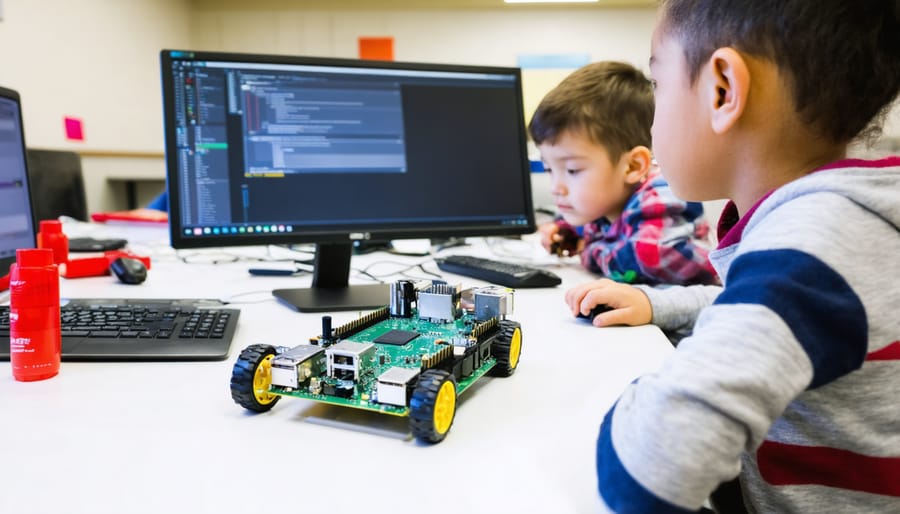
The Raspberry Pi has revolutionized STEM education by enabling the creation of engaging, interactive learning tools that make complex concepts accessible and fun. One popular application is the creation of programmable robots that teach basic coding principles through hands-on experimentation. Students can build simple wheeled robots that respond to basic commands, gradually advancing to more complex behaviors like obstacle avoidance and line following.
Digital science kits powered by Raspberry Pi have transformed traditional experiments into interactive experiences. From weather stations that collect and visualize real-time environmental data to microscopes that capture and analyze specimens digitally, these tools bring scientific concepts to life in the classroom.
For mathematics education, innovative Pi-powered tools include geometric visualization boards and interactive calculation displays. These devices help students understand abstract concepts through tangible interactions and real-time feedback. When combined with smart home automation projects, students can also learn about practical applications of mathematics in everyday scenarios.
Language learning has also benefited from Raspberry Pi innovations, with interactive vocabulary boards and pronunciation practice tools that use LED arrays and speech recognition. These devices provide immediate feedback and create an engaging learning environment that encourages active participation and retention.
The most impactful aspect of these learning tools is their customizability, allowing educators to tailor the complexity and focus of each project to their students’ needs and curriculum requirements.
Accessibility Solutions
The Raspberry Pi has emerged as a powerful tool in creating affordable and customizable assistive technology solutions. Innovative makers have developed numerous projects to support individuals with various disabilities, making everyday tasks more accessible and enhancing learning experiences for students with special needs.
One notable invention is the eye-tracking communication system, which enables non-verbal individuals to communicate using eye movements to control a computer interface. This system costs significantly less than commercial alternatives while providing similar functionality. Another impactful creation is the smart braille display, which converts digital text to braille in real-time, making reading materials more accessible to visually impaired users.
For students with motor skill challenges, makers have designed adaptive gaming controllers using the Raspberry Pi. These custom controllers feature larger buttons, simplified interfaces, and specialized input methods tailored to individual needs. Similarly, voice-controlled home automation systems have been developed to help individuals with mobility limitations control their environment independently.
The educational sphere has benefited from Pi-powered learning aids, including touch-sensitive teaching tools and interactive sensory boards. These devices help students with autism and other developmental differences engage with educational content in ways that suit their learning styles. Many of these projects are open-source, allowing educators and caregivers to modify and improve the designs based on specific needs.
These accessibility solutions demonstrate how the Raspberry Pi’s versatility and affordability can break down barriers and create opportunities for inclusive learning and independent living.
Home Automation Game-Changers
Advanced Security Systems
The Raspberry Pi’s versatility shines particularly bright in the realm of home security, offering cost-effective alternatives to expensive commercial systems. By combining a Pi with cameras, motion sensors, and door contacts, enthusiasts can create sophisticated security systems that rival professional installations at a fraction of the cost.
A basic Pi-powered security setup typically includes a camera module for video surveillance, PIR motion sensors for detection, and a web interface for remote monitoring. Users can access live feeds, receive instant notifications, and even control their system from anywhere using a smartphone app. Advanced features can include facial recognition for authorized access, night vision capabilities, and automated responses to detected threats.
One popular configuration uses OpenCV for intelligent motion detection, reducing false alarms by distinguishing between human movement and environmental changes. This can be enhanced with machine learning algorithms to recognize specific individuals or identify suspicious behavior patterns.
Storage solutions can be customized to suit different needs, from local recording to cloud backup integration. Many makers implement rotating storage systems that automatically archive older footage while maintaining recent recordings for immediate access.
For added security, these systems can be integrated with smart home devices, controlling lights, sirens, or door locks in response to triggered events. Some enthusiasts even add environmental monitoring capabilities, combining security with home automation to create comprehensive protection systems.
Energy Management Tools
The Raspberry Pi’s versatility shines in energy management applications, offering cost-effective solutions for monitoring and optimizing power consumption. One popular project involves creating a whole-house energy monitor using current sensors connected to the Pi’s GPIO pins. This setup allows homeowners to track power usage in real-time and identify energy-hungry appliances through an intuitive web interface.
Smart power strips powered by Raspberry Pi have emerged as another innovative solution. These devices can automatically shut off power to devices during idle periods or peak electricity rates. By incorporating temperature and motion sensors, these systems can also manage HVAC and lighting systems more efficiently, potentially reducing energy bills by up to 30%.
For solar energy enthusiasts, the Raspberry Pi serves as an excellent solar panel monitoring system. Using analog-to-digital converters and voltage sensors, users can track solar production, battery levels, and consumption patterns. The data can be visualized through platforms like Grafana or custom-built dashboards, helping optimize solar panel positioning and maintenance schedules.
Advanced users have even created predictive energy management systems that use machine learning algorithms to forecast energy usage patterns. These systems can automatically adjust smart home devices based on historical data, weather forecasts, and real-time electricity prices, maximizing energy efficiency while maintaining comfort levels.
The world of Raspberry Pi inventions continues to evolve and expand, demonstrating the remarkable potential of this versatile single-board computer. From smart home solutions to educational tools, environmental monitoring systems to entertainment devices, these innovations showcase how creativity and technology can intersect to solve real-world problems.
The impact of Raspberry Pi inventions extends far beyond individual projects. In education, these devices are helping students develop crucial programming and engineering skills while making technology more accessible and engaging. In scientific research, they’re enabling cost-effective data collection and analysis. For businesses, they’re providing affordable solutions for automation and monitoring tasks that would otherwise require expensive commercial equipment.
Looking ahead, the future of Raspberry Pi innovations appears boundless. As new sensors, components, and software capabilities become available, makers and developers will continue to push the boundaries of what’s possible. The growing integration of artificial intelligence and machine learning with Raspberry Pi projects opens up exciting possibilities for smart automation, computer vision applications, and intelligent systems.
The maker community’s collaborative spirit ensures that knowledge and innovations are shared freely, inspiring others to build upon existing projects and create new solutions. This open-source approach, combined with the Pi’s affordability and versatility, means that anyone with an idea can potentially create the next groundbreaking invention.
Whether you’re a seasoned developer or just starting your journey with Raspberry Pi, remember that every major innovation started as a simple idea. The projects we’ve explored demonstrate that with creativity, determination, and the right tools, it’s possible to create devices that can make a real difference in the world.