
Revolutionize industrial processes as an automation and robotics engineer by mastering programmable logic controllers (PLCs), machine learning algorithms, and advanced sensor integration. Design autonomous systems that boost manufacturing efficiency by 40-60% while reducing human error rates and workplace accidents. Transform production lines through sophisticated robotic implementations, starting with getting started with Raspberry Pi for prototyping and testing control systems. Create seamless human-robot collaboration frameworks that combine cutting-edge safety protocols with adaptive learning capabilities, enabling robots to perform complex tasks alongside human workers.
The field of automation and robotics engineering stands at the intersection of mechanical engineering, computer science, and artificial intelligence, driving the fourth industrial revolution through smart manufacturing solutions. Modern automation engineers leverage real-time data analytics, Industrial Internet of Things (IIoT) connectivity, and advanced simulation tools to develop systems that continuously optimize themselves, predict maintenance needs, and adapt to changing production requirements. As manufacturing facilities worldwide embrace digital transformation, automation and robotics engineers lead the charge in implementing sustainable, efficient, and scalable solutions that define the future of industry.
The Modern Automation Engineer’s Toolbox
Programming Languages and Control Systems
Automation and robotics engineers rely heavily on various programming languages to develop and maintain industrial control systems. Python stands out as a versatile language, particularly useful for rapid prototyping and implementing machine learning algorithms. For real-time control applications, C++ remains the industry standard due to its efficiency and direct hardware access capabilities.
Ladder Logic (LD) and Structured Text (ST) are essential for programming Programmable Logic Controllers (PLCs), which form the backbone of industrial automation. MATLAB and Simulink are widely used for system modeling, simulation, and control system design, enabling engineers to test and optimize their solutions before deployment.
Modern robotics applications often utilize Robot Operating System (ROS), which provides a flexible framework for robot software development. For motion control and trajectory planning, specialized languages like RAPID (ABB), KRL (KUKA), and INFORM (YASKAWA) are commonly used with specific robot manufacturers’ systems. These languages allow precise control over robot movements and integration with other automation components.
Hardware Integration Skills
Hardware integration is a cornerstone skill for automation and robotics engineers, requiring proficiency in both electrical and mechanical systems. These professionals must understand sensor technologies, actuators, and control systems to create seamless interactions between different hardware components. They work extensively with programmable logic controllers (PLCs), microcontrollers, and various communication protocols like I2C, SPI, and UART.
A crucial aspect of hardware integration involves selecting and implementing appropriate sensors, including proximity sensors, vision systems, and force/torque sensors. Engineers must also master motor control systems, ranging from simple DC motors to complex servo systems and stepper motors. Understanding signal processing and conditioning is essential for accurate data acquisition and system response.
Engineers in this field regularly work with industrial networking protocols such as EtherCAT, Profinet, and Modbus, ensuring reliable communication between different system components. They must also be proficient in reading electrical schematics, designing control panels, and troubleshooting hardware issues. Safety integration is paramount, requiring knowledge of emergency stops, safety relays, and industry safety standards.
The ability to prototype and test hardware configurations, often using development boards and simulation tools, is also essential for successful implementation of automated systems.
Raspberry Pi in Industrial Automation
Cost-Effective Control Solutions
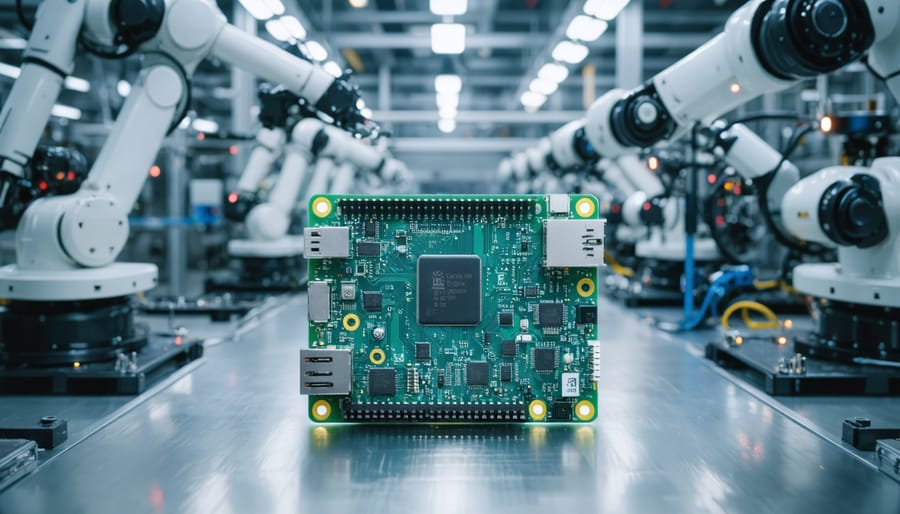
In the realm of industrial automation, cost remains a significant barrier for many small to medium-sized enterprises. However, Raspberry Pi has emerged as a game-changing solution, offering powerful automation capabilities at a fraction of the cost of traditional industrial controllers. These compact computers, typically priced under $100, can handle complex automation tasks while providing excellent flexibility and scalability.
Engineers are increasingly turning to Raspberry Pi for developing prototype automation systems and implementing small-scale industrial controls. The platform’s ability to interface with various sensors, actuators, and industrial communication protocols makes it an ideal choice for budget-conscious automation projects. When combined with Python programming and open-source libraries, Raspberry Pi can create sophisticated control systems for conveyor belts, sorting mechanisms, and quality control stations.
One notable advantage is the extensive community support and readily available resources, which significantly reduce development time and costs. Engineers can leverage existing code libraries and hardware configurations, allowing them to focus on customizing solutions for specific applications rather than building systems from scratch.
For educational institutions and training facilities, Raspberry Pi provides an accessible entry point into automation engineering. Students can gain hands-on experience with real-world automation concepts without requiring expensive industrial equipment. This accessibility has helped bridge the gap between theoretical knowledge and practical implementation, preparing the next generation of automation engineers for industry challenges.
Real-Time Monitoring and Data Collection
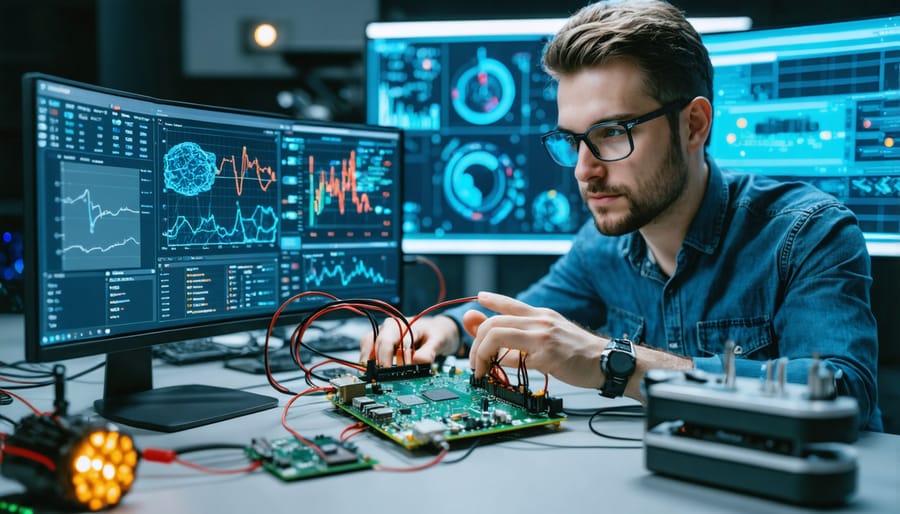
Real-time monitoring and data collection form crucial aspects of modern automation systems, and Raspberry Pi has emerged as a versatile platform for implementing these solutions. Automation and robotics engineers frequently utilize Raspberry Pi’s capabilities to create sophisticated IoT sensors and monitoring systems that provide valuable insights into manufacturing processes.
The implementation typically involves connecting various sensors to the Raspberry Pi, including temperature sensors, proximity detectors, vibration monitors, and optical sensors. These components work together to create a comprehensive monitoring network that can track multiple parameters simultaneously. Engineers can program the Raspberry Pi using Python or Node.js to collect, process, and analyze data in real-time.
A key advantage of using Raspberry Pi for monitoring systems is its ability to integrate with existing industrial equipment through standard protocols like Modbus and OPC UA. This allows engineers to retrofit older machinery with modern monitoring capabilities without requiring complete system overhauls. The collected data can be stored locally or transmitted to cloud platforms for advanced analytics and visualization.
The system can be configured to trigger automated responses based on predefined conditions, such as sending alerts when measurements exceed acceptable ranges or automatically adjusting process parameters to maintain optimal performance. This level of automation helps maintain consistent quality control while reducing the need for constant manual supervision.
Practical Applications in Manufacturing
Quality Control Systems
Quality control systems represent a crucial aspect of automation and robotics engineering, where automated inspection processes ensure consistent product quality while reducing human error. Modern manufacturing facilities employ sophisticated vision systems, sensor arrays, and AI-powered algorithms to detect defects in real-time, maintaining high production standards across assembly lines.
These automated quality control implementations typically include multiple inspection points throughout the production process. High-speed cameras capture detailed images of products, while advanced pattern recognition software analyzes these images for irregularities, dimensional accuracy, and surface defects. Laser scanning systems provide precise 3D measurements, ensuring components meet exact specifications.
Engineers develop custom algorithms that can detect subtle variations in product quality, often incorporating machine learning capabilities that improve detection accuracy over time. These systems can identify issues such as incorrect assembly, missing components, surface blemishes, or dimensional inconsistencies at speeds far exceeding human capability.
Integration with manufacturing execution systems (MES) allows for immediate feedback and automatic adjustment of production parameters when quality issues are detected. This real-time response capability helps minimize waste and optimize production efficiency. Data collected from these systems also provides valuable insights for continuous process improvement and predictive maintenance.
Temperature sensors, pressure gauges, and spectral analysis tools complement visual inspection systems, ensuring that products meet both physical and chemical specifications. Modern quality control systems can also generate detailed reports and maintain digital records for compliance and traceability purposes, essential for industries with strict regulatory requirements like pharmaceuticals and aerospace.
Production Line Optimization
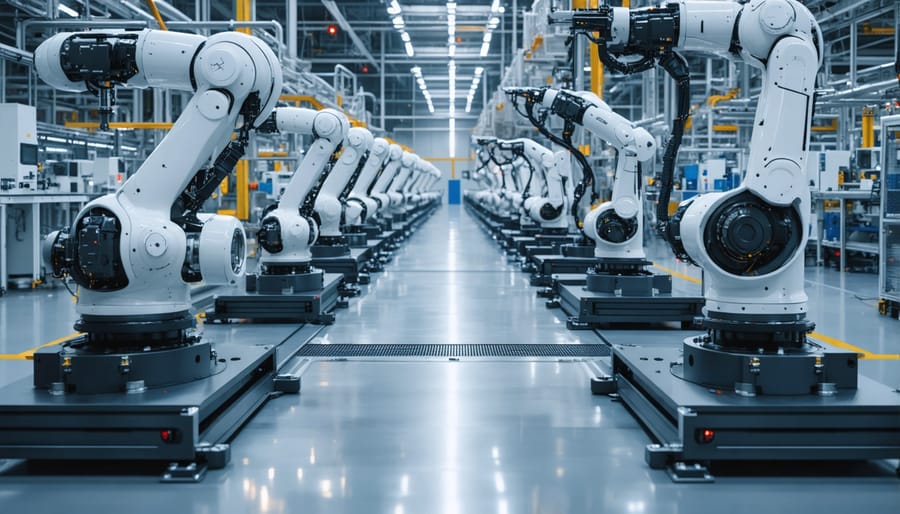
Production line optimization stands at the core of an automation and robotics engineer’s responsibilities, focusing on maximizing efficiency while minimizing waste and downtime. These professionals implement sophisticated automation solutions that transform traditional manufacturing processes into streamlined, data-driven operations.
By integrating sensors, programmable logic controllers (PLCs), and robotic systems, engineers create intelligent production lines that can adapt to changing conditions in real-time. They utilize advanced analytics tools to monitor key performance indicators (KPIs) such as throughput, cycle time, and quality metrics, enabling continuous improvement of manufacturing processes.
A crucial aspect of production line optimization involves implementing predictive maintenance systems. These systems use machine learning algorithms to anticipate equipment failures before they occur, significantly reducing unexpected downtime. Engineers also design flexible manufacturing cells that can quickly switch between different product variants, meeting the growing demand for customized products while maintaining efficiency.
Another key focus area is the implementation of Industrial Internet of Things (IIoT) devices. These smart sensors and connected devices gather real-time data about production line performance, environmental conditions, and product quality. This data enables engineers to identify bottlenecks, optimize workflow patterns, and make data-driven decisions to improve overall equipment effectiveness (OEE).
Energy efficiency also plays a vital role in production line optimization. Automation engineers implement smart power management systems and energy-efficient robotics to reduce operational costs while meeting sustainability goals. They often utilize simulation software to test and validate optimization strategies before implementing them on the actual production floor, ensuring smooth transitions and minimal disruption to ongoing operations.
Future Trends and Opportunities
Industry 4.0 Integration
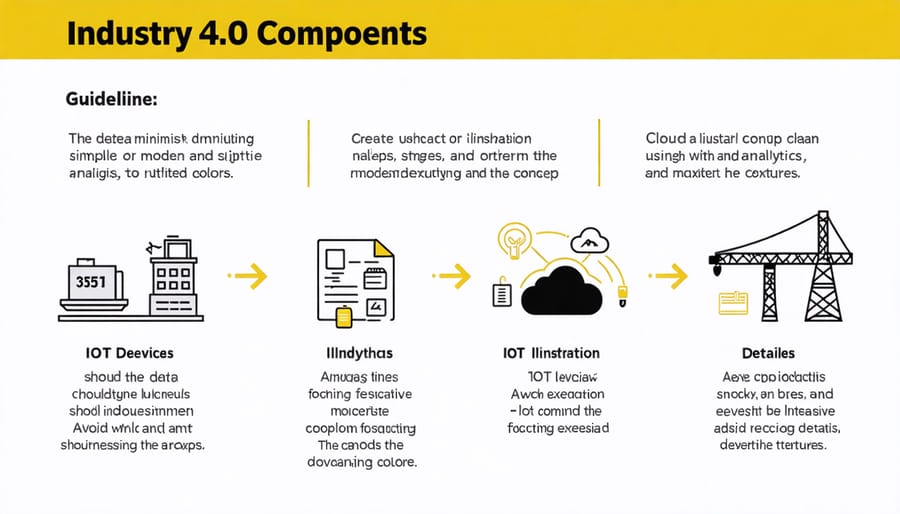
Automation and robotics engineers are at the forefront of implementing Industry 4.0 technologies in modern manufacturing environments. They bridge the gap between traditional automation systems and smart manufacturing by integrating IoT sensors, cloud computing, and artificial intelligence into existing production lines.
These engineers develop and maintain sophisticated control systems that enable real-time data collection and analysis, predictive maintenance, and adaptive manufacturing processes. By implementing digital twins and smart sensors, they create virtual representations of physical systems that help optimize production efficiency and reduce downtime.
A key responsibility is ensuring seamless communication between different systems through industrial networks and protocols. This includes programming PLCs, configuring SCADA systems, and establishing reliable data exchange between shop floor equipment and higher-level management systems.
Engineers also focus on implementing collaborative robots (cobots) and flexible automation solutions that can adapt to changing production requirements. They utilize edge computing and machine learning algorithms to enable autonomous decision-making at the machine level, while ensuring cybersecurity measures protect these interconnected systems.
By leveraging tools like Raspberry Pi for prototyping and testing industrial IoT applications, automation engineers can develop cost-effective solutions for small and medium-sized manufacturers looking to embrace digital transformation.
Career Growth and Specialization
Automation and robotics engineers enjoy diverse career paths with numerous opportunities for growth and specialization. Entry-level positions typically begin in manufacturing facilities or industrial settings, where engineers gain hands-on experience with automated systems and robotic applications. As they progress, many professionals choose to specialize in areas such as industrial robotics, autonomous systems, or smart manufacturing technologies.
Career advancement often leads to roles like Senior Automation Engineer, Robotics Systems Architect, or Technical Lead. These positions involve greater responsibility in system design, project management, and team leadership. Some engineers focus on specific industries, such as automotive manufacturing, aerospace, or consumer electronics, developing deep expertise in sector-specific automation solutions.
The field also offers opportunities in research and development, where engineers can work on cutting-edge technologies like collaborative robots (cobots), artificial intelligence integration, and Industry 4.0 implementations. Those interested in the business aspect can transition into consulting roles, helping companies optimize their automation strategies and implement new technologies.
Educational advancement through specialized certifications or advanced degrees can accelerate career growth. Popular specializations include machine learning applications, vision systems, PLC programming, and industrial IoT integration. With the increasing adoption of automation across industries, professionals who combine technical expertise with project management skills are particularly valuable and often advance to senior management positions.
Automation and robotics engineers stand at the forefront of technological advancement, shaping the future of manufacturing, healthcare, and countless other industries. Their work not only improves efficiency and productivity but also enhances workplace safety and product quality. As we look ahead, the demand for these professionals continues to grow exponentially, driven by Industry 4.0 initiatives and the increasing need for smart automation solutions.
The future outlook for automation engineers is particularly promising, with emerging technologies like artificial intelligence, machine learning, and the Internet of Things creating new opportunities and challenges. These professionals will play a crucial role in developing sustainable manufacturing practices, implementing collaborative robots (cobots), and creating more flexible and adaptable production systems.
The impact of automation engineers extends beyond traditional manufacturing settings. Their expertise is increasingly valuable in emerging fields such as autonomous vehicles, smart cities, and space exploration. As technology continues to evolve, these engineers will need to adapt their skills and embrace continuous learning to stay current with industry trends.
For aspiring automation and robotics engineers, the field offers exciting opportunities to innovate and make meaningful contributions to society. Whether developing new robotic systems, optimizing production processes, or creating innovative solutions for complex problems, these professionals will continue to be essential in driving technological progress and shaping our automated future.