
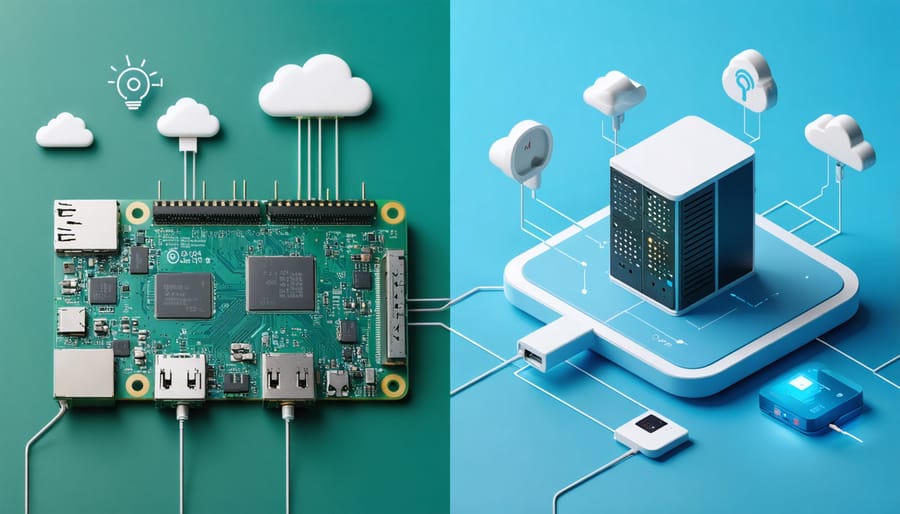
Edge computing revolutionizes how Raspberry Pi enthusiasts process data by bringing computation closer to data sources, while cloud computing offers virtually unlimited scalability from remote servers. Understanding these architectural approaches helps optimize your Pi project architecture for specific use cases. Edge computing excels in real-time applications where milliseconds matter, such as smart home automation, industrial sensors, and IoT devices that require instant response. Cloud computing, conversely, shines in scenarios demanding massive computational power or data storage, enabling complex analytics and machine learning tasks without local hardware constraints.
Choose edge computing when latency is critical, internet connectivity is unreliable, or data privacy demands local processing. Opt for cloud computing when scaling resources dynamically, accessing advanced services, or collaborating across multiple locations. Many successful Pi projects combine both approaches, processing time-sensitive data locally while leveraging cloud resources for heavy computational tasks and long-term storage.
This practical comparison explores how to harness both technologies effectively, focusing on real-world implementations that maximize your Raspberry Pi’s potential while minimizing costs and complexity.
Why Edge Computing Matters for Your Pi Projects
Real-Time Processing Without Cloud Delays
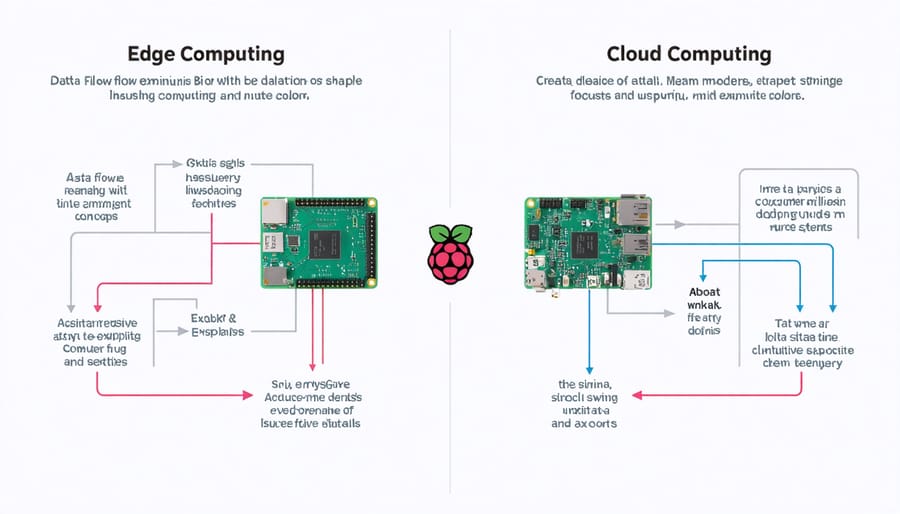
When it comes to processing speed and response time, edge computing has a clear advantage over cloud computing. Instead of sending data all the way to distant servers, edge computing processes information right where it’s generated – on your local device or nearby edge servers. This significantly reduces latency, making it perfect for time-sensitive applications.
Think of it like having a conversation: talking to someone in the same room (edge computing) is much faster than relaying messages through a friend across town (cloud computing). This immediate processing capability is crucial for applications like autonomous vehicles, industrial automation, or real-time sensor monitoring on your Raspberry Pi projects.
For example, if you’re building a smart security camera system with your Pi, edge computing allows for instant motion detection and response, while cloud processing might introduce delays of several hundred milliseconds or more. These delays might seem small, but in critical applications, every millisecond counts.
The real-time processing advantage becomes even more apparent when internet connectivity is unstable or bandwidth is limited. Edge computing continues to function efficiently, providing consistent performance regardless of network conditions.
Saving Bandwidth and Storage Costs
Edge computing significantly reduces bandwidth usage and storage costs by processing data closer to its source. Instead of sending raw data to distant cloud servers, edge devices like Raspberry Pi can filter, analyze, and compress data locally, transmitting only relevant information. This approach is particularly beneficial for IoT projects where devices generate massive amounts of data continuously.
Consider a security camera system: Rather than streaming all footage to the cloud, edge computing allows the camera to process video locally, sending alerts only when motion is detected. This smart filtering can reduce bandwidth consumption by up to 90% while maintaining system effectiveness.
Storage costs also decrease substantially as edge computing eliminates the need to store all raw data in cloud databases. Local processing enables real-time decision-making and data aggregation, sending only processed results to the cloud. For example, a weather monitoring station can process thousands of sensor readings locally, transmitting only hourly averages to the cloud storage.
This efficient resource utilization makes edge computing particularly attractive for projects with limited internet connectivity or budget constraints.
Edge vs. Cloud: Making the Right Choice
Processing Speed and Response Time
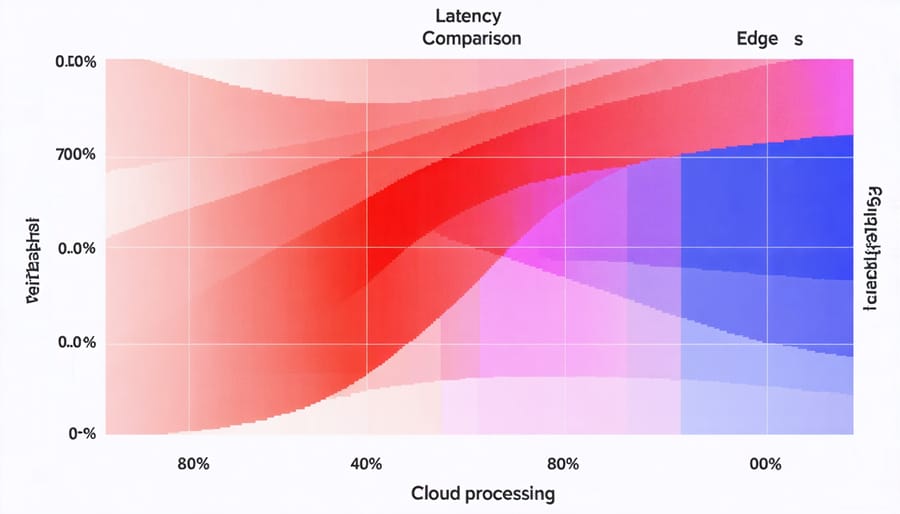
When comparing processing speed and response time, edge computing often takes the lead over traditional cloud solutions, especially in scenarios requiring real-time data processing. With edge computing, data is processed closer to its source, typically within milliseconds, compared to the 100+ milliseconds it might take to send data to and receive a response from cloud servers.
This difference becomes particularly noticeable in Raspberry Pi projects involving sensors or real-time applications. For instance, a Pi-based security camera using edge computing can detect and respond to motion almost instantly, while the same setup using cloud processing might experience a noticeable delay before triggering an alert.
However, the speed advantage of edge computing comes with a trade-off. Cloud computing generally offers more processing power and can handle more complex computations, even if it takes slightly longer to deliver results. This makes cloud computing better suited for tasks like machine learning model training or large-scale data analytics.
The choice between edge and cloud processing often depends on your project’s specific needs. Edge computing shines in applications requiring:
– Immediate response times
– Real-time data processing
– Offline functionality
– Reduced bandwidth usage
Meanwhile, cloud computing remains superior for:
– Complex calculations
– Big data analysis
– Resource-intensive tasks
– Scalable processing needs
Security and Data Privacy
Security considerations differ significantly between edge and cloud computing, with each approach offering distinct advantages and challenges. Edge computing provides enhanced data privacy by processing sensitive information locally, reducing the risk of data exposure during transmission. This localized processing is particularly beneficial for Raspberry Pi projects handling personal or confidential data.
Cloud computing, while offering robust security measures through established providers, requires data to travel across networks, potentially increasing vulnerability points. However, major cloud providers invest heavily in security infrastructure and regular updates that might be challenging to implement in edge devices.
One significant advantage of edge computing is the ability to implement containerization for enhanced security, allowing for isolated environments that protect critical applications and data. This approach is especially valuable when working with multiple services on a single Raspberry Pi.
Both architectures require careful consideration of authentication, encryption, and access control. Edge computing typically offers better compliance with data sovereignty regulations, as data remains within physical boundaries. However, maintaining security updates and patches can be more challenging with distributed edge devices compared to centralized cloud systems.
For optimal security, many projects implement a hybrid approach, utilizing edge computing for sensitive data processing while leveraging cloud security features for non-critical operations and backup storage.
Cost and Resource Management
When comparing costs between edge and cloud computing, several key factors come into play. Cloud computing typically follows a pay-as-you-go model, where you’re charged based on resource usage, storage, and data transfer. This can be cost-effective for small-scale operations but may become expensive as data volumes and processing needs grow.
Edge computing, particularly when implemented with Raspberry Pi devices, often has higher initial hardware costs but lower long-term operational expenses. A basic edge computing setup might require multiple Pi units, sensors, and networking equipment, representing a significant upfront investment. However, you’ll save on recurring cloud service fees and bandwidth costs.
Resource management also differs significantly between the two approaches. Cloud computing offers virtually unlimited scalability, allowing you to instantly provision more resources as needed. This flexibility comes at the cost of increased latency and potential bandwidth constraints. Edge computing, while more limited in raw processing power, provides better resource utilization for local operations and reduces network dependency.
For Raspberry Pi enthusiasts, the resource management trade-off often favors edge computing. A well-designed edge network can efficiently handle local processing tasks while maintaining lower power consumption compared to cloud services. This is particularly valuable for IoT projects where continuous cloud connectivity might be impractical or cost-prohibitive.
Consider implementing a hybrid approach, using edge computing for time-sensitive operations while leveraging cloud resources for data storage and heavy processing tasks. This balanced strategy often provides the most cost-effective and resource-efficient solution for Pi-based projects.
Implementing Edge Computing on Your Pi
Essential Hardware Requirements
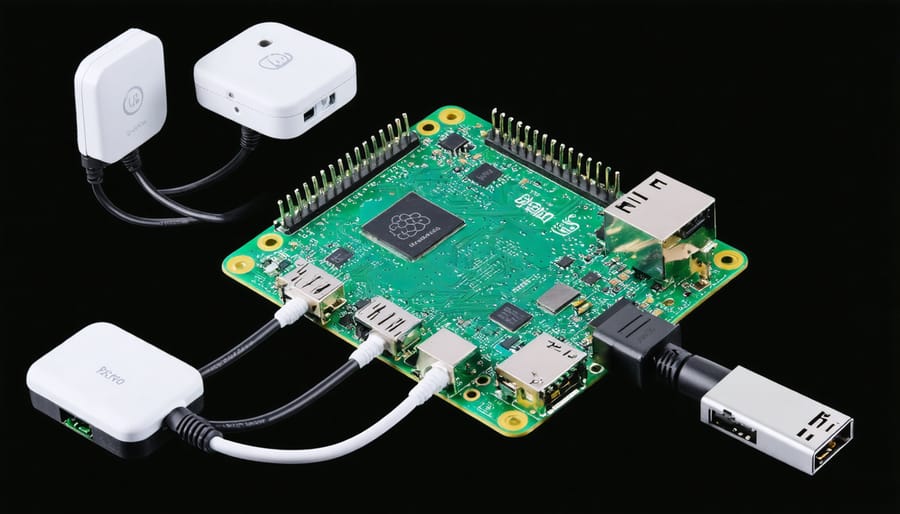
For edge computing setups, you’ll need a reliable edge device like a Raspberry Pi 4 (minimum 4GB RAM recommended) or similar single-board computer. These devices serve as your local processing units and should include adequate storage (32GB+ microSD card or SSD) for running edge applications and temporary data storage.
Essential networking components include a stable internet connection (minimum 10Mbps upload/download) and a reliable router with QoS capabilities. For more demanding edge applications, consider adding a small network switch for improved connectivity management.
Cloud computing implementations require less physical hardware on-site but demand robust internet connectivity (25Mbps+ recommended) for consistent cloud service access. Your local devices need sufficient RAM (8GB+ recommended) and processing power to handle cloud-based applications effectively.
For hybrid setups combining edge and cloud capabilities, you’ll want:
– A primary edge device (Raspberry Pi 4 or similar)
– Backup power supply (UPS)
– High-quality network cables (Cat 6 or better)
– External storage for data redundancy
– Environmental sensors (if monitoring physical conditions)
– Network monitoring tools
Remember that hardware requirements can vary significantly based on your specific use case. Start with these basics and scale up as needed. For optimal performance, ensure all components are compatible and properly configured for your intended application.
Software Stack Setup
Setting up your software stack for edge computing differs significantly from cloud configurations. Let’s walk through the essential steps for both environments, starting with edge computing on your Raspberry Pi.
For edge computing, begin by installing Raspberry Pi OS (formerly Raspbian) as your base operating system. Update your system using:
“`
sudo apt update
sudo apt upgrade
“`
Install Docker to manage containerized applications:
“`
curl -fsSL https://get.docker.com -o get-docker.sh
sudo sh get-docker.sh
“`
For efficient virtual machine deployment, install KVM and related tools:
“`
sudo apt install qemu-kvm libvirt-daemon bridge-utils
“`
For cloud computing setup, you’ll need:
1. A cloud provider account (AWS, Azure, or GCP)
2. CLI tools for your chosen provider
3. Infrastructure as Code tools like Terraform
Install AWS CLI (if using AWS):
“`
curl “https://awscli.amazonaws.com/awscli-exe-linux-aarch64.zip” -o “awscliv2.zip”
unzip awscliv2.zip
sudo ./aws/install
“`
Configure your credentials:
“`
aws configure
“`
Remember to implement proper security measures for both setups:
– Enable SSH key authentication
– Configure firewalls
– Set up monitoring tools
– Implement backup solutions
This foundation allows you to deploy applications in either environment while maintaining security and performance standards.
Performance Optimization Tips
To get the most out of your edge computing setup, particularly when using Raspberry Pi devices, it’s essential to implement several optimization strategies. Start by properly configuring your hardware resources – ensure your Pi has adequate cooling and consider using an SSD instead of an SD card to maximize Pi performance and reduce latency.
Data optimization is crucial for edge computing efficiency. Implement effective data filtering and compression techniques at the edge to reduce bandwidth usage and processing overhead. Only transmit essential data to the cloud, performing preliminary analysis locally when possible.
Consider implementing caching mechanisms at the edge to store frequently accessed data and reduce network requests. This is particularly important for applications requiring real-time responses. Use lightweight protocols like MQTT for device communication, as they’re designed for minimal overhead and efficient data transfer.
Load balancing is another critical factor. Distribute workloads evenly across your edge devices to prevent any single node from becoming a bottleneck. Implement failover mechanisms to ensure continuous operation even if some edge nodes become unavailable.
Monitor your edge computing resources regularly using tools like Prometheus or Grafana. This helps identify performance bottlenecks and optimize resource allocation. Keep your edge devices’ firmware and software updated to benefit from the latest performance improvements and security patches.
Finally, consider containerization for your edge applications. Using lightweight containers helps manage resources more efficiently and ensures consistent performance across different edge devices while maintaining isolation between applications.
Edge computing and cloud computing each bring unique advantages to the table, and understanding their distinct roles can help you make informed decisions for your projects. While cloud computing continues to dominate large-scale applications with its virtually unlimited resources and accessibility, edge computing is revolutionizing how we handle time-sensitive data and local processing needs.
For Raspberry Pi enthusiasts and makers, this comparison opens up exciting possibilities. You can leverage both paradigms by using your Pi as an edge device while maintaining cloud connectivity for data storage and heavy processing tasks. This hybrid approach often delivers the best of both worlds.
Ready to get started? Consider these next steps:
1. Evaluate your project’s specific needs, particularly regarding latency, data privacy, and processing requirements
2. Start small with a basic edge computing setup using your Raspberry Pi
3. Experiment with different cloud services that complement your edge deployment
4. Monitor performance metrics to optimize your configuration
5. Join the maker community to share experiences and learn from others
Remember that the choice between edge and cloud computing isn’t always an either/or decision. Many successful projects combine both approaches, creating robust solutions that balance local processing power with cloud-based capabilities. Whether you’re building a smart home system, an IoT weather station, or a local gaming server, understanding these computing paradigms will help you create more efficient and effective projects.