
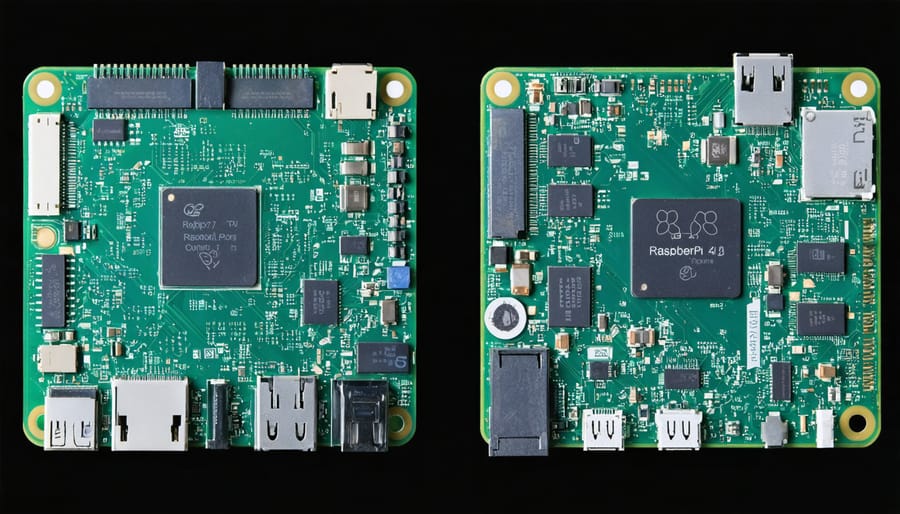
Discover the key differences between the Raspberry Pi 4 and 4B models to choose the best fit for your projects and budget. The Raspberry Pi 4 Model B offers upgraded specs, including faster CPU and RAM options up to 8GB, while maintaining the same compact form factor and GPIO pinout as the original Pi 4. However, the 4B revision addresses USB-C power issues and improves reliability for demanding applications. Consider your performance needs, power requirements, and budget when selecting between these powerful single-board computers to bring your innovative ideas to life.
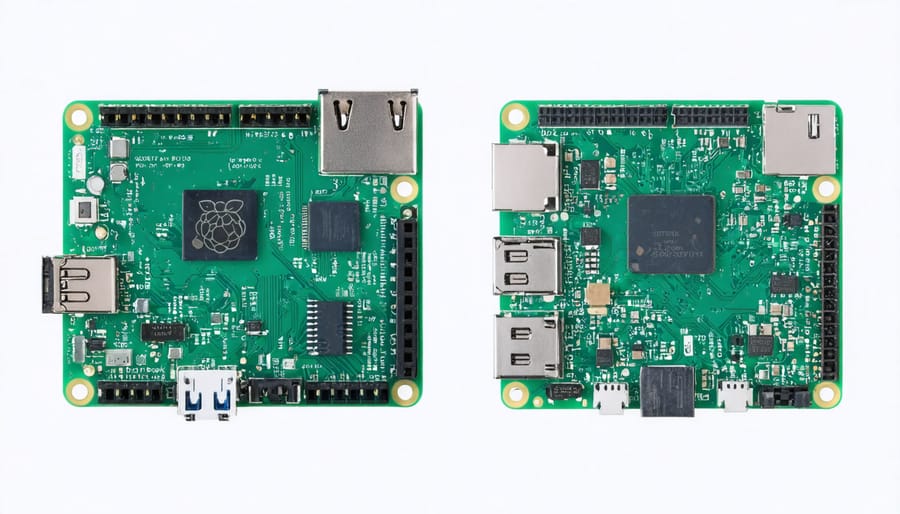
Key Differences Between Raspberry Pi 4 and 4B
Processor and Performance
The Raspberry Pi 4 Model B uses the Broadcom BCM2711 SoC a quad-core Cortex-A72 (ARM v8) 64-bit processor. It’s important to clarify a common misconception: there is no separate “Raspberry Pi 4” and “Raspberry Pi 4B.” The official name is Raspberry Pi 4 Model B, and all variants of this model use the same BCM2711 chip.
| Specification | Original Release (2019) | Updated Revision (2021) |
|---|---|---|
| Processor | BCM2711, 1.5GHz | BCM2711, 1.8GHz |
| RAM Options | 1GB, 2GB, 4GB, 8GB | 2GB, 4GB, 8GB |
| Architecture | Quad-core Cortex-A72 (ARM v8) 64-bit | Quad-core Cortex-A72 (ARM v8) 64-bit |
All Raspberry Pi 4 Model B boards initially shipped with the processor clocked at 1.5GHz. In 2021, the Raspberry Pi Foundation released a hardware revision that increased the stock clock speed to 1.8GHz, providing a notable performance boost across the entire product line. This revision applied to all RAM configurations, whether you purchased the 2GB, 4GB, or 8GB variant.
The performance improvements with the BCM2711 represent a significant leap over previous Raspberry Pi generations. You can run multiple applications simultaneously, handle machine learning projects and enjoy smoother multimedia playback. The upgraded processor makes the Pi 4 Model B particularly well-suited for retro gaming and other demanding tasks that would have struggled on earlier models.
If you’re choosing between different Pi models for your project, understanding these processor specifications can help guide your decision. Check out our Raspberry Pi model comparison to see how the Pi 4 Model B stacks up against other options in the lineup.
Memory and Storage Options
The Raspberry Pi 4 and 4B offer different memory and storage options to suit various needs. The Raspberry Pi 4 comes in 1GB, 2GB, and 4GB LPDDR4 SDRAM variants, while the 4B introduces an 8GB LPDDR4 SDRAM option for more demanding applications. Both models feature a faster memory clock speed of 3200 MT/s compared to the Raspberry Pi 3’s 2400 MT/s.
In terms of storage, both the Raspberry Pi 4 and 4B use a microSD card slot for boot media and long-term storage. They also include a USB 3.0 interface, allowing users to connect external SSDs or HDDs for faster and more expansive storage options. The USB 3.0 ports provide data transfer speeds up to 5 Gbps, a significant improvement over the USB 2.0 ports found on earlier models.
Connectivity and Ports
When it comes to connectivity and ports, both the Raspberry Pi 4 and 4B offer a robust set of options. They feature two USB 3.0 ports, two USB 2.0 ports, and a Gigabit Ethernet port for fast wired networking. Additionally, both models include dual-band 2.4 GHz and 5 GHz wireless LAN, providing reliable Wi-Fi connectivity for your projects.
Bluetooth 5.0 is also present on both the Raspberry Pi 4 and 4B, enabling seamless wireless communication with peripherals like keyboards, mice, and other compatible devices. The inclusion of Bluetooth 5.0 ensures improved range, speed, and energy efficiency compared to previous versions.
For audio and video output, both models feature a full-size HDMI port, supporting resolutions up to 4K at 60Hz. They also include a 4-pole stereo audio and composite video port, offering flexibility for connecting to various displays and audio systems.
In terms of expandability, the Raspberry Pi 4 and 4B have a 40-pin GPIO header, allowing you to connect a wide range of sensors, actuators, and other hardware components. This makes them ideal for building custom projects and exploring the world of physical computing.
Overall, the Raspberry Pi 4 and 4B provide an impressive array of connectivity options, making them suitable for a diverse range of applications and projects, whether you’re a beginner or an experienced maker.
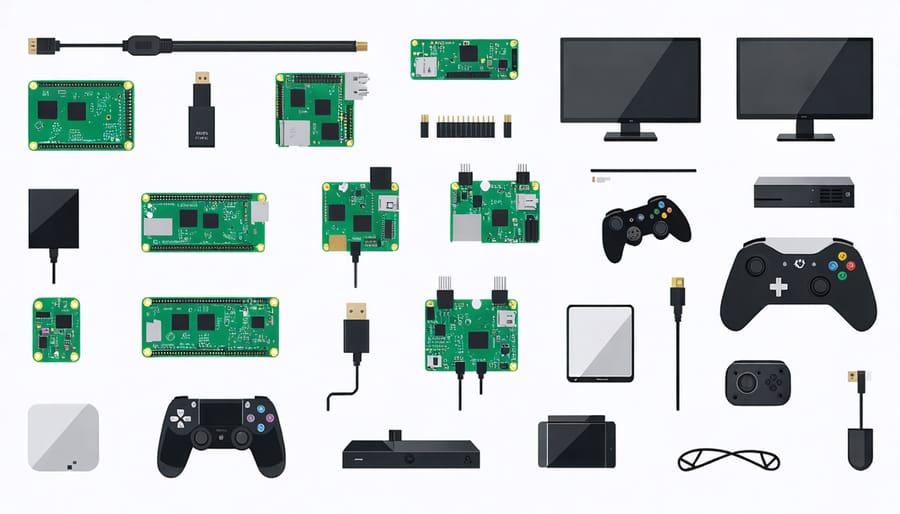
Use Cases: Pi 4 vs 4B
Everyday Computing and Productivity
Both the Raspberry Pi 4 and 4B offer capable performance for everyday computing tasks. Web browsing is smooth and responsive, with the ability to handle multiple tabs and stream video content without issues. For productivity, these single-board computers can run office suites like LibreOffice, allowing you to create and edit documents, spreadsheets, and presentations. While not as powerful as a desktop PC, the Raspberry Pi 4 and 4B provide a cost-effective solution for basic computing needs. The 4GB or 8GB RAM options are recommended for a better multitasking experience. Overall, these devices deliver impressive performance considering their compact size and affordable price point, making them a viable option for everyday use in homes, offices, or educational settings.
Media Centers and Gaming
Both the Raspberry Pi 4 and 4B excel as media centers and light gaming devices. With their powerful quad-core processors, ample RAM, and built-in Wi-Fi and Bluetooth, they can easily handle streaming high-quality video content. The Raspberry Pi 4B’s extra RAM options make it even more capable for multitasking and running resource-intensive applications. You can turn either model into a retro gaming machine using emulators like RetroPie, allowing you to enjoy classic games from various consoles. While not designed for intensive modern gaming, both models can handle retro gaming and some lighter indie titles with ease. The upgraded CPU and GPU in the 4B may provide a slight performance edge in gaming scenarios.
DIY Projects and Maker Applications
Both the Raspberry Pi 4 and 4B are excellent choices for DIY projects and maker applications. The Raspberry Pi 4 is well-suited for entry-level projects, such as building a retro gaming console or setting up a simple home media server. Its quad-core processor and 1GB of RAM provide sufficient power for most basic tasks.
However, if your projects require more intensive processing or multitasking, the Raspberry Pi 4B is the better option. With up to 8GB of RAM and a faster CPU, it can handle more complex projects like building a multi-room audio system, creating a smart home hub, or developing AI and machine learning applications. For instance, if you’re interested in exploring AI projects, you might consider the potential of Raspberry Pi in machine learning. The 4B’s improved networking capabilities also make it ideal for projects that require faster data transfer or network-based communication.
Ultimately, both models offer a cost-effective and versatile platform for prototyping and experimentation, but the Raspberry Pi 4B’s enhanced performance makes it the preferred choice for more demanding maker projects.
Pricing and Value
The Raspberry Pi 4 and 4B offer excellent value for their price points. The base model 4 starts at just $35 for the 1GB RAM variant, while the 4B ranges from $35 for 1GB to $75 for 8GB. Despite their affordable prices, both models deliver impressive performance for single-board computers. The higher RAM options on the 4B provide even better multitasking and performance for demanding applications. Considering their versatility and potential for diverse projects, both the Raspberry Pi 4 and 4B provide outstanding value, making them accessible to hobbyists, educators, and professionals alike. Ultimately, the choice between the two comes down to your specific needs and budget.
Conclusion
In summary, while the Raspberry Pi 4 and 4B share many similarities, the 4B offers improved thermal management, a refined USB-C power circuit, and increased compatibility with USB 3.0 devices. For most users, these incremental upgrades make the 4B the preferred choice. However, if you already own a Raspberry Pi 4 or have specific project requirements, the original model may still suffice. When choosing the right model, consider your budget, project scope, and the potential benefits of the 4B’s enhancements. Regardless of your decision, both models offer incredible value and versatility for a wide range of applications, from learning to code to building innovative IoT solutions.